
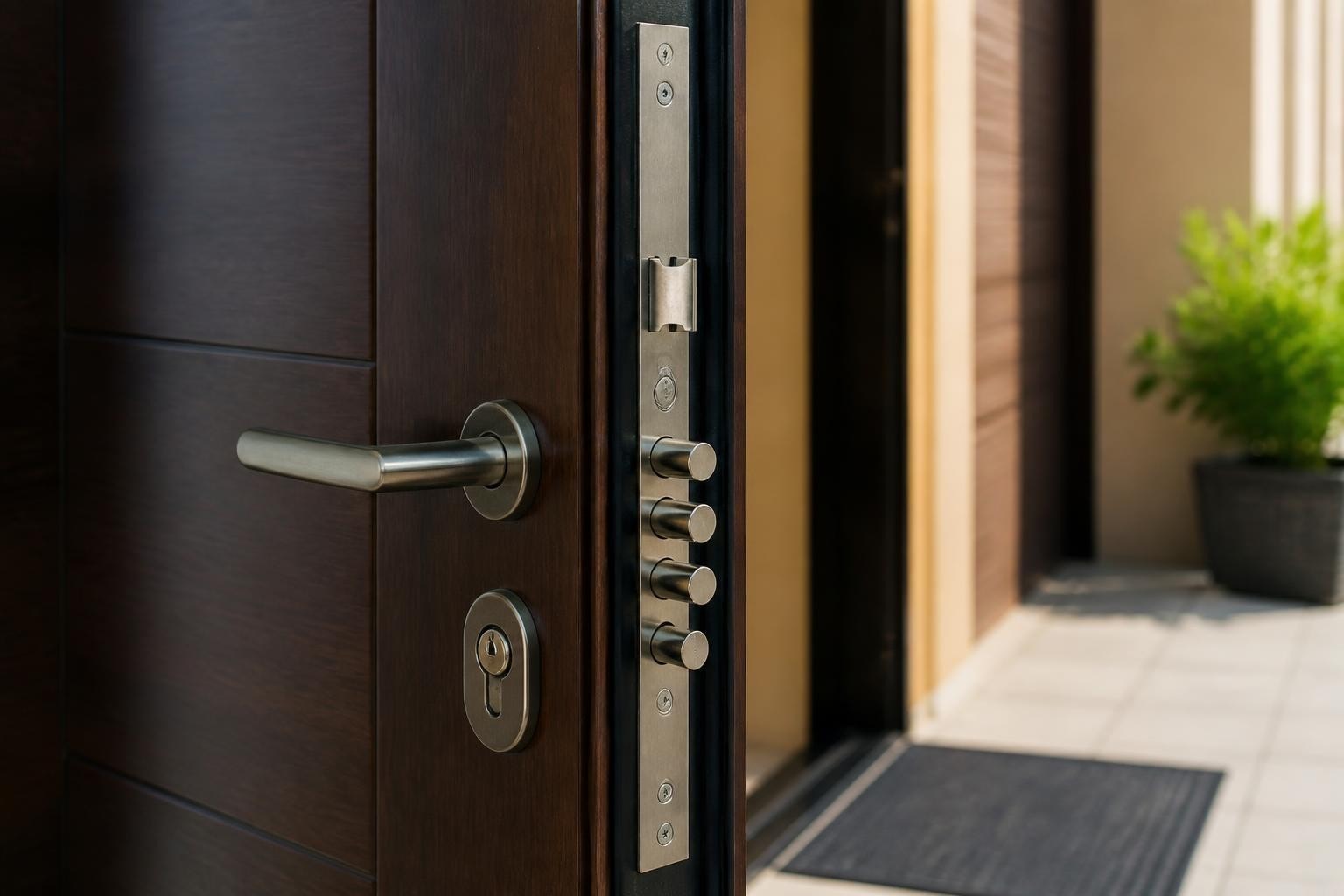
Your home's first line of defense against intruders begins at the threshold. House security doors have evolved from simple steel barriers into sophisticated systems that combine strength, technology, and design to protect families and property. In 2026, homeowners across South Africa and worldwide face increasingly sophisticated threats, making the choice of exterior door protection more critical than ever. Understanding what separates a true security door from standard entry options can mean the difference between deterring criminals and becoming another statistic.
The foundation of any effective security door lies in its construction materials and engineering. Modern house security doors typically feature steel, aluminum alloy, or composite construction designed to resist forced entry attempts that would quickly compromise standard residential doors.
Steel doors remain the gold standard for maximum protection. Heavy-gauge steel (16-gauge or thicker) provides exceptional resistance to kicking, prying, and impact attacks. The frame construction matters equally-a door is only as strong as its weakest component. Quality manufacturers reinforce the entire doorframe assembly with steel or hardened aluminum, extending protection beyond just the door panel itself.
Different core materials offer varying levels of security and insulation:
The door's thickness directly correlates with its resistance to attack. Standard residential doors measure 1¾ inches thick, while security-rated models often exceed 2 inches. This additional material creates more resistance against battering and provides space for reinforced lock mechanisms.
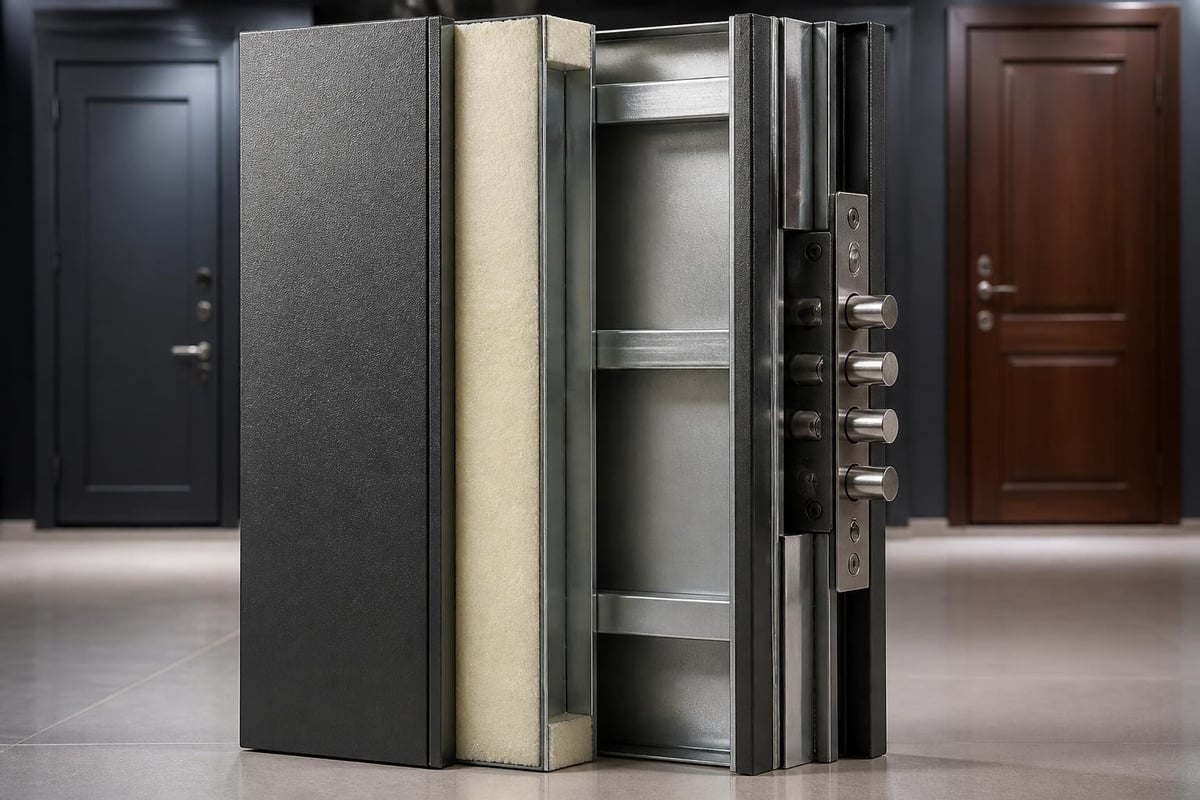
The locking mechanism transforms a reinforced door into a true security barrier. House security doors demand locking systems that match the door's structural strength, preventing the lock from becoming the failure point during an attack.
Multi-point locking systems represent the current standard for serious security installations. Unlike traditional single-bolt locks, these systems engage three to seven locking points simultaneously-top, middle, bottom, and sometimes horizontal points. This distribution of force makes the door exponentially more difficult to force open. According to locking configuration standards from UL, proper lock installation and certification ensure both security and safe egress during emergencies.
| Lock Type | Security Level | Typical Applications | Key Features |
|---|---|---|---|
| Multi-point deadbolt | Maximum | Primary entries, high-risk areas | 3-7 engagement points, hardened bolts |
| Smart lock integration | High | Tech-enabled homes | Remote access, activity logs, temporary codes |
| Reinforced single deadbolt | Medium-High | Secondary doors, budget installations | Grade 1 rating, 1-inch throw minimum |
| Biometric systems | Maximum | Executive protection, sensitive areas | Fingerprint/facial recognition, audit trails |
Modern installations increasingly incorporate smart lock technology without sacrificing physical security. Quality smart locks maintain Grade 1 ANSI/BHMA certification while adding remote monitoring, temporary access codes for service providers, and integration with whole-home security systems.
The strike plate-where the bolt engages the frame-deserves special attention. A standard strike plate with ½-inch screws fails easily under kick attacks. Security installations require heavy-duty strike plates with 3-inch screws anchored into wall studs, distributing force across a larger area and preventing the frame from splintering.
Third-party certification removes guesswork from security door selection. Multiple organizations test and rate doors based on their resistance to specific attack methods, providing objective benchmarks for comparison.
The British Standards Institution's PAS 024 certification evaluates doors against six attack methods: manual attack, bodily force, cutting, drilling, picking, and door furniture (handle/lock) attacks. Doors passing this rigorous protocol earn Secured by Design approval. The Secured by Design technical standards provide detailed specifications that have influenced security door design internationally.
SANS 1385 certification applies specifically to South African security installations, testing doors and frames as complete assemblies. This whole-system approach reflects real-world conditions better than testing components separately.
UL 752 ratings classify bullet resistance for extreme-security applications. While most residential installations don't require ballistic protection, high-risk properties or executive residences may specify Level 1-3 UL 752 doors.
Impact ratings from organizations like the Insurance Institute for Business & Home Safety (IBHS) measure storm and wind-debris resistance. In coastal regions or areas prone to severe weather, impact certification protects against both criminal and environmental threats.
Look beyond marketing claims. Legitimate certifications require independent testing laboratories to verify performance. Request certification documentation before purchase, and verify the certificate covers the complete door assembly-not just individual components.
Even the strongest security door fails if poorly installed. The installation process determines whether your investment delivers its rated protection or creates vulnerabilities that criminals can exploit.
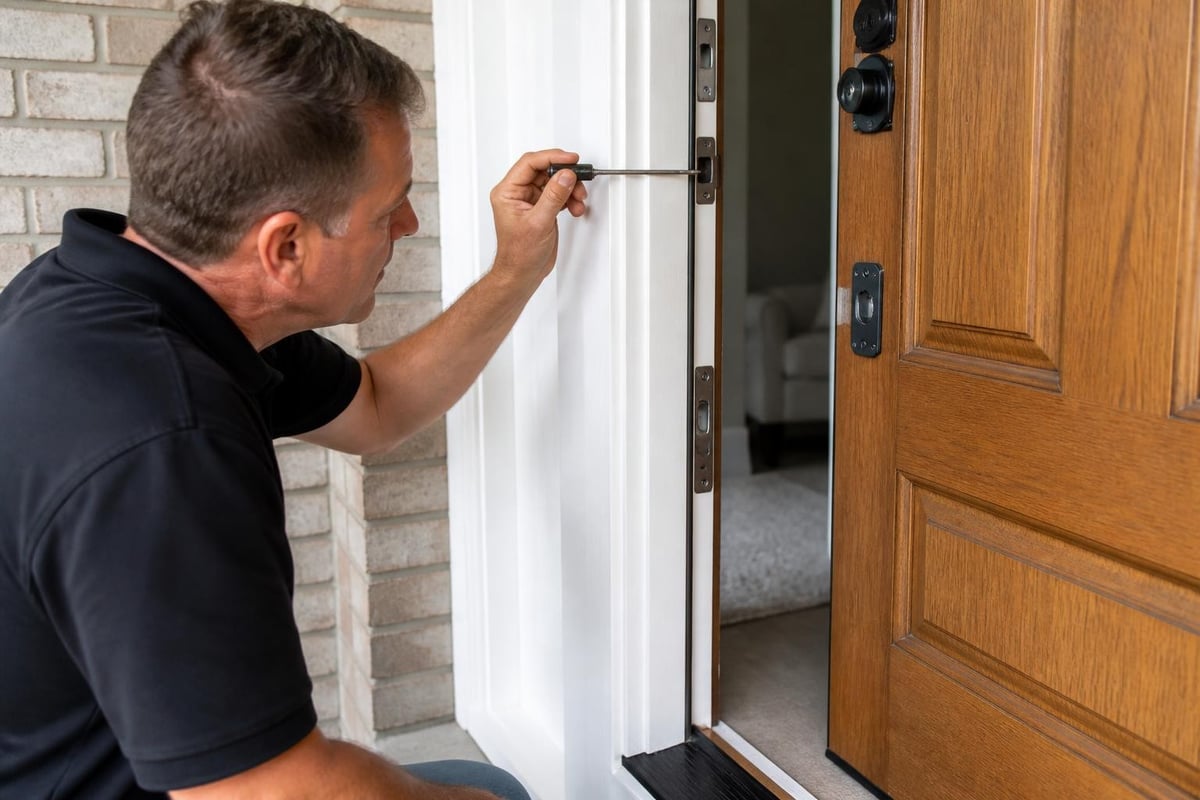
Professional installation begins with frame assessment. Existing doorframes rarely provide adequate anchoring for security doors. Installers should:
The gap between door and frame (the reveal) should measure consistently around all edges. Variations indicate poor fitting that may allow prying attacks or reduce lock effectiveness.
House security doors no longer force homeowners to choose between protection and curb appeal. Contemporary designs blend seamlessly with architectural styles while maintaining full security capabilities.
Decorative security screens layer over solid security doors, providing ventilation and visibility without compromising protection. These screens utilize hardened mesh or bar configurations tested to the same standards as the primary door. Homeowners enjoy natural light and airflow while the security barrier remains in place.
Material finishes have expanded dramatically. Powder-coated steel accepts virtually any color specification, matching existing trim or creating architectural contrast. Woodgrain finishes replicate traditional door aesthetics using photographic-quality printing on steel surfaces, delivering wood's appearance with steel's strength.
Glass panels present special considerations. Security glazing uses laminated or polycarbonate materials that resist shattering. Even when broken, laminated security glass maintains a barrier that prevents hand access to interior locks. Position glass panels strategically-away from lock mechanisms and at heights that limit reach-through access.
For properties requiring accessible design compliance, security doors must balance protection with usability requirements. Automatic operators, reduced opening force, and proper clearances ensure security installations don't create barriers for residents with mobility limitations.
Modern house security doors function as platforms for integrated security technology, extending protection beyond physical barriers into digital monitoring and control systems.
Video integration builds security cameras directly into door assemblies or coordinated sidelights. These systems capture visitor approaches, record package deliveries, and document attempted break-ins with tamper-resistant recording that survives even if the camera itself is damaged.
Smart doorbells coordinate with security doors, providing two-way communication and remote monitoring. Quality installations position cameras and intercoms to eliminate blind spots while maintaining weather protection.
Keyless entry systems eliminate the vulnerability of hidden spare keys while providing flexible access control:
These systems maintain mechanical backup locks for reliability during power failures or system malfunctions. The CISA personal security guidelines recommend layered approaches that combine physical barriers with electronic monitoring and neighborhood awareness.
South African climates demand security solutions that don't sacrifice comfort. House security doors can incorporate ventilation while maintaining protection through several proven approaches.
Security screen doors with hardened mesh provide airflow and insect protection behind a locked barrier. The primary security door remains open for ventilation while the screen layer prevents intrusion. High-quality security screens utilize stainless steel mesh strong enough to resist cutting and prying, with locking systems matching the main door's security level.
Perforated steel panels integrate ventilation directly into solid security doors. Strategic perforation patterns allow substantial airflow while maintaining structural integrity. The perforation size and pattern must be small enough to prevent tool insertion or visual compromise of interior spaces.
Climate-specific features include thermal breaks in steel doors to reduce heat transfer, weather sealing that maintains integrity across thousands of opening cycles, and corrosion-resistant finishes for coastal installations where salt air accelerates deterioration.
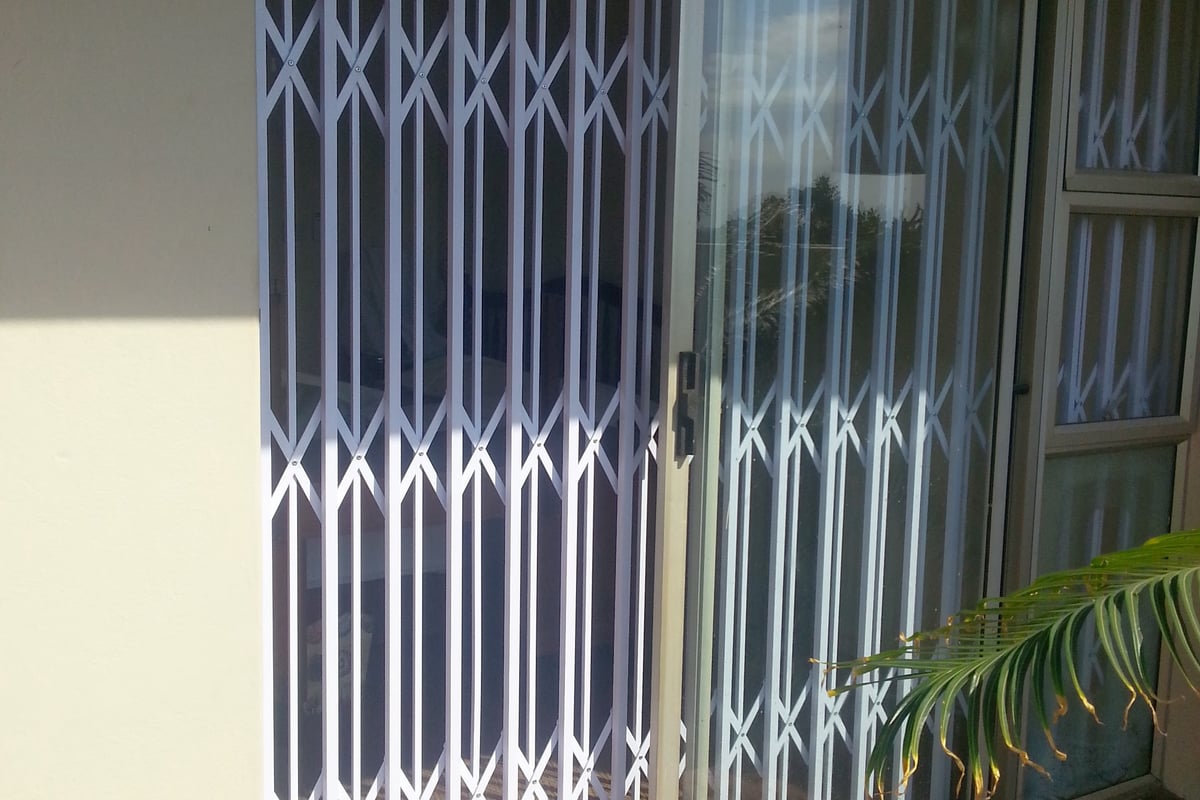
Properties dealing with wildlife intrusion-particularly in areas where monkeys target homes-benefit from specialized security solutions. Monkey-proof security gates extend protection beyond human threats, utilizing closely-spaced bars and tamper-resistant hardware that prevents dexterous primates from manipulating locks or creating entry points. These installations demonstrate how security needs vary based on environmental factors unique to each property.
House security doors represent significant investments that require regular maintenance to preserve both function and warranty coverage. Understanding maintenance requirements before purchase ensures long-term value.
Annual inspection schedules should verify:
Steel doors in coastal regions require more frequent inspection due to accelerated corrosion. Quality powder-coat finishes provide excellent protection, but any chips or scratches exposing base metal need immediate touch-up to prevent rust spread.
Lock mechanisms benefit from graphite-based lubricants applied semi-annually. Avoid oil-based products that attract dust and can gum up precision components. Multi-point locking systems require particular attention-all engagement points must operate smoothly and engage simultaneously for proper security.
| Maintenance Task | Frequency | DIY/Professional | Impact of Neglect |
|---|---|---|---|
| Lock lubrication | Every 6 months | DIY | Mechanism failure, key breakage |
| Hinge inspection/adjustment | Annually | DIY or Professional | Misalignment, lock engagement failure |
| Frame anchor verification | Every 2 years | Professional | Complete security failure under attack |
| Finish touch-up | As needed | DIY | Corrosion, reduced lifespan |
| Smart system updates | Quarterly | DIY | Security vulnerabilities, feature loss |
Manufacturers typically warrant security doors for 10-25 years depending on construction quality and finish. Warranty coverage often requires professional installation and documented maintenance. Keep installation certificates, maintenance records, and certification documentation for insurance and warranty claims.
House security doors range from R8,000 to R50,000+ depending on size, materials, certification level, and features. Understanding cost drivers helps align budgets with security requirements.
Material selection creates the largest price variation. Basic steel doors with standard locks occupy the budget category, while multi-point locking systems, smart integration, and premium finishes increase costs substantially. However, the incremental cost of upgrading from basic to intermediate security often represents exceptional value-the security improvement dramatically exceeds the percentage price increase.
Installation complexity affects total project cost. Simple door replacement in standard frames costs significantly less than full security frame installation with reinforcement. Properties with non-standard dimensions, historical architecture, or accessibility requirements face higher installation expenses.
Consider long-term value beyond initial price. According to Consumer Reports door buying research, quality security doors often outlast three or more standard door replacements while preventing property losses that dwarf their initial cost. Insurance premiums may decrease with certified security installations, and property values increase in security-conscious markets.
The Bureau of Justice Statistics reports show that visible security measures deter most burglars before they attempt entry. From this perspective, house security doors provide value even when never tested by an actual attack-their deterrent effect prevents crimes rather than simply resisting them.
Complete home security extends beyond the front door. House security doors function most effectively within a comprehensive security strategy addressing all potential entry points.
Secondary doors including back entries, garage access doors, and basement entries require protection proportional to their vulnerability. Criminals often target these less-visible locations after finding front doors too difficult. Applying security standards to all pedestrian entries eliminates weak points that undermine primary door investments.
Landscaping and exterior lighting complement door security. The crime prevention approach known as CPTED (Crime Prevention Through Environmental Design) uses environmental factors to reduce opportunity. Strategic lighting eliminates hiding spots near entries, while thorny vegetation beneath windows discourages approach. The NIST security terminology standards help clarify how environmental factors and physical barriers work together in comprehensive protection.
Window security deserves equal attention to door protection. Criminals bypass secure doors by breaking adjacent windows and reaching through to operate interior locks. Window security solutions like reinforced burglar bars or impact-resistant glazing close these alternative entry routes.
South African homeowners face unique security challenges that influence house security door specifications. High property-crime rates in certain regions justify investment in premium security solutions, while building codes and insurance requirements create baseline standards.
Township and high-density residential areas often require maximum-security specifications due to elevated risk levels. Properties in these locations benefit from visible security measures that deter opportunistic criminals while providing genuine protection against determined attacks.
Coastal installations face accelerated corrosion from salt air. Stainless steel components, marine-grade powder coating, and regular maintenance schedules preserve door function and appearance in these challenging environments.
Load-shedding impacts electronically operated systems, making backup power and mechanical override features essential for South African installations. Quality smart locks maintain basic keyless operation during power failures, while automated systems include battery backup sufficient for extended outages.
Insurance companies increasingly offer premium reductions for certified security installations. Documenting door certifications, professional installation, and maintenance records supports these insurance negotiations and may be required for claims approval after break-in attempts.
Protecting your home starts with understanding that house security doors serve as both physical barriers and psychological deterrents within a comprehensive security approach. The right door combines certified construction, professional installation, and ongoing maintenance to deliver decades of reliable protection. Whether you need maximum-security solutions for high-risk properties or balanced protection that maintains your home's aesthetic appeal, Limax Security Specialists provides expert consultation and installation services throughout South Africa, helping you select and install security solutions tailored to your specific requirements and environment.


