
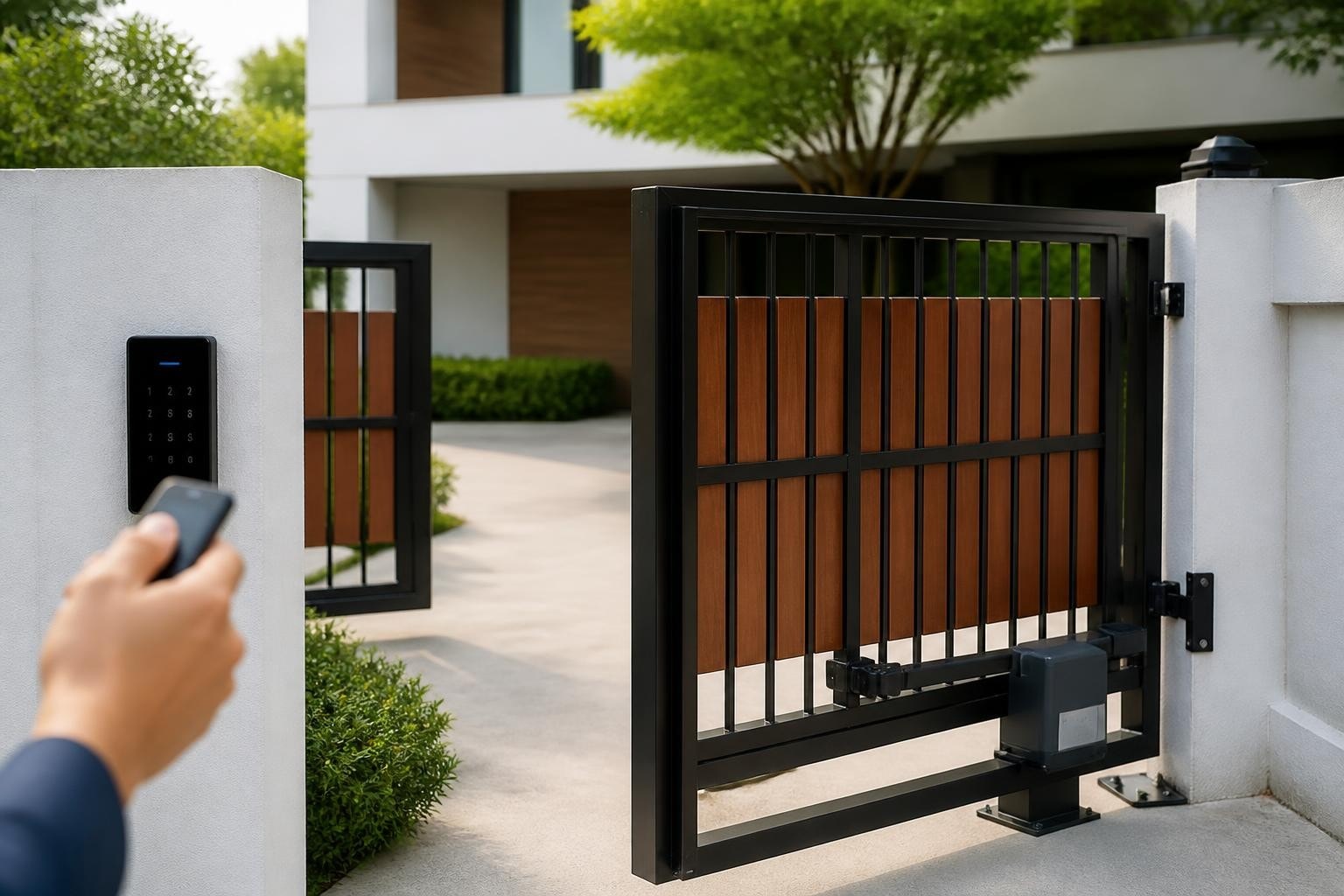
A swing gate door represents one of the most versatile and widely used access control solutions for residential, commercial, and industrial properties. Unlike sliding gates that require parallel track space, a swing gate door operates on hinges, moving inward or outward to permit or restrict entry. This fundamental mechanism offers distinct advantages in space-constrained installations while providing robust security and aesthetic appeal. Understanding the design principles, safety regulations, and material considerations for swing gate door systems enables property owners and security professionals to select and implement solutions that balance functionality, compliance, and long-term durability.
The operational simplicity of a swing gate door belies the engineering precision required for reliable performance. Each installation must account for gate leaf weight, hinge placement, latch mechanisms, and clearance zones. Single-leaf designs swing from one side, requiring clear space equal to the gate width plus safety margins. Double-leaf configurations split the opening between two gate panels, reducing individual swing radius while maintaining full aperture width.
Proper swing gate door installation begins with robust post foundations. Gate posts must resist lateral forces from wind loads, operational stress, and potential impact events. The ASCE 7 guidelines provide wind load calculations that determine post sizing and foundation depth based on regional exposure categories and gate surface area.
Critical structural elements include:
Material selection directly impacts long-term performance. Steel provides maximum strength for high-security applications but requires corrosion protection through galvanizing or powder coating. Aluminum offers excellent corrosion resistance with reduced weight, though thickness and alloy grade must compensate for lower tensile strength. Wrought iron delivers traditional aesthetics but demands ongoing maintenance in humid climates.
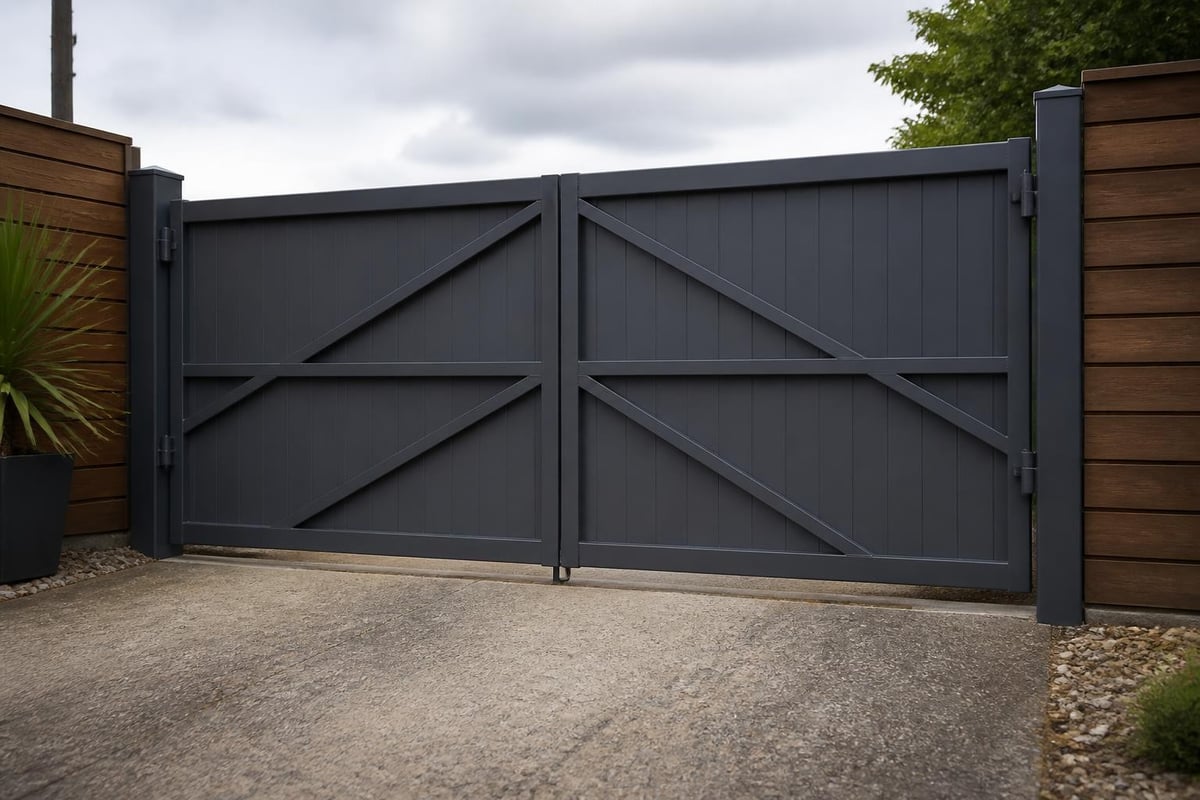
Manual swing gate door systems rely on user effort to open and close gate leaves. This approach suits low-traffic residential applications where simplicity and cost control take priority. Self-closing hinges with adjustable tension maintain security by automatically returning gates to the closed position, while mechanical latches prevent unauthorized access.
Automated systems integrate electric operators that provide controlled opening and closing cycles. Linear actuators mounted to gate posts and leaves deliver precise movement with adjustable speed and force limits. Articulated arm operators accommodate varying hinge positions and gate geometries. Underground operators conceal mechanical components below ground level, preserving clean aesthetics while protecting equipment from weather exposure and tampering.
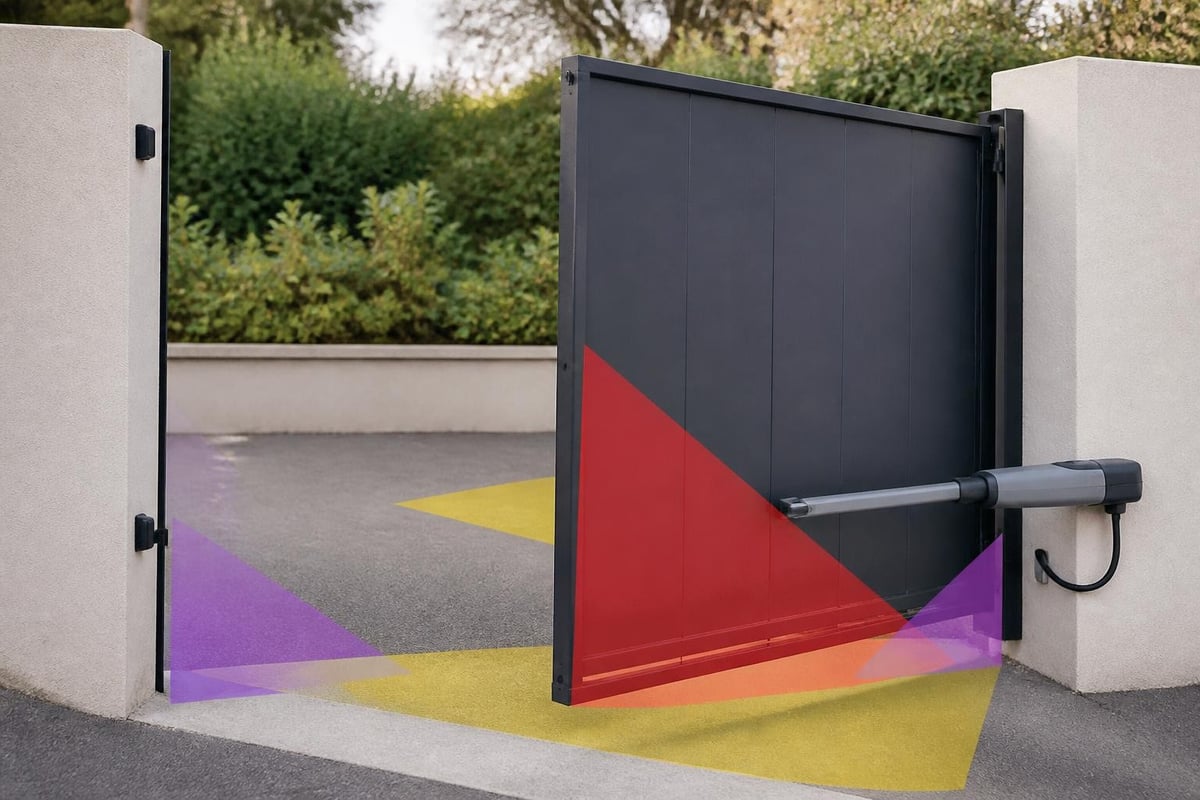
Swing gate door installations must satisfy multiple safety frameworks that protect users from entrapment, crushing, and impact hazards. The UL 325 standard establishes requirements for gate operators, including force limitation, obstruction detection, and entrapment protection zones. Compliance verification through third-party testing ensures operators meet defined safety thresholds before field deployment.
Powered swing gate door systems create dynamic pinch points at hinges, latches, and along the leading edge during closing cycles. Primary entrapment zones form where gate leaves meet posts or adjacent structures. Secondary entrapment zones exist along the entire swing arc where moving gates could trap pedestrians against fixed objects or adjacent gate leaves.
Safety measures include:
The HSE guidance on powered gates emphasizes risk assessment methodologies that identify site-specific hazards and implement layered protection strategies appropriate to traffic patterns and user populations.
Properties serving public accommodation must ensure swing gate door installations comply with accessibility standards. The ADA Standards for Accessible Design specify maximum opening forces, minimum clear widths, and maneuvering clearances that enable wheelchair users to navigate gate passages independently.
| ADA Requirement | Specification | Application to Swing Gates |
|---|---|---|
| Opening Force | ≤5 lbf (interior), ≤15 lbf (exterior) | Requires powered operators or counterbalanced hinges |
| Clear Width | Minimum 32 inches | Gate leaf design must account for hinge projection |
| Maneuvering Clearance | 18-60 inches depending on approach | Post placement and swing direction affect compliance |
| Threshold Height | ≤0.5 inches | Ground-level track systems or beveled transitions |
The U.S. Access Board guidance provides detailed technical specifications that inform compliant swing gate door design, particularly regarding approach angles, latch operation, and closing speed for automatic operators.
Climate conditions, security requirements, and aesthetic preferences converge in swing gate door material selection. Each material system presents distinct performance characteristics that influence total cost of ownership beyond initial installation expenses.
Hot-rolled steel delivers maximum strength-to-cost ratio for swing gate door fabrication. Tube steel frames accept infill panels ranging from sheet metal to ornamental pickets. Galvanized coatings provide baseline corrosion protection, while powder-coat finishes add color options and enhanced weather resistance. Steel gates accommodate heavy-duty hinges and multi-point locking systems essential for high-security installations.
Advantages:
Considerations:
Aluminum swing gate door construction reduces weight by approximately 60% compared to equivalent steel designs. This weight advantage decreases structural demands on posts and hinges while simplifying installation procedures. Marine-grade alloys resist corrosion without protective coatings, making aluminum ideal for coastal environments and high-humidity climates.
Modern aluminum extrusion techniques create profiles mimicking traditional wrought iron aesthetics. Powder-coat finishes bond directly to aluminum surfaces through thermal curing processes that resist peeling and UV degradation. The material's inherent corrosion resistance eliminates ongoing painting requirements, reducing lifecycle maintenance costs.
Emerging materials including aluminum-wood composites, vinyl-reinforced structures, and synthetic wood alternatives expand swing gate door design options. These systems prioritize aesthetic appeal and low maintenance over maximum security performance. Composite materials suit residential applications where neighborhood covenants restrict industrial appearances while homeowners seek reduced upkeep compared to natural wood gates.
Contemporary swing gate door installations incorporate electronic access control that manages entry authorization, tracks usage patterns, and integrates with broader security infrastructures. Access control systems transform gates from passive barriers into intelligent checkpoints that authenticate users before permitting passage.
Proximity card readers mounted at user height communicate with embedded chips in key cards or fobs. When authorized credentials approach the reader, the system triggers gate operator activation. This contactless approach suits commercial properties with moderate traffic volumes and defined user populations requiring accountability.
Keypad systems require users to enter numeric codes that the controller validates against programmed sequences. Code-based access eliminates physical credential distribution but requires regular code rotation to maintain security. Backlit keypads with weather-resistant construction withstand outdoor installation environments.
Biometric authentication using fingerprint or facial recognition provides highest security levels by verifying individual physical characteristics rather than transferable credentials. These systems prevent unauthorized credential sharing while creating detailed audit trails of gate access events.
Cloud-connected access control platforms enable property managers to configure swing gate door permissions, review access logs, and receive real-time alerts from any internet-connected device. Remote management eliminates site visits for routine credential updates while providing immediate notification of forced entry attempts or system malfunctions.
Video verification systems integrate cameras with access control to capture imagery of each gate activation. This visual record supplements electronic logs with photographic evidence useful for security investigations and liability documentation. License plate recognition cameras automate vehicle identification, triggering gate opening for registered vehicles without driver intervention.
For properties seeking comprehensive security without visual obstruction, solutions like Monkey proof gates combine physical barrier strength with specialized design features that prevent climbing and unauthorized access while maintaining visibility and aesthetic appeal.
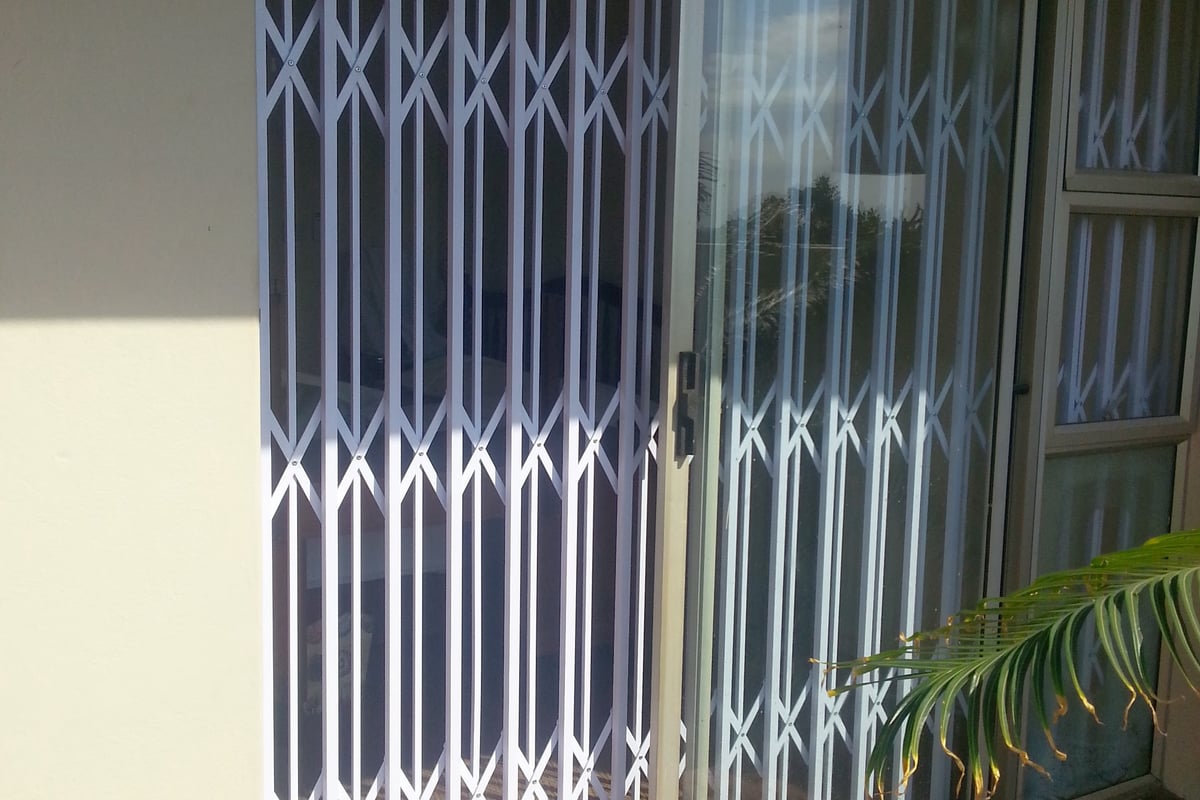
Professional swing gate door installation requires careful site assessment, precise measurements, and adherence to manufacturer specifications. Even minor installation errors compound over operational cycles, leading to premature wear, binding mechanisms, or safety system failures.
Grade verification ensures swing paths remain clear of ground obstructions throughout the opening arc. Sloped terrain may require grading work or strategic hinge placement that accounts for elevation changes. Underground utility location prevents costly damage to electrical, water, or communication lines during post excavation.
Property line surveys confirm gate placement within legal boundaries and satisfy setback requirements established by local zoning ordinances. Encroachment onto public rights-of-way or neighboring properties creates liability exposure and potential removal mandates.
| Issue | Cause | Prevention Strategy |
|---|---|---|
| Gate sagging | Undersized hinges or inadequate post strength | Engineer hinge load capacity with 200% safety margin; specify steel posts for gates exceeding 200 lbs |
| Binding during operation | Misaligned posts or settling foundations | Use laser levels during installation; extend footings below frost line; cure concrete minimum 7 days |
| Inconsistent latching | Post movement or thermal expansion | Install adjustable latch receivers; account for 1/8-inch expansion per 10 feet of gate width |
| Corrosion at ground contact | Moisture wicking into hollow posts | Seal post bottoms; install drainage weep holes; elevate gate bottoms minimum 2 inches above grade |
Professional installers reference DASMA gate system guidance for technical specifications addressing structural design, operator sizing, and safety device placement specific to swing gate door configurations.
Routine maintenance extends swing gate door operational life while preventing safety system degradation. Maintenance intervals vary based on usage frequency, environmental exposure, and component quality, but established schedules prevent minor issues from escalating into costly failures.
Visual examination identifies obvious damage, corrosion, or component wear. Gate frames should maintain square geometry without sagging or twisting. Hinge pins remain properly seated with retaining fasteners secure. Paint or coating surfaces show no bubbling, cracking, or delamination indicating moisture intrusion.
Operational testing verifies smooth movement throughout the full swing arc. Gates should open and close without binding, unusual noise, or excessive force requirements. Automated systems complete full cycles within manufacturer-specified timeframes. Safety sensors trigger appropriate responses when test obstructions enter monitored zones.
Lubrication service applies appropriate products to moving components. Hinges receive lithium-based grease that maintains viscosity across temperature ranges. Latch mechanisms benefit from dry lubricants that don't attract dust accumulation. Operator gears and bearings follow manufacturer lubrication schedules using specified products.
Comprehensive professional maintenance includes component replacement for wear items, electrical system testing, and safety certification. Technicians verify force limitation settings comply with current standards, test emergency release mechanisms, and inspect underground wiring for damage from moisture or rodents.
Documentation of maintenance activities creates service records valuable for warranty claims and liability protection. Photographic evidence of component conditions supports replacement recommendations while establishing compliance with duty-of-care responsibilities for property owners.
Beyond basic access control, swing gate door systems accommodate multiple security layers that deter intrusion attempts and delay forced entry long enough for security response.
Spiked or rounded top rails prevent intruders from gaining handholds or footholds during climbing attempts. Decorative finials serve dual purposes as architectural details and functional deterrents. Spacing between vertical pickets or bars must not exceed 4 inches to prevent body passage, following CPSC safety recommendations originally developed for pool enclosures but applicable to general gate safety.
Continuous mesh or solid panels eliminate climbing purchase points entirely. Expanded metal, perforated sheet, or welded wire mesh creates visual barriers while maintaining airflow. Security-rated mesh products resist cutting attempts using common hand tools, with independent testing validating performance claims.
High-security swing gate door installations incorporate bollards, ground loops, or reinforced foundation structures that prevent vehicle ram attacks. Anti-ram bollards placed 4-6 feet inside gate perimeters create standoff distances that prevent vehicles from achieving speeds necessary for effective ramming. Bollards rated for specific impact velocities follow ASTM crash test standards that quantify penetration resistance.
Reinforced gate frames using heavy-wall tubing or doubled structural members distribute impact forces across larger areas, reducing likelihood of catastrophic failure. Continuous welds rather than intermittent tack welds prevent joint separation during impact events. Some installations incorporate sacrificial shear pins that fail under extreme loads, protecting operator mechanisms and allowing gate replacement without complete system rebuilding.
Swing gate door systems function as components within comprehensive perimeter security designs. Fence integration ensures no gaps exist between gate frames and adjacent fencing that could permit unauthorized entry. Overlapping fence panels or wing walls extend beyond gate edges, eliminating bypass opportunities.
Lighting systems illuminate approach areas and gate mechanisms, eliminating concealment shadows that facilitate tampering attempts. Motion-activated lighting conserves energy while startling potential intruders. Coordinated lighting and camera coverage creates overlapping surveillance zones with no blind spots.
Swing gate door project budgets must account for equipment, installation, and ongoing operational expenses. Initial cost variation across product categories reflects material differences, automation complexity, and security feature integration.
Basic manual gates for residential applications typically range from $800-2,500 installed, depending on materials and size. These systems provide fundamental security and property definition without electronic complexity. DIY installation reduces costs further but requires proper tools and technical capability to ensure safe, compliant results.
Mid-range automated systems incorporating electric operators, keypad access, and basic safety features span $3,500-8,000 installed. This category suits most residential and light commercial applications requiring convenient operation and moderate security levels. Professional installation ensures proper safety device configuration and regulatory compliance.
High-security commercial installations with advanced access control, anti-ram features, and integrated surveillance capabilities range from $10,000-30,000+ depending on span width, security rating, and system complexity. These investments protect high-value assets or satisfy security mandates for critical infrastructure and sensitive facilities.
Beyond acquisition costs, swing gate door systems incur operating expenses that impact long-term value:
Proper material selection and quality component specification reduce lifecycle costs despite higher initial investment. A well-engineered aluminum or properly maintained steel swing gate door delivers 20-30 years of service, while budget alternatives may require replacement within 10-15 years.
Swing gate door systems deliver versatile security and access control when properly designed, installed, and maintained according to established safety standards and site-specific requirements. Whether you're protecting a residential property, commercial facility, or industrial complex in South Africa, Limax Security Specialists provides expert consultation, professional installation, and comprehensive security solutions tailored to your specific needs. Contact Limax Security Specialists today to discuss how the right swing gate door system can enhance your property's security while maintaining aesthetic appeal and regulatory compliance.


