
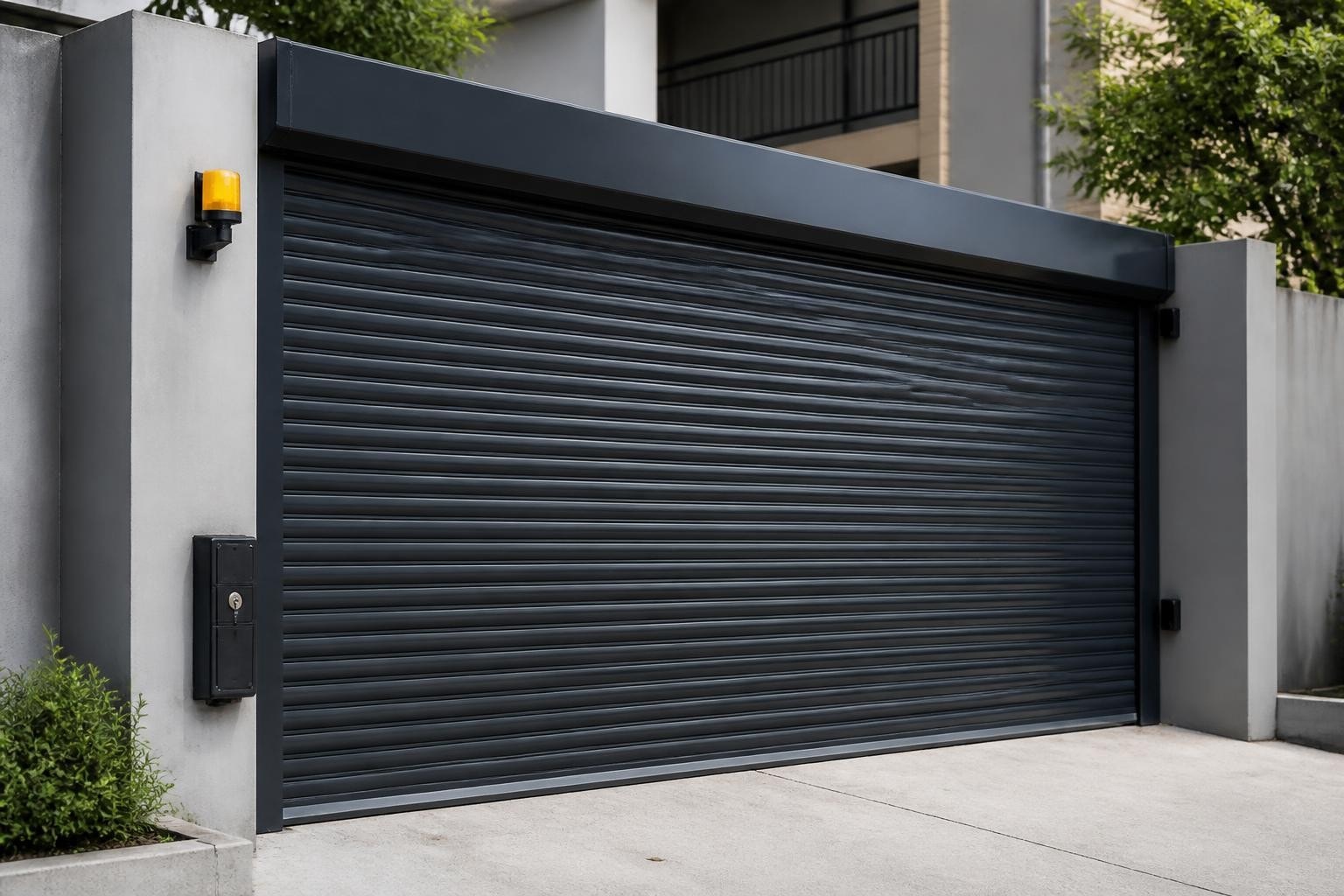
Selecting the right physical security barrier for your property requires balancing protection, operational efficiency, and regulatory compliance. A roller security gate offers a space-efficient solution that combines robust intrusion resistance with automated convenience, making it a popular choice for warehouses, retail storefronts, industrial facilities, and high-security residential applications. Understanding the technical specifications, safety standards, and performance criteria that govern these systems ensures you invest in a solution that meets both your immediate security needs and long-term operational requirements.
Modern roller security gate systems consist of interlocking horizontal slats that coil around a barrel assembly housed in a protective hood. The slats-typically fabricated from extruded aluminum, galvanized steel, or stainless steel-provide varying levels of security based on their profile, gauge, and interconnection method.
The barrel assembly serves as the winding mechanism, with the gate curtain rolling up around it when opened. Motor-driven systems incorporate this barrel with a tubular motor mounted inside, while manual gates use a spring-balance mechanism or direct crank operation. The quality of the barrel and its mounting brackets directly impacts long-term operational reliability.
Key material considerations include:
Guide channels mounted to the opening's sides keep the curtain aligned during operation. These channels must be securely anchored to the structural frame, as they bear the lateral loads during forced-entry attempts. The bottom bar-the weighted rail at the curtain's base-provides tension and incorporates safety edges in motorized installations.
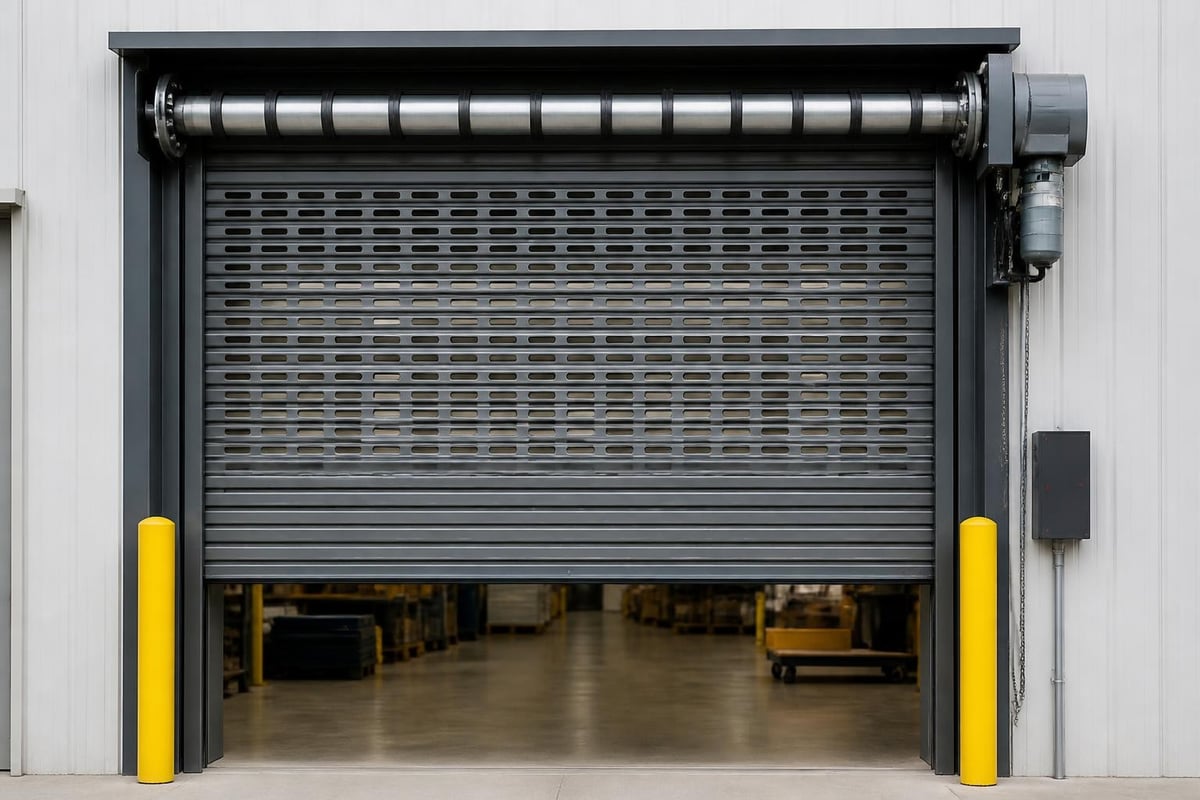
Manual operation remains viable for smaller openings or locations with infrequent access needs. Chain-hoist mechanisms allow one person to raise curtains up to approximately 100 square feet, though this requires physical presence and effort with each operation.
Motorized systems dominate commercial and high-security applications. Tubular motors housed within the barrel assembly provide compact, weather-protected operation. These systems integrate with access control platforms, allowing authorization via keypads, card readers, biometric scanners, or remote controls.
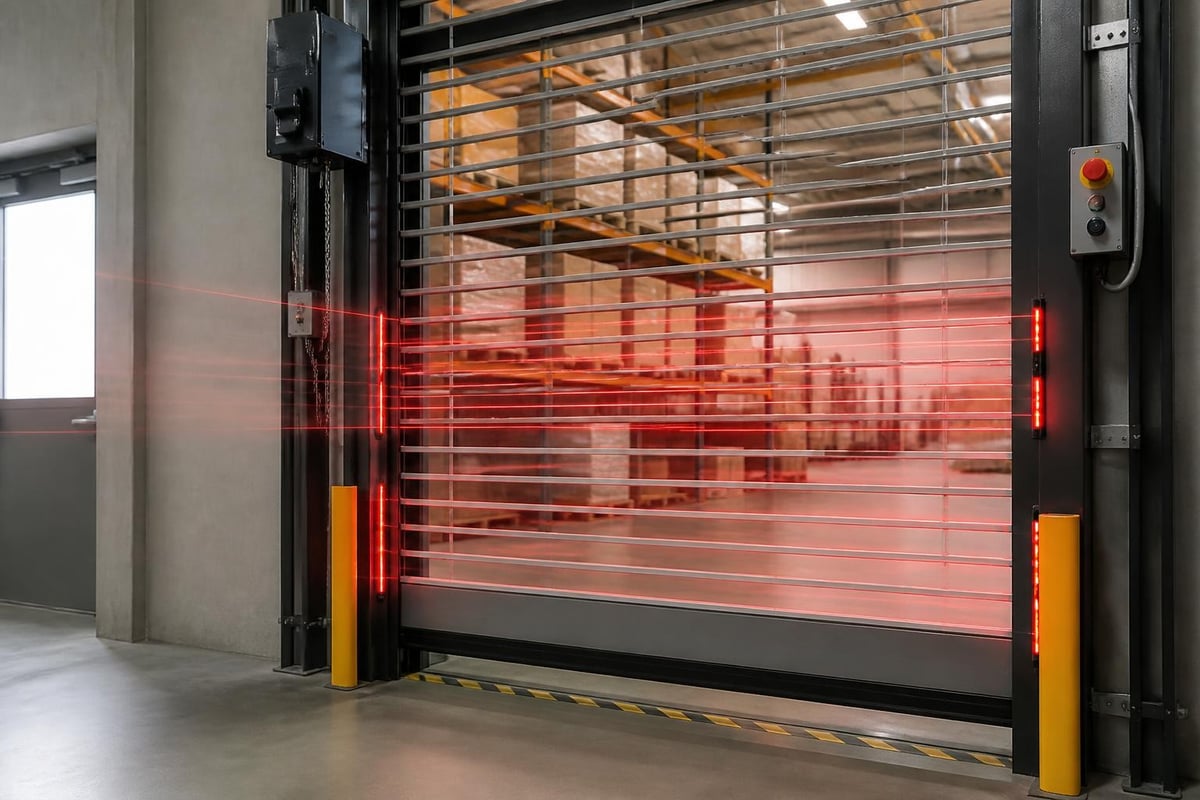
Control logic must incorporate safety features mandated by UL 325, the standard covering entrapment protection for powered gates and doors. Photoelectric sensors detect obstructions in the gate's path, while pressure-sensitive edges reverse direction upon contact. These features prevent injury and equipment damage during automated operation.
Specifying a roller security gate requires understanding the applicable product standards and performance classifications. European markets reference BS EN 13241, which establishes comprehensive requirements for industrial, commercial, and garage doors including roller shutters. This standard addresses safety, performance testing, CE marking, and essential health and safety requirements.
Security performance is quantified through standardized attack testing. Gates are subjected to various intrusion methods including prying, impact, cutting, and sustained force application. Test duration and tool categories determine the classification level.
| Security Class | Typical Application | Attack Resistance | Test Duration |
|---|---|---|---|
| Class 1-2 | Low-risk retail, storage | Basic tools | 3-5 minutes |
| Class 3-4 | Standard commercial, warehouses | Hand tools, leverage | 5-15 minutes |
| Class 5-6 | High-value assets, critical infrastructure | Power tools, sustained attack | 15-30+ minutes |
Material thickness, slat interconnection design, and guide channel security significantly influence test performance. A roller security gate rated for higher security classes typically incorporates reinforced slats, anti-lift devices, and hardened locking mechanisms.
Installations in exposed locations must withstand environmental loads without operational failure or structural damage. Wind-load ratings specify the maximum sustained and gust pressures the curtain can resist when closed. This becomes critical for large industrial doors and coastal installations.
Engineering calculations account for the curtain's surface area, slat profile, guide channel strength, and anchorage capacity. Undersized components lead to deflection, binding, or catastrophic failure during storm events. Proper specification requires site-specific wind data and structural analysis.
Operating a motorized roller security gate introduces mechanical hazards that require systematic risk mitigation. OSHA regulations covering mechanical power transmission apply to commercial and industrial installations, establishing requirements for guarding, maintenance access, and operator training.
The primary safety concern involves personnel or vehicles being struck by or trapped under a closing curtain. Modern installations incorporate multiple protection layers:
CIBSE engineering guidance on automatic doors and gates provides practical recommendations for designing safe installations. This includes proper sensor placement, control panel positioning, warning signage, and maintenance protocols that preserve safety function over the equipment's service life.
When a roller security gate protects a building's primary entrance or egress path, fire and life-safety codes impose additional requirements. Gates cannot obstruct required exit routes during building occupancy unless specific conditions are met.
NFPA guidance on life safety and door systems addresses scenarios where security barriers interact with egress requirements. Solutions include:
Federal facilities reference additional criteria for entrance controls and perimeter barriers, as detailed in GSA design guidance for public buildings. These standards establish layered security approaches while maintaining occupant safety.
Choosing the appropriate roller security gate specification begins with threat assessment and operational analysis. The barrier must address realistic risks without imposing unnecessary operational burden or cost.
FEMA’s risk management guidance provides frameworks for evaluating facility vulnerabilities and selecting appropriate physical security measures. This process examines:
A warehouse storing commodity goods requires different protection than a facility housing high-value electronics or controlled substances. The roller security gate specification should match the analyzed risk level rather than defaulting to maximum-security solutions that may be operationally impractical.
Daily operational patterns influence both the gate configuration and automation level. High-traffic facilities benefit from faster motor speeds, though this increases wear and maintenance needs. Environments with frequent access by different personnel justify sophisticated access control integration.
Site-specific factors affecting selection:
Manual operation remains appropriate for residential garages, storage units, and infrequently accessed service entrances. The reduced initial cost and elimination of electrical requirements offset the operational inconvenience for low-frequency use.
A roller security gate functions most effectively as one component within a layered security strategy. Integration with electronic security systems enables coordinated protection and centralized monitoring.
Modern installations link gate operation to access control platforms that verify user authorization before permitting entry. This creates an audit trail of all access events while restricting operation to approved personnel.
Common integration approaches include:
| Method | Security Level | Typical Application | Key Features |
|---|---|---|---|
| Keypad/PIN | Basic | Small businesses, storage | Shareable codes, simple installation |
| Proximity card | Medium | Office buildings, warehouses | Individual credentials, deactivation capability |
| Biometric | High | Data centers, pharmaceutical | Non-transferable, highest assurance |
| License plate recognition | Vehicle-specific | Parking structures, logistics | Automated truck access, delivery tracking |
Integration protocols like Wiegand, OSDP, or IP-based systems enable the gate controller to communicate with enterprise security management platforms. This allows security personnel to remotely open gates during emergencies, review access logs, and receive alerts for forced-entry attempts.
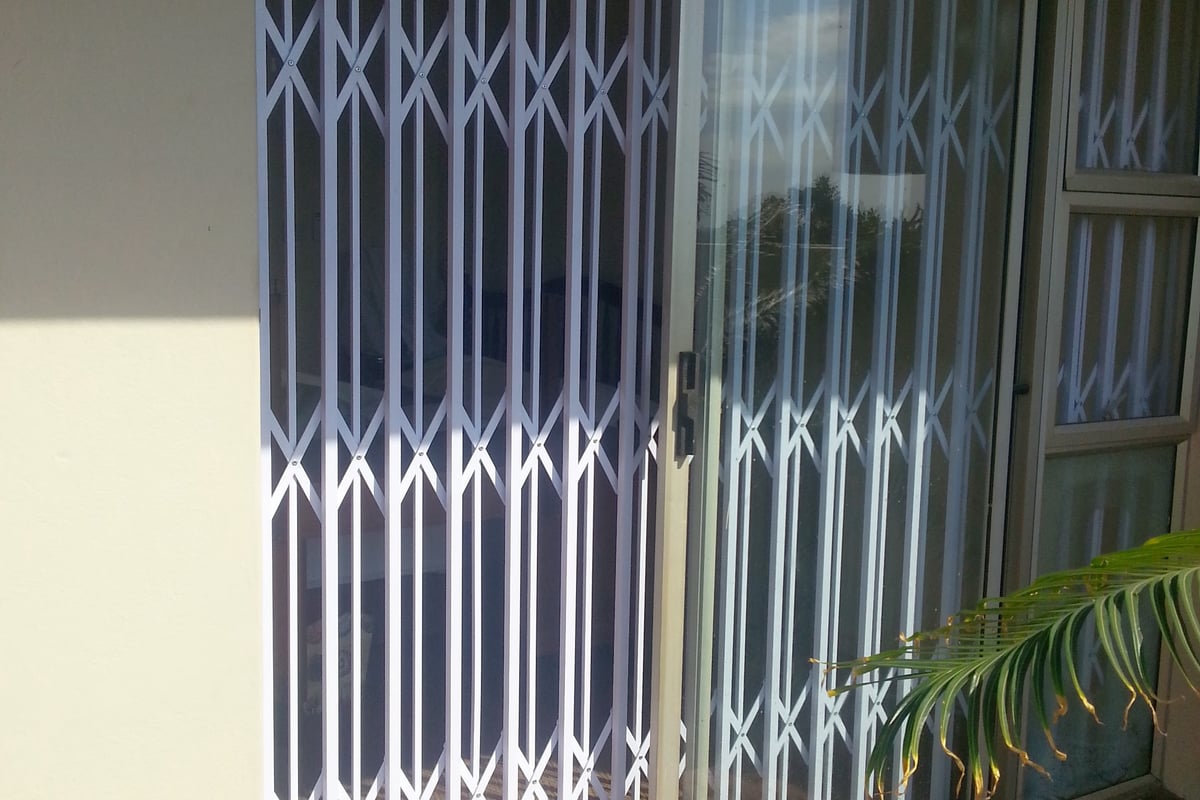
For properties requiring protection from both human intruders and wildlife, specialized solutions address unique threats. Some installations incorporate design features that prevent climbing or reaching through the curtain, offering protection similar to monkey-proof security gates that secure properties in areas with persistent animal intrusion challenges. These adaptations maintain security effectiveness while addressing location-specific vulnerabilities.
Coordinating gate operation with video surveillance creates visual verification of access events and provides forensic evidence following security incidents. Cameras positioned to capture approaching vehicles and personnel enhance access control effectiveness.
Intrusion detection sensors-including vibration sensors, magnetic contacts, and beam interruption devices-alert security personnel to forced-entry attempts. When integrated with the gate's control system, these sensors can trigger:
Sustained performance and safety function require preventive maintenance programs tailored to the installation's operational intensity and environmental exposure. Neglected systems experience accelerated wear, safety-system degradation, and unexpected failures.
Manufacturer recommendations typically specify quarterly inspections for commercial installations with daily operation. Critical maintenance tasks include:
Annual comprehensive servicing should include motor inspection, control board diagnostics, and full operational testing under various load conditions. Documentation of maintenance activities supports warranty compliance and demonstrates due diligence for liability purposes.
Even properly maintained systems require component replacement as wear limits accumulate. Tubular motors typically achieve 50,000 to 100,000 operational cycles before requiring replacement or rebuild. Curtain life varies based on material, operational frequency, and environmental factors, ranging from 10 to 25 years.
Typical component service intervals:
Proactive replacement before catastrophic failure prevents safety incidents and minimizes operational disruption. Maintaining spare parts inventory for critical components reduces downtime when failures occur.
Proper installation establishes the foundation for reliable operation and long service life. Shortcuts during installation create persistent problems that compromise both performance and safety.
The guide channels and header assembly must be anchored to structural members capable of resisting both operational loads and forced-entry attempts. Inadequate anchorage leads to deflection that causes binding, excessive wear, and potential security breaches.
Professional installations verify substrate strength before selecting fasteners. Hollow masonry walls may require through-bolting to structural backup, while steel-frame buildings need appropriate beam attachments. The header must be level and the guide channels plumb and parallel to prevent uneven slat wear.
Motorized installations require compliant electrical work meeting national and local codes. Dedicated circuits prevent nuisance tripping, while proper conduit installation protects wiring from physical damage. Control panels should be positioned for convenient operator access while remaining secure from tampering.
Ground-fault protection and appropriate wire sizing for motor loads prevent electrical hazards. Low-voltage control wiring must maintain separation from line-voltage conductors to prevent interference and safety issues.
Common installation errors to avoid:
Emerging technologies continue to enhance roller security gate functionality, security, and integration capabilities. These advancements address evolving threat landscapes and operational requirements.
IoT-enabled gate controllers provide remote monitoring and control through smartphone applications and web interfaces. Facility managers receive real-time status updates, operational alerts, and can grant temporary access to contractors without physical presence.
Cloud-based management platforms aggregate data from multiple locations, enabling enterprise-wide security oversight. Analytics identify usage patterns, maintenance needs, and security anomalies that warrant investigation.
Materials research continues to produce stronger, lighter curtain options. Advanced aluminum alloys offer improved strength-to-weight ratios, while composite materials promise enhanced corrosion resistance and impact absorption. Some manufacturers now offer ballistic-rated slat profiles for extreme-threat environments.
Locking mechanisms have evolved beyond traditional slide bolts to include motorized multi-point locks that engage automatically when the gate reaches the closed position. These systems distribute resistance across multiple points, significantly increasing forced-entry difficulty.
Implementing effective perimeter security requires understanding the technical specifications, safety requirements, and operational considerations that define roller security gate performance. From material selection and certification compliance to integration with comprehensive security systems, each decision impacts both immediate effectiveness and long-term value. Whether protecting commercial facilities, industrial operations, or high-security residential properties, Limax Security Specialists combines technical expertise with quality installations that deliver reliable protection tailored to South African security challenges. Contact our team for a comprehensive assessment and specification recommendation that matches your specific requirements.


