
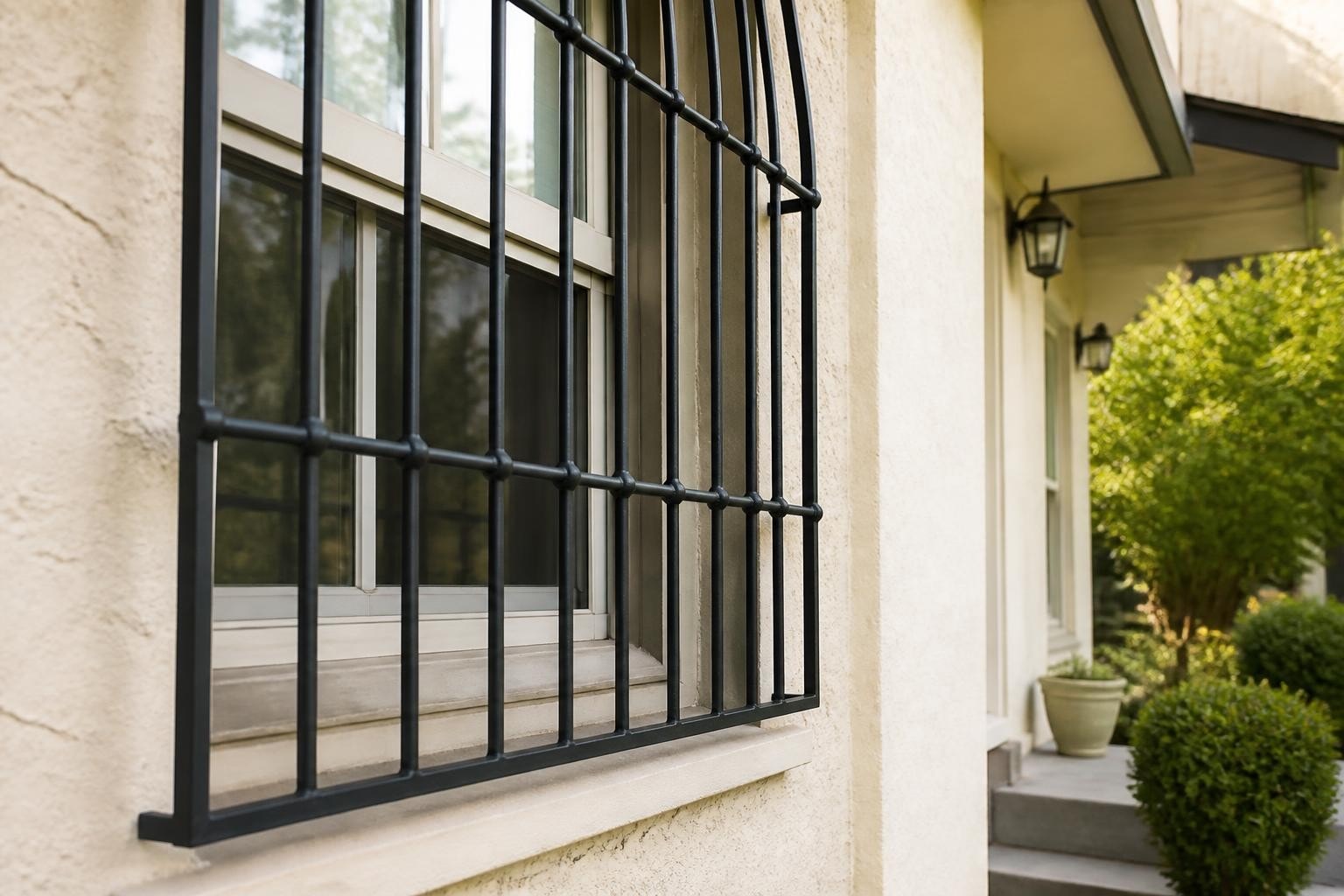
Window security remains one of the most critical yet frequently overlooked aspects of home and commercial property protection. While homeowners invest significantly in door security and alarm systems, windows often represent vulnerable entry points that criminals actively target. Window guard bars provide a robust physical barrier that simultaneously addresses two distinct safety concerns: preventing unauthorized access from outside intruders and protecting children from accidental falls from interior spaces. Understanding the various types, regulatory requirements, and installation considerations enables property owners to make informed decisions that balance security, aesthetics, and life-safety needs.
Window guard bars serve dual protective roles that make them essential components in comprehensive property security strategies. The primary function involves creating a physical deterrent against forced entry through windows, particularly ground-floor and easily accessible openings. These barriers significantly increase the time and effort required for break-ins, often causing would-be intruders to abandon attempts entirely.
The secondary function addresses an equally critical concern: fall prevention. According to research on pediatric window falls, children under five years old represent the highest-risk demographic for such incidents, particularly in urban environments with multi-story residential buildings. Window guard bars installed according to proper safety standards create protective barriers that prevent children from climbing through open windows while still allowing ventilation and emergency egress when designed correctly.
Property owners must recognize that security-focused window guard bars and child-safety fall-prevention devices, while visually similar, serve different purposes and follow distinct regulatory frameworks. Security bars prioritize strength, permanence, and resistance to tampering or forced removal. These installations typically feature heavier gauge materials, reinforced mounting systems, and fixed configurations designed to withstand sustained attack.

Child-safety guards emphasize compliance with spacing regulations that prevent small bodies from passing through, combined with quick-release mechanisms that allow emergency escape. The ASTM F2090 standard specifically addresses window fall-prevention devices with emergency-escape release mechanisms, establishing performance criteria that balance protection with life-safety requirements. Understanding this distinction helps property owners select appropriate solutions for their specific risk profile.
The market offers several distinct categories of window guard bars, each designed for specific applications, aesthetic preferences, and security requirements. Selecting the appropriate type requires evaluating factors including threat level, building codes, architectural style, and budget constraints.
Traditional fixed burglar bars represent the most recognizable and widely installed window security solution. These permanent installations typically consist of vertical or horizontal steel or aluminum bars welded or bolted into reinforced frames mounted directly into the building structure. The spacing between bars generally ranges from three to four inches for security applications, sufficient to prevent adult entry while maintaining visibility and airflow.
For residential and commercial properties where maximum security takes priority, Limax Burglar Guards offer custom-fitted aluminum solutions that combine rust-free durability with clean modern aesthetics. Their BX, BXX, Horizontal Bars, and Clear View options provide property owners with choices that match their specific security requirements without compromising the building's visual appeal.
Key advantages of fixed traditional bars include:
Removable window guard bars address the critical life-safety concern of emergency egress during fires or other disasters. These systems incorporate release mechanisms that allow occupants to remove or swing open the guards from the interior without tools or special knowledge. The Consumer Product Safety Commission emphasizes that window guards in sleeping areas must include such release capabilities to prevent entrapment during emergencies.
Quick-release mechanisms vary in design complexity and ease of operation. Common configurations include:
| Release Type | Operation Speed | Child Resistance | Code Compliance | Typical Cost |
|---|---|---|---|---|
| Lever Release | 2-5 seconds | Moderate | High | $$$ |
| Swing-Away | 5-10 seconds | High | High | $$$$ |
| Removable Panel | 10-20 seconds | Very High | Moderate | $$ |
| Emergency Catch | 3-7 seconds | Low-Moderate | High | $$$ |
Modern decorative window guard bars combine aesthetic appeal with protective functionality, addressing the common objection that traditional bars create a fortress-like appearance. These systems incorporate ornamental metalwork, custom patterns, and architectural elements that complement building design while maintaining security integrity.
Decorative options include scrollwork designs, geometric patterns, custom logos or monograms, and period-appropriate styles matching historical architecture. While generally more expensive than utilitarian bars, decorative guards add property value and preserve curb appeal in upscale neighborhoods or heritage buildings where appearance matters significantly.
Window guard bar installation must navigate complex regulatory landscapes that vary significantly by jurisdiction, building type, and intended purpose. Property owners and installers bear legal responsibility for ensuring compliance with applicable codes and standards.
Several major cities maintain specific window guard requirements focused on child safety in residential buildings. New York City’s Window Guards program represents the most comprehensive municipal approach, requiring landlords to install approved guards in any apartment where children ten years old or younger reside. The NYC Window Guard rules establish detailed specifications for approved devices, installation procedures, and annual inspection requirements.
Key regulatory considerations include:
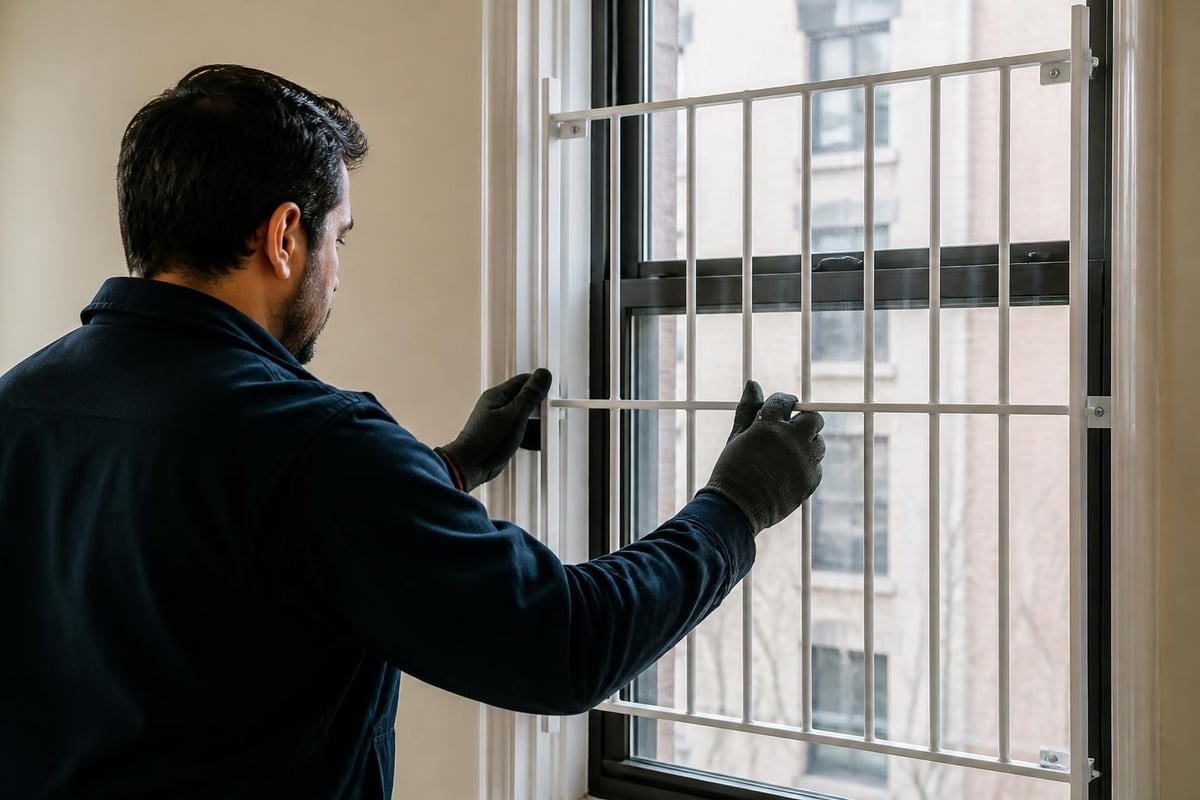
Window guard bars create inherent tension with fire-safety codes that mandate secondary means of egress from sleeping rooms. The NFPA codes addressing building life-safety require careful integration of fall-prevention devices with emergency escape provisions. Building officials, fire marshals, and code enforcement agencies must approve installations that potentially obstruct egress routes.
Compliant installations typically satisfy both security and fire-safety requirements through:
Beyond municipal codes, industry standards establish performance criteria for window guard bars. The ASTM F2090 standard specifically addresses window fall-prevention devices with emergency-escape releases, defining testing protocols for strength, durability, release force, and child resistance. Manufacturers seeking code approval typically certify products against this standard.
Additional relevant standards include load-bearing requirements, corrosion resistance specifications, UV stability for powder-coated finishes, and mounting hardware strength criteria. Professional installers should verify that specified products carry appropriate certifications and test documentation.
The longevity and effectiveness of window guard bars depend significantly on material choice, manufacturing quality, and finish treatments. Different materials offer distinct advantages suited to varying climates, budgets, and security requirements.
Steel remains the traditional choice for maximum-security applications due to its superior strength-to-cost ratio. Mild steel bars resist cutting, prying, and impact better than alternative materials, making them preferred for high-crime areas or commercial installations protecting valuable inventory.
Steel advantages and limitations:
Galvanized and powder-coated finishes significantly extend steel bar lifespan, particularly in coastal environments or regions with high humidity. Quality installations incorporate corrosion-resistant mounting hardware and proper sealing at wall penetrations to prevent moisture intrusion.
Aluminum offers corrosion resistance, lighter weight, and maintenance-free performance that make it increasingly popular for residential applications. While softer than steel, properly designed aluminum guard systems provide adequate security for most residential threat environments while eliminating rust concerns entirely.
Modern aluminum window guard bars utilize thicker wall sections and reinforced designs to compensate for the material's lower tensile strength. Anodized or powder-coated finishes provide color options and additional surface protection while maintaining the underlying corrosion resistance.
High-end installations may specify stainless steel for superior corrosion resistance, architectural-grade appearance, and minimal maintenance requirements. Marine-grade stainless steel (316 alloy) performs exceptionally well in coastal locations where salt spray rapidly degrades lesser materials.
Premium materials command significantly higher costs but deliver extended service life and enhanced aesthetics. Property owners should evaluate total cost of ownership including maintenance, refinishing, and replacement expenses when comparing material options.
Proper installation determines whether window guard bars deliver their intended protection or create false security. Professional installation following manufacturer specifications and building codes ensures optimal performance and legal compliance.
The integrity of window guard bar installations depends primarily on mounting system strength. Guards attached to weak substrates or inadequate anchors fail during forced-entry attempts or pull free under emergency egress forces.
Critical installation considerations include:
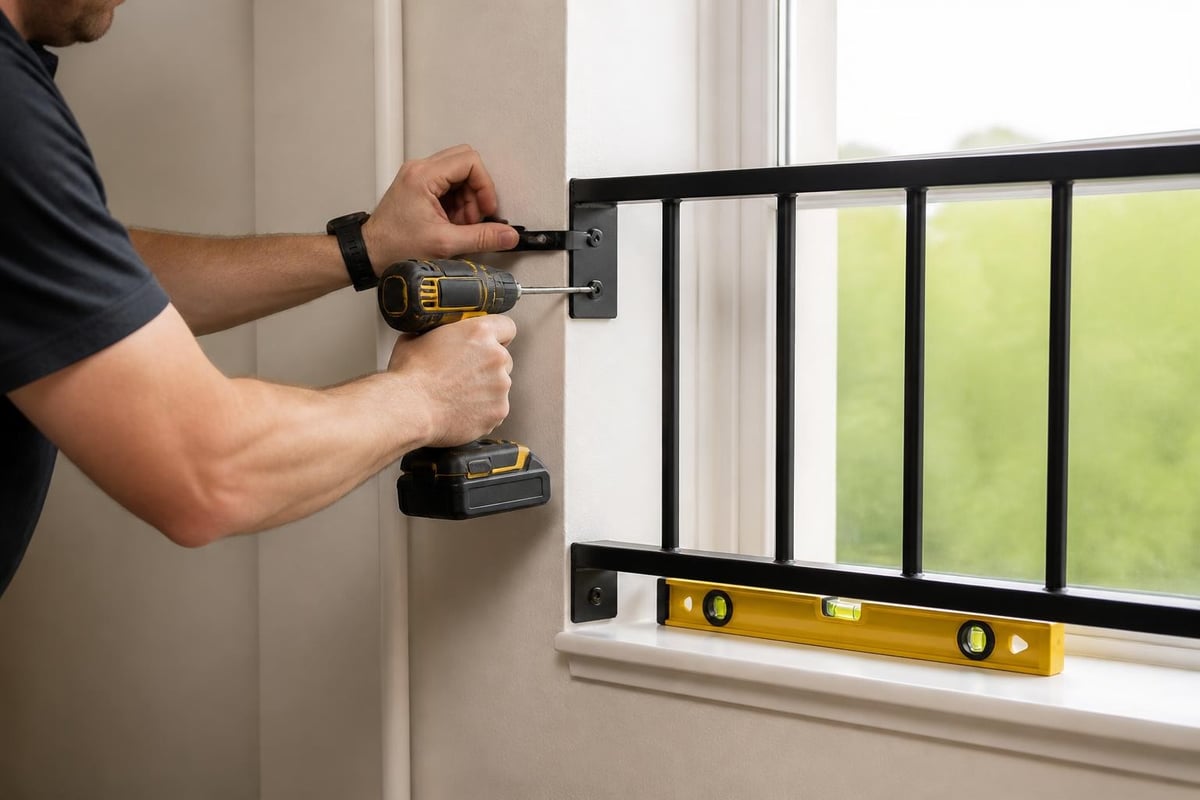
Masonry installations typically utilize expansion anchors or through-bolts with backing plates. Wood-frame applications require grade-marked lag screws driven into solid framing members, never into trim or siding alone. Metal-frame buildings may accept self-drilling screws or require welded attachment plates depending on framing gauge.
Proper alignment ensures even bar spacing, maintains aesthetic appearance, and prevents stress concentrations that weaken the overall system. Professional installers use levels, spacing jigs, and measurement tools to achieve consistent results across multiple window openings.
Step-by-step installation sequence:
Even experienced contractors occasionally make mistakes that compromise window guard bar effectiveness. Awareness of common errors helps property owners verify quality workmanship and installation teams maintain best practices.
Frequent installation problems include insufficient anchor embedment depth, mounting to non-structural trim or siding, over-tightening that cracks substrates, failure to seal penetrations against water, improper bar spacing that violates child-safety codes, blocked or non-functional emergency releases, and misalignment creating visual defects or structural weak points.
Window guard bars require minimal but essential maintenance to ensure continued protection and code compliance throughout their service life. Establishing regular inspection schedules and addressing issues promptly prevents gradual deterioration that compromises security.
Property owners should conduct visual inspections at least annually, with more frequent checks in harsh environments or high-use locations. Inspection points include mounting hardware tightness, substrate condition around anchors, bar condition checking for bends or damage, finish integrity and corrosion signs, emergency release mechanism function, and frame alignment and spacing consistency.
Rental property owners subject to municipal window guard ordinances must often conduct annual inspections and maintain documentation proving compliance. Professional inspection services provide certified reports satisfying legal requirements while identifying needed repairs.
Regular cleaning removes accumulated dirt, debris, and corrosive contaminants that accelerate deterioration. Mild detergent solutions and soft brushes clean most installations effectively without damaging protective finishes. Avoid abrasive cleaners or tools that scratch powder coating or remove galvanized zinc layers.
| Maintenance Task | Frequency | Materials Required | Estimated Time |
|---|---|---|---|
| Visual inspection | Annually | None | 15 min/window |
| Cleaning | Bi-annually | Mild soap, water, soft brush | 20 min/window |
| Hardware tightening | Annually | Appropriate wrenches/drivers | 10 min/window |
| Release mechanism test | Quarterly | None | 5 min/window |
| Finish touch-up | As needed | Matching paint/coating | 30 min/window |
| Professional inspection | Every 3-5 years | N/A (hired service) | Varies |
Quick-release mechanisms require periodic testing to verify proper operation when needed during actual emergencies. Occupants should practice release procedures until operation becomes intuitive, particularly in homes with children who may need to activate releases independently.
Testing should confirm that releases operate smoothly without excessive force, guards fully clear the window opening when released, mechanisms reset properly after testing, and all household members understand operation procedures. Document testing dates and results, particularly for rental properties subject to inspection requirements.
Window guard bars historically carried negative connotations of urban blight or fortress-like appearance. Modern design approaches and advanced manufacturing techniques now enable security installations that enhance rather than detract from property aesthetics and value.
Matching window guard bars to architectural style maintains visual cohesion while providing necessary protection. Traditional homes benefit from decorative wrought-iron designs with period-appropriate details. Contemporary properties pair well with minimalist horizontal bars or low-profile mesh systems. Mediterranean or Spanish Revival architecture accommodates ornamental scrollwork that complements existing ironwork details.
Color selection significantly impacts visual integration. Powder-coated finishes matching window frames, trim colors, or architectural accents help guards blend rather than stand out. Black or dark bronze typically recede visually, while lighter colors may draw unwanted attention in some contexts.
Quality security installations, including professionally installed window guard bars, can positively impact property values in appropriate markets. High-crime neighborhoods particularly value visible security features, while affluent areas may prefer discrete solutions that provide protection without advertising security concerns.
Real estate professionals note that security features appeal most strongly to specific buyer demographics including families with young children, elderly residents concerned about home invasions, previous crime victims seeking enhanced protection, and investors in rental properties requiring code compliance.
Conversely, poorly installed, visually obtrusive, or non-compliant guard systems may depress property values or complicate sales transactions. Buyers often request removal of unpermitted installations or discount offers to account for remediation costs.
Window guard bars function most effectively as components within layered security strategies that combine physical barriers, detection systems, and response protocols. Understanding how guards complement other security measures enables property owners to develop comprehensive protection programs.
Effective security design implements multiple defensive layers that delay intruders and increase detection probability. Window guard bars represent one such layer, ideally combined with perimeter fencing or walls, motion-activated security lighting, reinforced doors and locks, alarm systems with window sensors, and surveillance cameras covering vulnerable areas.
Each layer increases the time required for successful intrusion while creating additional opportunities for detection and response. Professional security assessments identify optimal combinations of measures suited to specific threat environments and budget constraints.
Modern window guard bars increasingly incorporate electronic components that enhance protection and provide remote monitoring capabilities. Integration options include magnetic contacts detecting guard removal attempts, vibration sensors triggering alarms during cutting attempts, electric locking mechanisms controllable via smart home systems, and integrated cameras providing visual verification of attempted breaches.
Smart home platforms enable centralized monitoring and control of multiple security components through unified interfaces. Property owners receive instant notifications of security events and can verify alarm conditions remotely before dispatching emergency services.
Window guard bars provide essential protection against both intrusion and accidental falls when properly selected, installed, and maintained according to applicable codes and standards. Property owners must balance security effectiveness, life-safety compliance, aesthetic considerations, and budget constraints to identify optimal solutions for their specific circumstances. Whether you need burglar protection, child-safety compliance, or comprehensive security integration, Limax Security Specialists delivers custom-fitted solutions backed by decades of experience serving South African residential and commercial clients.


