
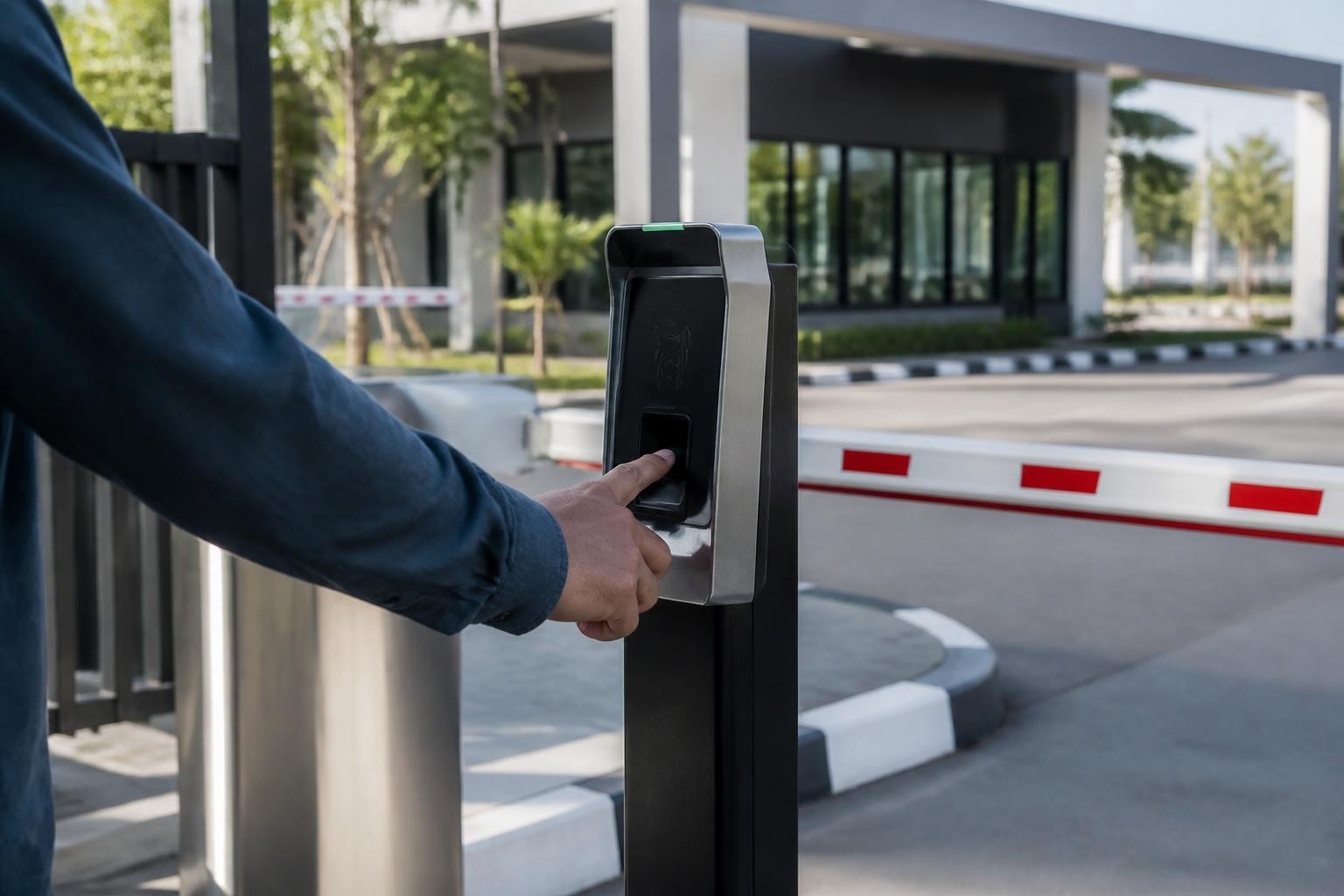
Access control gate systems represent the critical first line of defense for modern commercial and residential properties, combining physical barriers with intelligent authentication technologies to regulate who enters and exits a premises. As security threats evolve and become more sophisticated in 2026, property owners and security managers are increasingly turning to automated gate solutions that deliver both robust protection and seamless user experience. These systems have evolved far beyond simple keypads and remote controls, now incorporating biometric readers, wireless credentials, video verification, and cloud-based management platforms that transform perimeter security into a comprehensive, data-driven operation.
Access control gate systems consist of several integrated components working in concert to authenticate users, control physical barriers, and monitor access events. The fundamental architecture includes credential readers (RFID, biometric, or mobile), gate operators (motors and actuators), control panels, power supplies, and communication infrastructure linking the system to centralized management platforms.
The control panel serves as the system's brain, processing authentication requests and triggering gate movements based on predefined access rules. Modern panels communicate bidirectionally with both the gate hardware and enterprise security management systems, enabling real-time monitoring and remote troubleshooting.
Each component within an access control gate system plays a specific role in the authentication and barrier control workflow:
The quality and compatibility of these components directly impact system reliability. According to the ASIS International research report on access control, 67% of organizations cite integration challenges as a primary concern when deploying access systems, highlighting the importance of selecting components designed for interoperability.
| Component Type | Typical Lifespan | Maintenance Frequency | Common Issues |
|---|---|---|---|
| Gate Operator | 10-15 years | Quarterly | Motor wear, lubrication |
| RFID Reader | 8-12 years | Annual | Reader drift, weather damage |
| Control Panel | 12-18 years | Bi-annual | Firmware updates, connectivity |
| Safety Sensors | 5-8 years | Quarterly | Alignment, sensitivity drift |
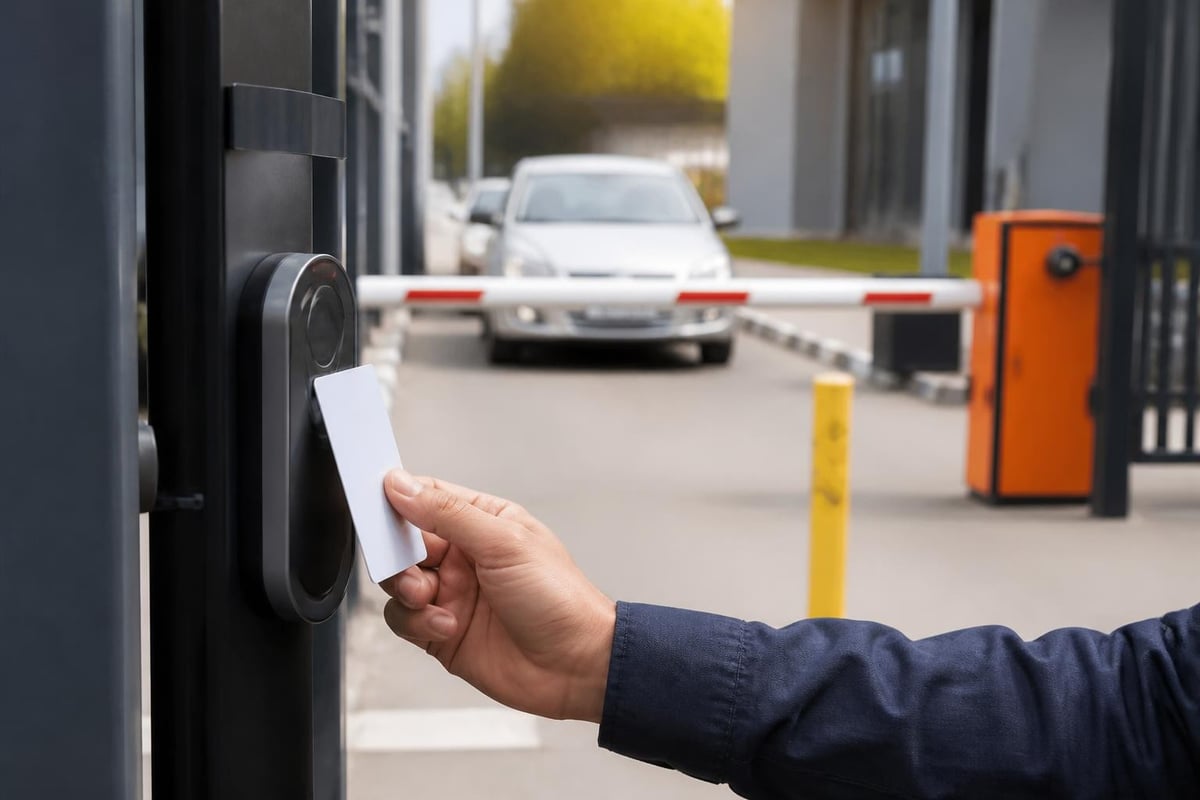
The credential technologies employed in access control gate systems have expanded dramatically, moving beyond traditional proximity cards to encompass mobile credentials, biometrics, and hybrid multi-factor approaches. Each technology offers distinct advantages regarding security, convenience, and total cost of ownership.
Radio-frequency identification remains the workhorse of vehicular access control, offering a proven balance of cost, reliability, and security. Modern RFID solutions operate across multiple frequency bands-125 kHz proximity, 13.56 MHz smart cards, and UHF long-range readers-each suited to different applications and read ranges.
Smart cards based on the 13.56 MHz standard support encryption and mutual authentication protocols, significantly improving security over legacy proximity technology. These cards can store multiple credentials and support both contactless and contact-based applications, making them versatile for enterprises managing both gate access and building entry.
Long-range UHF readers excel in high-throughput applications where vehicles must maintain speed through access points. With effective read ranges exceeding 10 meters, these systems enable hands-free access at parking garages, distribution centers, and gated communities where stopping disrupts traffic flow.
Biometric technologies provide the highest level of identity assurance by verifying inherent physical or behavioral characteristics. Fingerprint, facial recognition, and iris scanning systems are increasingly deployed at pedestrian gates adjacent to vehicular access points, particularly where security requirements demand positive identification rather than mere credential possession.
A comprehensive survey on biometric authentication published in 2023 notes that modern facial recognition systems achieve accuracy rates exceeding 99.8% under controlled conditions, though performance degrades in challenging lighting or with partially obscured faces. This reality necessitates careful reader placement and often suggests hybrid approaches combining biometrics with secondary credentials.
Implementation considerations include:
Smartphone-based credentials represent the fastest-growing segment of access control technology, leveraging devices users already carry while enabling sophisticated security features impossible with physical cards. Mobile credentials utilize Bluetooth Low Energy (BLE) for touchless, hands-free authentication, automatically unlocking gates as authorized users approach in vehicles or on foot.
The advantages extend beyond convenience. Mobile credentials eliminate card printing and distribution costs, can be instantly issued or revoked remotely, and support time-based or geofenced restrictions that enhance security. Additionally, smartphone platforms provide secure credential storage backed by device encryption and biometric unlocking, creating a multi-factor authentication chain.
Organizations implementing mobile access must address device compatibility, user training, and the digital divide affecting populations without smartphones or with limited technical proficiency. Successful deployments typically maintain alternative authentication methods during transition periods.
Access control gate systems deliver maximum value when integrated into broader security and building management ecosystems. Modern systems communicate via IP networks using open protocols, enabling coordination with video surveillance, intrusion detection, visitor management, and enterprise resource planning platforms.
The Physical Security Interoperability Alliance (PSIA) has developed specifications defining how access control systems should interoperate with video management, intrusion panels, and identity management platforms. Adherence to these standards ensures that access events trigger camera recording, denied access attempts generate security alerts, and user credentials synchronize across multiple systems without manual intervention.
Pairing access control gate systems with video surveillance creates powerful verification and forensics capabilities. Cameras positioned at reader locations capture facial images or vehicle details synchronized with each access event, providing visual confirmation of who used each credential.
License plate recognition (LPR) technology automates vehicular access control by reading registration plates and comparing them against authorized databases. This approach eliminates physical credentials for routine access while maintaining audit trails and supporting blacklist enforcement. LPR systems perform particularly well at multi-tenant properties where managing thousands of physical credentials becomes administratively burdensome.
Integration points include:
Access control gate systems must comply with safety standards protecting users from entrapment, collision, and other hazards associated with automated barriers. In the United States, UL 325 governs door, driveway, and gate operators, establishing requirements for entrapment protection devices, operating forces, and control system reliability.
UL 325 classifies gate operators based on usage (residential vs. commercial) and access type (vehicular vs. pedestrian), with each class subject to specific safety device requirements. Commercial vehicular gates, for example, must employ monitored entrapment protection devices that actively detect obstructions and immediately reverse gate movement.
Multiple overlapping protection technologies work together to prevent injuries and property damage:
Regular inspection and testing of these safety devices is not merely best practice but a legal requirement in most jurisdictions. Many organizations implement monthly safety audits supplemented by professional annual inspections, documenting all tests to demonstrate due diligence.
The CISA Security and Resiliency Guide emphasizes that security measures must never compromise life safety, recommending that access control gates fail to a safe state during emergencies and include manual override capabilities for first responders.
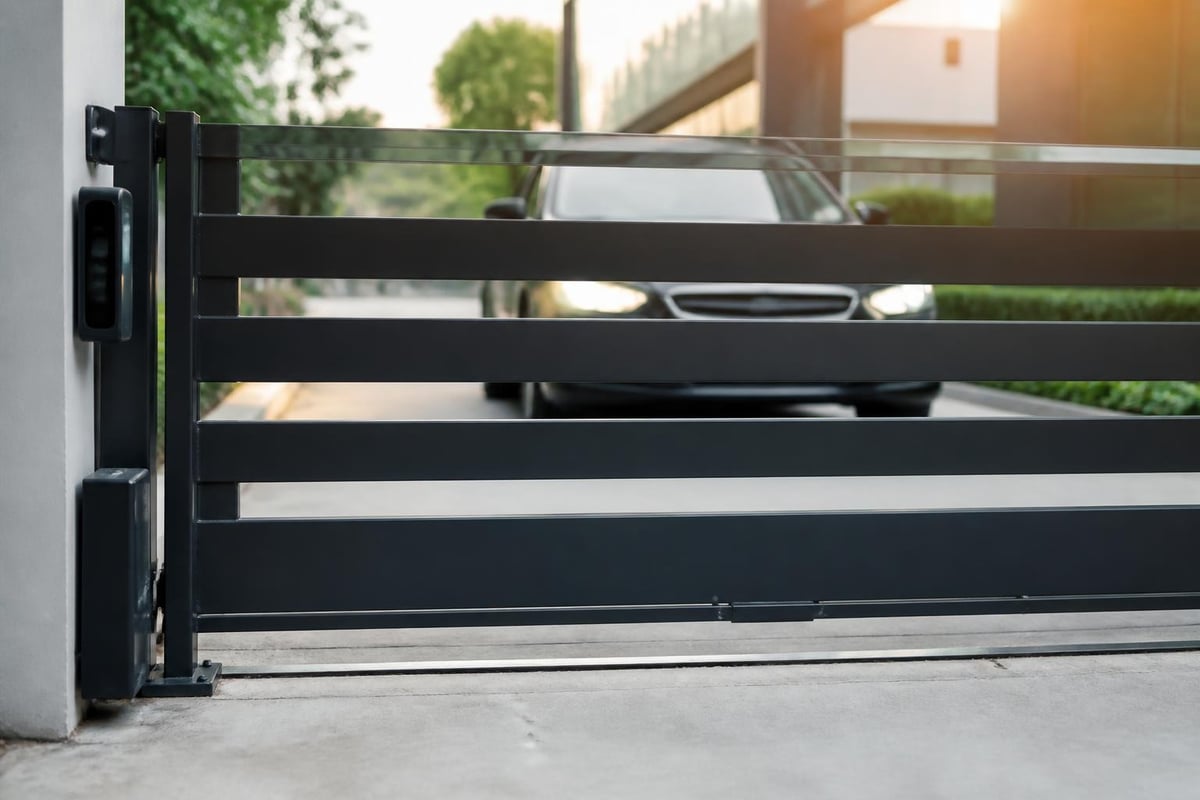
The physical gate design significantly impacts system performance, security effectiveness, maintenance requirements, and visual aesthetics. Selection depends on traffic volume, space constraints, security threat level, and architectural considerations.
Swing gates operate like traditional doors, pivoting on hinges to open inward or outward. They suit residential applications and lower-volume commercial entrances where ample clearance exists for the gate swing arc. Single-swing designs accommodate openings up to 6 meters, while dual-swing configurations handle wider driveways while reducing individual panel size.
Advantages include simple mechanics, lower maintenance requirements, and easier manual operation during power failures. Disadvantages center on the substantial clearance area required and vulnerability to wind loading that can strain operators.
Cantilever sliding gates move horizontally along the fence line, making them ideal for locations with limited setback or sloped driveways incompatible with swing gates. These systems require no ground track, instead riding on cantilevered frames that support the entire gate weight from one side.
Sliding gates excel in high-traffic commercial applications, offering faster cycle times than swing gates and superior wind resistance. They require fence-line clearance equal to the gate width plus operator housing, and their wheeled assemblies demand regular maintenance to prevent binding.
Rising bollards and barrier arms suit applications requiring rapid throughput with moderate security. Barrier arms cycle in 3-6 seconds, enabling high vehicle flow rates at parking facilities and campus entrances. Modern barrier systems incorporate LED lighting, breakaway designs preventing damage from accidental strikes, and variable speed control adapting to traffic conditions.
Bollards provide higher security against forced entry, with hydraulic or electromechanical models capable of stopping vehicles traveling at moderate speeds. Anti-terrorism bollards rated to stop large vehicles at highway speeds serve critical infrastructure, government facilities, and high-risk commercial properties.
| Gate Type | Typical Cycle Time | Security Level | Space Required | Best Applications |
|---|---|---|---|---|
| Swing | 10-15 seconds | Medium-High | High (arc clearance) | Residential, low-volume commercial |
| Sliding | 8-12 seconds | High | Medium (fence-line run) | Commercial, industrial, high-volume |
| Barrier Arm | 3-6 seconds | Low-Medium | Low | Parking, campus, high throughput |
| Bollard | 4-8 seconds | Very High | Very Low | Critical infrastructure, anti-ram |
Contemporary access control gate systems incorporate intelligent features that improve both security effectiveness and user experience. These capabilities leverage connectivity, data analytics, and automation to create more responsive and adaptive security perimeters.
Tailgating-following an authorized vehicle through a gate before it closes-represents a persistent vulnerability undermining access control. Modern systems combat tailgating through multiple mechanisms: vehicle separation sensors that detect multiple vehicles per credential, timed gate closure settings preventing sufficient gap for followers, and video analytics identifying tailgating events for security review.
Anti-passback logic prevents credential sharing by tracking which users are currently inside the secured area. The system denies entry credentials that haven't been used to exit, while also preventing exit by credentials that didn't enter. This feature requires entry and exit readers creating a secure "zone" where the system maintains real-time occupancy tracking.
Professional visitor management platforms integrate with gate access control to streamline guest access while maintaining security oversight. Visitors pre-register online or through mobile apps, receiving temporary credentials (QR codes, PIN codes, or mobile credentials) valid only during scheduled visit windows.
Upon arrival, the system automatically grants access, notifies hosts of guest entry, and triggers appropriate video recording. This automation eliminates manual gate release by security personnel while creating comprehensive audit trails documenting all visitor activity. Many systems automatically revoke temporary credentials after visits conclude, preventing unauthorized return access.
For properties where security gates serve as the primary entry point, integrating visitor management ensures that even temporary access maintains the same authentication rigor as permanent credentials. Companies like Limax Security Specialists increasingly recommend integrated solutions where gate access, visitor management, and video surveillance operate as unified systems rather than disconnected components.
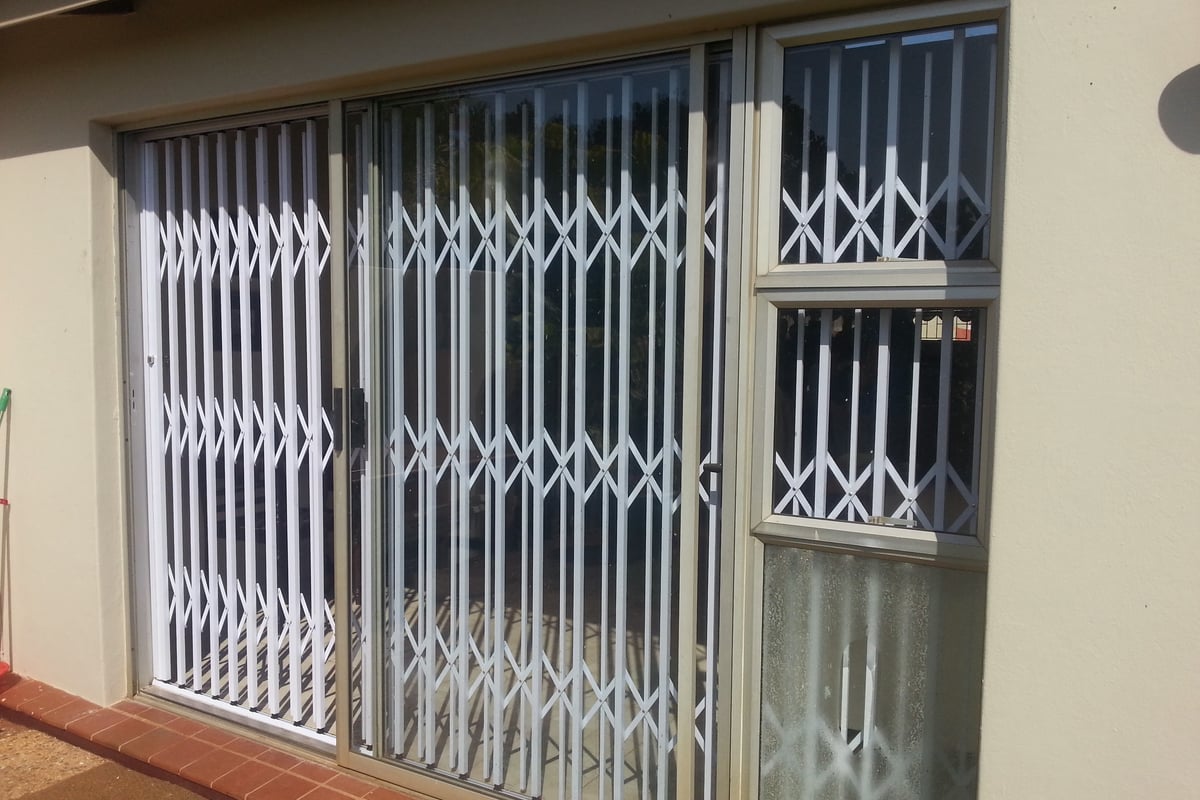
When implemented correctly, robust physical barriers like specialized security gates work seamlessly with electronic access control to deliver defense-in-depth strategies that electronic systems alone cannot achieve.
Internet of Things technologies and cloud platforms are transforming access control gate systems from isolated perimeter devices into networked security assets managed through centralized dashboards accessible from anywhere. Cloud-based management eliminates on-premises servers, reduces IT overhead, and enables rapid deployment across distributed facilities.
A comprehensive literature review of access control in IoT published in IEEE Access examines how networked gate systems participate in broader IoT security ecosystems, highlighting both capabilities and vulnerabilities. Cloud-connected gates support remote configuration, firmware updates pushed automatically, and predictive maintenance alerts based on operational analytics.
Access control gate systems generate substantial data: credential presentations, denied access attempts, gate cycle counts, operator fault codes, and environmental conditions. Cloud platforms aggregate this data across multiple sites, applying analytics that reveal patterns invisible when viewing individual gates in isolation.
Organizations leverage these insights to:
Real-time dashboards provide security managers with system health visibility, alerting them to offline gates, credential reader malfunctions, or unusual activity requiring investigation. This operational intelligence transforms reactive security management into proactive risk mitigation.
Network connectivity introduces cyber risk to physical security systems. Access control gate systems must implement defense-in-depth cybersecurity measures protecting against unauthorized access, credential forgery, and system manipulation.
Essential protections include encrypted communications between system components, credential data stored using modern cryptographic standards, regular security patches addressing discovered vulnerabilities, and network segmentation isolating security systems from general corporate networks. The CISA Security and Resiliency Guide recommends treating cyber and physical security as integrated disciplines rather than separate domains.
Reliable operation of access control gate systems requires proactive maintenance addressing both mechanical and electronic components. Neglected systems experience increasing failure rates, safety risks, and ultimately premature replacement costs exceeding preventive maintenance investments.
Comprehensive maintenance programs address gate operators, control electronics, credential readers, and safety devices on schedules matching manufacturer recommendations and environmental conditions. Typical programs include:
Monthly tasks:
Quarterly tasks:
Annual tasks:
Environmental factors dramatically affect maintenance needs. Coastal installations require corrosion-resistant hardware and more frequent lubrication, while dusty industrial environments necessitate sealed components and frequent cleaning.
Modern access control gate systems equipped with IoT sensors enable condition-based maintenance triggered by actual component wear rather than arbitrary time intervals. Operators report cycle counts, force measurements, and electrical parameters indicating deteriorating performance before complete failure occurs.
Predictive analytics identify patterns preceding failures, such as gradually increasing motor current draw suggesting mechanical binding, or intermittent credential read errors indicating reader degradation. Addressing these issues proactively during scheduled maintenance windows prevents inconvenient failures during peak traffic periods.
Access control gate systems represent significant capital investments ranging from several thousand dollars for basic residential installations to hundreds of thousands for enterprise deployments across multiple facilities. Understanding total cost of ownership beyond initial hardware purchase enables informed decision-making and realistic budget planning.
The complete system cost encompasses several categories often overlooked in preliminary budgets:
High-security applications requiring specialized gates, redundant systems, or extensive integration multiply costs substantially compared to standalone residential installations.
Ongoing operational expenses include electricity (gate operators consume 50-200 watts during movement), preventive maintenance, credential replacement, and software licensing for cloud-based platforms. These costs typically represent 8-12% of initial investment annually.
Return on investment stems from multiple sources: reduced security personnel requirements (automated gates eliminate manual gate opening), decreased insurance premiums (insurers recognize improved perimeter security), prevented losses from theft or unauthorized access, and enhanced property values. Commercial properties frequently realize ROI within 3-5 years through reduced staffing alone.
| Cost Category | Residential (Single Gate) | Commercial (Multi-Gate) | Enterprise (Campus) |
|---|---|---|---|
| Initial Hardware | $3,000-$8,000 | $15,000-$50,000 | $100,000-$500,000+ |
| Installation | $2,000-$5,000 | $10,000-$25,000 | $50,000-$200,000+ |
| Annual Maintenance | $300-$600 | $2,000-$5,000 | $10,000-$40,000+ |
| Typical ROI Period | N/A (amenity) | 3-5 years | 4-7 years |
Access control gate systems continue evolving rapidly, driven by advances in artificial intelligence, wireless technologies, and changing security paradigms. Understanding emerging trends helps organizations make forward-looking investment decisions that remain relevant as technology progresses.
Artificial intelligence and machine learning enhance system intelligence through behavioral analytics that establish normal access patterns and flag anomalies. AI-powered systems learn typical traffic flows, identify unusual credential usage suggesting sharing or theft, and optimize gate operation timing to minimize vehicle queuing while maintaining security.
Touchless authentication technologies accelerated by pandemic concerns are becoming standard expectations rather than premium features. Mobile credentials, facial recognition, and license plate recognition enable completely hands-free access experiences while simultaneously improving security through multi-factor authentication combining device possession, biometrics, and location verification.
Sustainability considerations increasingly influence gate system selection, with solar-powered operators, energy-efficient LED lighting, and power management features reducing environmental impact. Organizations pursuing green building certifications incorporate these features demonstrating commitment to environmental responsibility.
The convergence of physical and logical access control creates unified identity platforms where a single credential grants network login, building entry, and gate access. This convergence streamlines credential management, improves user experience, and enables more sophisticated security policies that adapt access privileges based on role, location, and context.
Modern access control gate systems deliver sophisticated perimeter security combining physical barriers, intelligent authentication, and networked management capabilities that transform security from reactive to proactive. By selecting appropriate technologies, maintaining systems properly, and integrating with broader security ecosystems, organizations create resilient first lines of defense against evolving threats. Limax Security Specialists brings decades of experience designing, installing, and supporting comprehensive security solutions throughout South Africa, from basic residential gates to complex commercial installations integrating access control, video surveillance, and intrusion detection. Contact our team today to discuss how properly specified and professionally installed access control gate systems can enhance your property's security while improving daily operations.


