
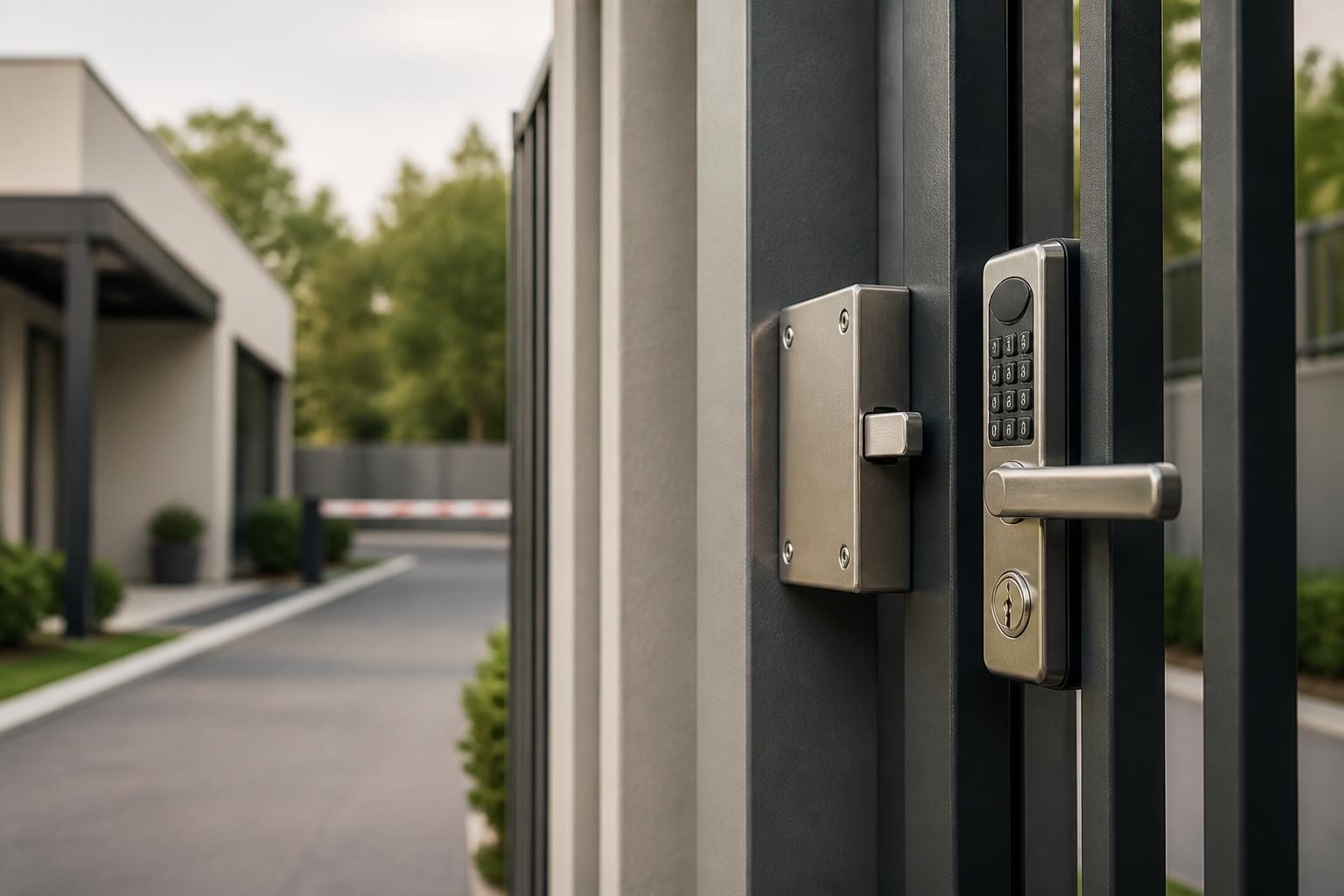
Gate lock security represents the critical first line of defense for residential and commercial properties, combining mechanical hardware, access control technology, and strategic design to control entry points and deter unauthorized access. Whether securing a driveway entrance, pedestrian walkway, or commercial facility perimeter, the lock you choose directly impacts your property's vulnerability. In 2026, property owners face evolving threats that demand robust, properly specified locking solutions backed by industry standards and integrated into comprehensive security strategies.
Gate lock security extends far beyond simply adding a padlock to a gate. It encompasses the entire locking assembly, strike plate, mounting hardware, and the gate structure itself working in concert to resist forced entry, withstand environmental conditions, and provide reliable operation over years of use.
The core components of effective gate lock security include:
A lock is only as strong as its weakest link. A high-security cylinder mounted to a flimsy gate frame or secured with inadequate fasteners creates a false sense of protection. The perimeter security approach outlined by CISA emphasizes layered defenses where gates, locks, and access controls work together to delay and deter intrusion attempts.
Professional gate lock security relies on recognized performance standards. The American National Standards Institute (ANSI) and Builders Hardware Manufacturers Association (BHMA) establish grading criteria that classify locks by durability, strength, and operational cycles.
| ANSI/BHMA Grade | Performance Level | Typical Application | Expected Cycles |
|---|---|---|---|
| Grade 1 | Highest security and durability | Commercial facilities, high-traffic gates | 800,000+ |
| Grade 2 | Medium commercial | Light commercial, residential gates | 400,000+ |
| Grade 3 | Residential | Basic residential applications | 200,000+ |
Grade 1 hardware meets the most stringent testing for forced entry resistance, operational endurance, and finish durability. For perimeter gates protecting valuable assets or high-risk facilities, specifying Grade 1 components becomes essential. The GSA PBS P100 standards reference these grades extensively when detailing requirements for federal facilities, providing a benchmark for serious security implementations.
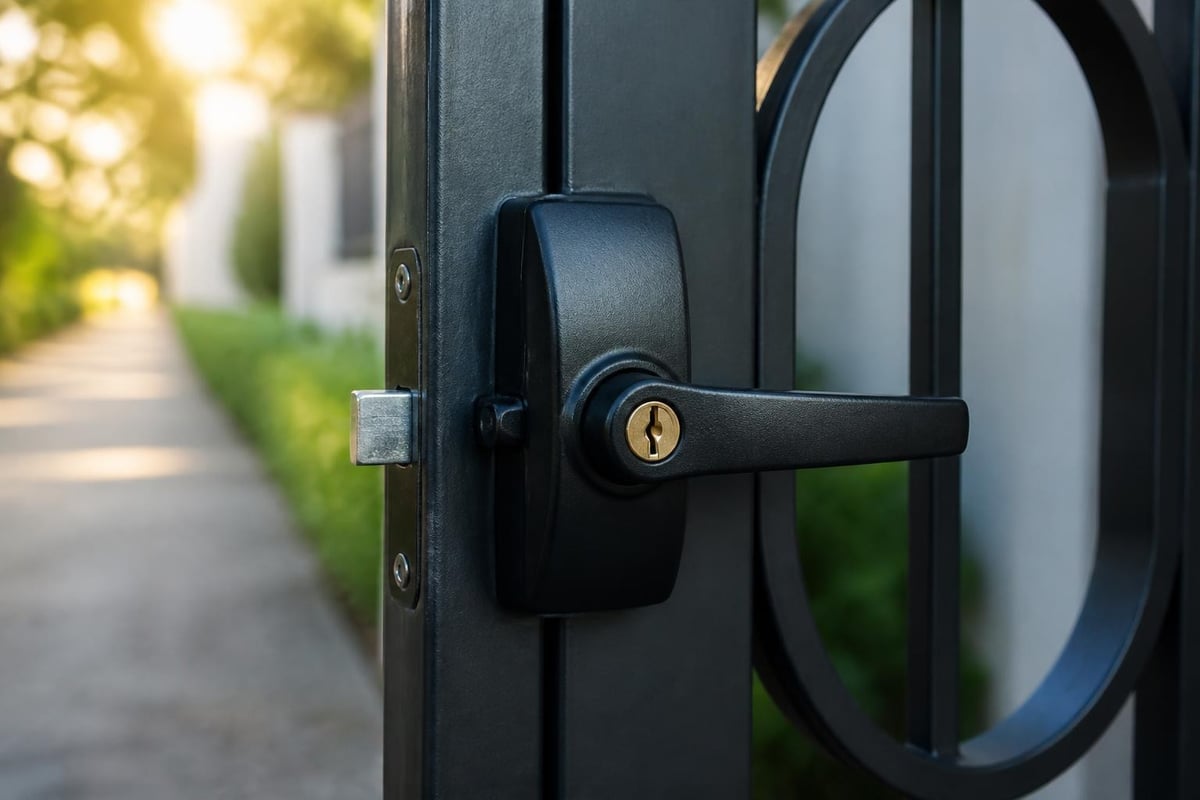
Choosing the right lock type depends on gate configuration, operational requirements, threat assessment, and integration needs. Each category offers distinct advantages and limitations.
Rim locks mount to the surface of the gate, making installation straightforward and replacement simple. They work well on metal gates where mortising (cutting a pocket into the gate material) isn't practical. High-security rim locks feature hardened steel bodies, anti-drill plates, and pick-resistant cylinders that provide substantial gate lock security without requiring modifications to the gate structure.
Mortise locks install within a pocket cut into the gate edge, offering a cleaner appearance and better resistance to tampering. The lock body sits protected within the gate material, with only the cylinder and lever or knob exposed. This configuration makes it harder for intruders to attack the mechanism directly.
Padlocks and hasps remain common for secondary gates and lower-security applications. Specifying a shrouded hasp that covers the padlock shackle significantly improves security by preventing bolt cutter access. Choose hardened steel hasps rated to match your padlock's security level, and ensure both components come from reputable manufacturers with documented performance data.
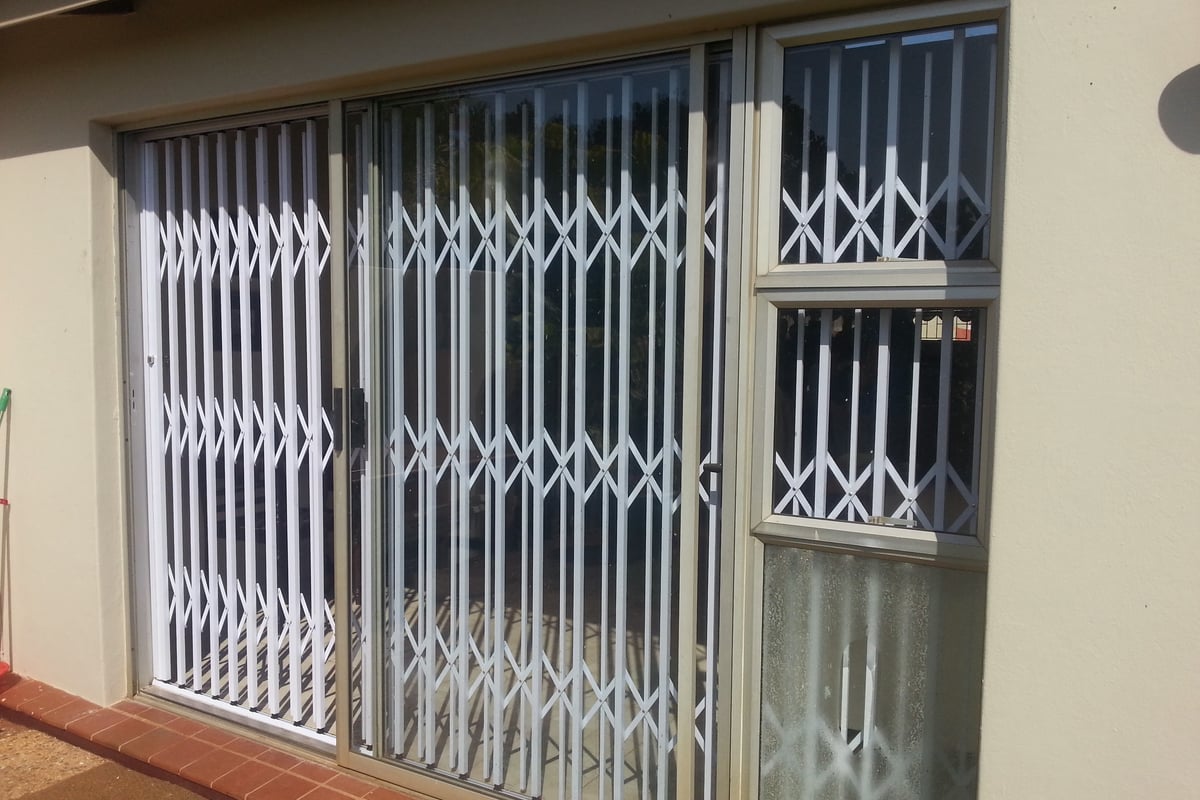
For properties requiring enhanced protection against unauthorized access, specialized security gates offer an integrated approach. Monkey-proof security gates feature innovative designs that prevent both human intruders and wildlife from compromising your perimeter, combining robust locking mechanisms with engineered gate construction that resists manipulation and climbing attempts.
Modern gate lock security increasingly incorporates electronic components that provide remote access control, audit trails, and integration with broader security management systems.
Electric strikes replace traditional mechanical strikes with electronically controlled units that release when authorized users present credentials (card, fob, code, or biometric). The gate lock itself remains mechanical, but the strike's locking function operates electrically. This hybrid approach maintains the reliability of mechanical hardware while adding access control flexibility.
Electromagnetic locks (maglocks) use powerful electromagnets to hold gates closed with force ratings from 600 to 2,000 pounds or more. They require constant power to remain locked and release immediately during power failures, making them suitable for fail-safe applications where emergency egress takes priority. Battery backup systems can extend hold time during brief outages.
Electrified mortise locks combine mechanical locking with electric motor-driven operation, allowing remote lock/unlock commands while maintaining manual override capability. These units prove valuable for automated gates where pedestrians need independent access without gate movement.
The Cornell University facilities specification demonstrates how institutions specify electrified hardware for exterior gates and doors, balancing security requirements with operational needs and code compliance. Their approach references ANSI/BHMA standards and provides detailed product criteria that ensure consistent performance across campus installations.
Even premium gate lock security hardware fails when improperly installed. Professional installation following manufacturer specifications and industry best practices determines whether your lock performs as designed or creates exploitable vulnerabilities.
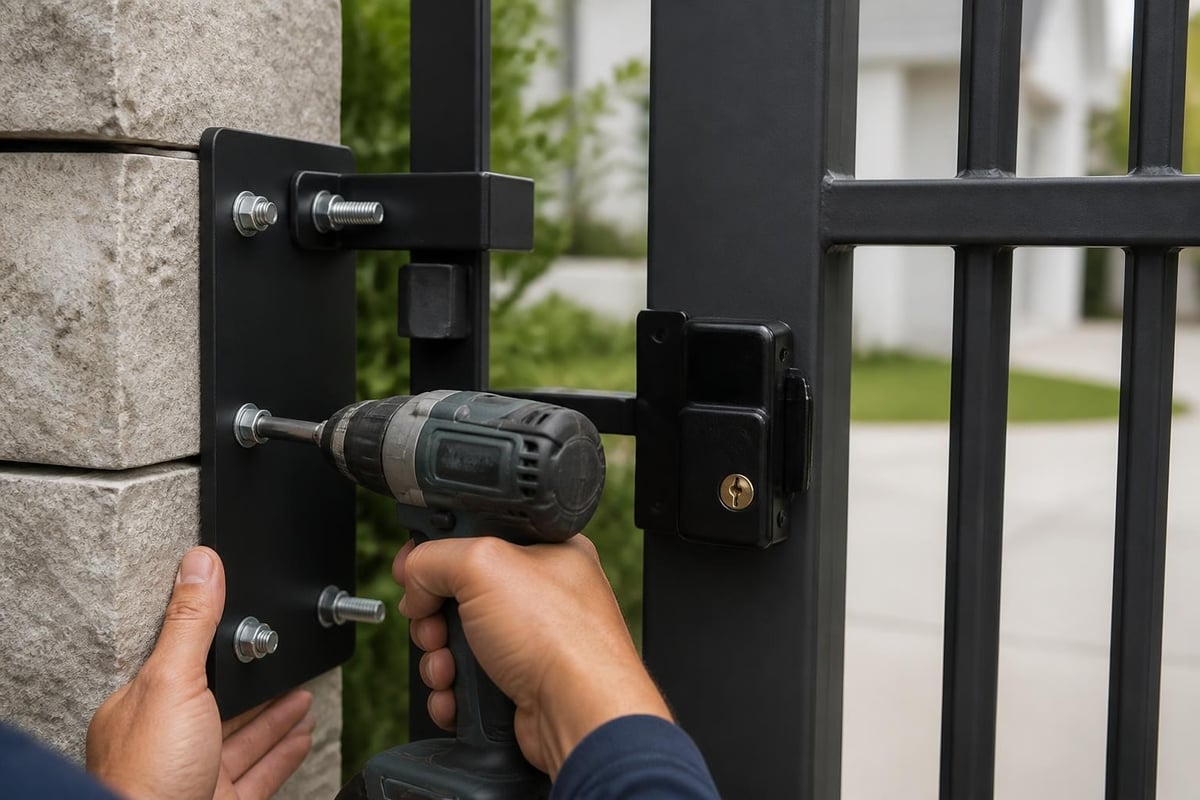
Gates experience lateral forces during normal operation and concentrated stress during forced entry attempts. The lock mounting area must distribute these forces across adequate structural material.
Critical reinforcement measures include:
The gate frame itself requires adequate strength to support security hardware. A high-security lock mounted to a thin-wall tube or lightweight aluminum frame creates an illusion of security while remaining vulnerable to prying or frame deformation.
Outdoor gate lock security faces continuous exposure to moisture, temperature extremes, UV radiation, and airborne contaminants. South African climates range from coastal humidity to arid interior conditions, each presenting distinct challenges.
| Environmental Factor | Impact on Locks | Mitigation Strategy |
|---|---|---|
| Coastal salt air | Corrosion, binding mechanisms | Stainless steel components, regular lubrication |
| UV exposure | Plastic/rubber component degradation | Metal construction, UV-resistant finishes |
| Temperature cycling | Expansion/contraction, lubricant breakdown | Proper clearances, synthetic lubricants |
| Dust and sand | Abrasive wear, mechanism jamming | Sealed housings, protective covers |
Specify locks with IP (Ingress Protection) ratings appropriate to the installation environment. IP65-rated locks resist water jets and complete dust protection, suitable for exposed perimeter gates. Coastal installations benefit from stainless steel or bronze construction that resists salt-air corrosion.
Contemporary gate lock security rarely operates in isolation. Integration with access control systems, video verification, and security management platforms creates responsive, auditable perimeter security that adapts to operational needs.
Card-based systems using proximity (RFID) or smart card technology remain widespread for commercial gates. They provide easy credential management, allowing administrators to issue, revoke, or modify access privileges without changing physical locks. Multi-technology readers accommodate both legacy and modern credential formats during system migrations.
Keypad entry suits locations where users need temporary codes or where credential distribution proves impractical. Modern keypads offer randomized number layouts, anti-tailgating features, and relay outputs compatible with electric strikes or maglocks. Code-based systems eliminate the security risks of lost or copied cards but require regular code rotation.
Biometric readers verify fingerprints, facial features, or iris patterns, eliminating credential sharing and providing highest-certainty identification. These systems work well for high-security zones but require careful environmental consideration, as extreme temperatures or direct sunlight can affect reader performance.
Mobile credentials delivered via smartphone apps represent the newest evolution, offering convenience, remote management, and encrypted Bluetooth or NFC communication. Users present their phone to the reader, combining something they have (phone) with something they know (unlock code) for two-factor authentication.
The ASIS International enterprise security competency framework addresses how physical security measures, including perimeter gates and access control, fit within comprehensive security programs that balance technology, processes, and human factors.
Gate lock security systems must account for power failures, network outages, and emergency scenarios. This fundamental choice affects life safety, asset protection, and regulatory compliance.
Fail-safe locks release during power loss, prioritizing egress over security. Fire codes often mandate fail-safe operation on pedestrian exit routes. Electromagnetic locks inherently operate fail-safe, while electric strikes can be wired either way. Backup batteries maintain lock status during brief outages, but extended failures result in unlocked gates.
Fail-secure locks remain locked without power, maintaining security during outages. Electrified mortise locks typically operate fail-secure, relying on mechanical locking when unpowered. This configuration suits property protection applications where emergency egress isn't required, but it demands manual override capability for authorized emergency access.
Your decision depends on the gate's primary purpose, local codes, and risk assessment. Vehicle gates controlling asset areas typically operate fail-secure. Pedestrian gates on emergency egress routes require fail-safe operation with backup power ensuring controlled access during normal conditions.
Gate lock security deteriorates without regular maintenance. Environmental exposure, operational wear, and component aging gradually compromise performance until failure occurs, often at the worst possible moment.
Monthly inspections should verify:
Quarterly service includes:
Annual comprehensive evaluation addresses:
Document all maintenance activities, component replacements, and performance issues. This history reveals patterns, supports warranty claims, and informs future specification decisions. Limax Security Specialists provides comprehensive maintenance programs that ensure your security installations continue performing at optimal levels throughout their service life.
Effective gate lock security begins with understanding what you're protecting against. Different threats demand different countermeasures, and no single lock prevents all attack methods.
Lock picking requires skill and time but leaves minimal evidence. High-security cylinders with sidebar mechanisms, magnetic pins, or interactive elements dramatically increase picking difficulty. Paracentric keyways and restricted key blanks prevent unauthorized duplication.
Forced entry through bolt cutters, prying, or impact attacks represents the most common threat to perimeter gates. Hardened steel bolts with rotating collars resist cutting. Anti-pry designs with minimal exposed edges reduce leverage points. Reinforced strikes and deep bolt throws withstand battering.
Gate spreading or lifting bypasses the lock entirely by deforming the frame or lifting the gate off hinges. Continuous welded construction, anti-lift pins, and proper hinge selection address these attack methods better than lock upgrades alone.
Key control failures occur when keys are lost, copied, or stolen. Patented keyways require authorization for duplication. Master key systems allow selective access while maintaining individual accountability. Periodic rekeying eliminates unauthorized copies from circulation.
Layered security recognizes that determined attackers eventually defeat any single barrier. Your gate lock security should integrate with lighting, surveillance, intrusion detection, and response protocols. The delay provided by robust locks gives monitoring systems time to detect intrusions and security personnel time to respond.
Gate lock security installations must satisfy building codes, fire safety regulations, accessibility requirements, and industry-specific mandates. Non-compliant installations create liability exposure and may void insurance coverage.
Fire codes govern egress routes, mandating panic hardware on certain pedestrian gates and fail-safe operation where emergency exit is required. Local authorities having jurisdiction (AHJ) interpret and enforce these requirements, which vary by occupancy type, building size, and use.
Accessibility standards address operating force, hardware height, and maneuvering clearances. Gates must operate with reasonable force and accommodate users with limited mobility. Automated operators often provide the most practical compliance solution.
Electrical codes regulate low-voltage wiring, power supply installation, and grounding for electronic locks and access control. Licensed electricians should perform or supervise installations involving line-voltage components.
Industry-specific regulations affect certain facilities. Chemical plants, critical infrastructure, and government facilities face heightened requirements detailed in frameworks like the CISA guidelines for perimeter security. Healthcare facilities, schools, and multi-family housing have distinct code provisions affecting lock specifications.
Professional security consultants familiar with South African standards and local enforcement practices help navigate this regulatory landscape. Proper specification, installation, and documentation demonstrate due diligence and reduce liability exposure should incidents occur.
The gate lock security landscape continues evolving as new technologies mature and user expectations shift. Understanding emerging trends helps future-proof installations and avoid obsolescence.
Cloud-based access control moves intelligence from on-site controllers to hosted platforms accessible anywhere with internet connectivity. Administrators manage credentials, schedules, and permissions through web interfaces. Real-time notifications alert operators to access events or system faults immediately.
Artificial intelligence analyzes access patterns to detect anomalies that may indicate credential misuse or unauthorized access attempts. Machine learning algorithms establish baseline behavior and flag deviations for investigation.
Wireless lock technology eliminates expensive trenching and conduit runs to remote gates. Battery-powered locks communicate via encrypted radio frequencies, cellular networks, or mesh topologies. Solar charging extends battery life indefinitely in appropriate installations.
Blockchain-based credentials promise tamper-proof audit trails and decentralized authentication that eliminates single points of failure. Though still emerging, this technology may transform enterprise access control within the next decade.
Sustainability considerations drive demand for locks manufactured from recycled materials, low-energy electronics, and designs optimized for long service life rather than planned obsolescence. Modular construction enables component replacement rather than complete lock replacement when failures occur.
These innovations complement rather than replace fundamental gate lock security principles. Robust mechanical components, proper installation, and comprehensive maintenance remain essential regardless of the electronic systems layered on top.
Choosing and implementing effective gate lock security requires balancing mechanical strength, access control functionality, environmental resilience, and operational requirements within your budget and regulatory framework. Whether protecting residential property or commercial facilities, the principles of proper specification, professional installation, and ongoing maintenance determine whether your perimeter security performs when tested. Limax Security Specialists brings decades of experience delivering integrated security solutions across South Africa, from high-security gates with advanced locking systems to comprehensive installations that protect what matters most. Contact our team today to assess your gate lock security needs and discover solutions engineered for lasting protection.


