
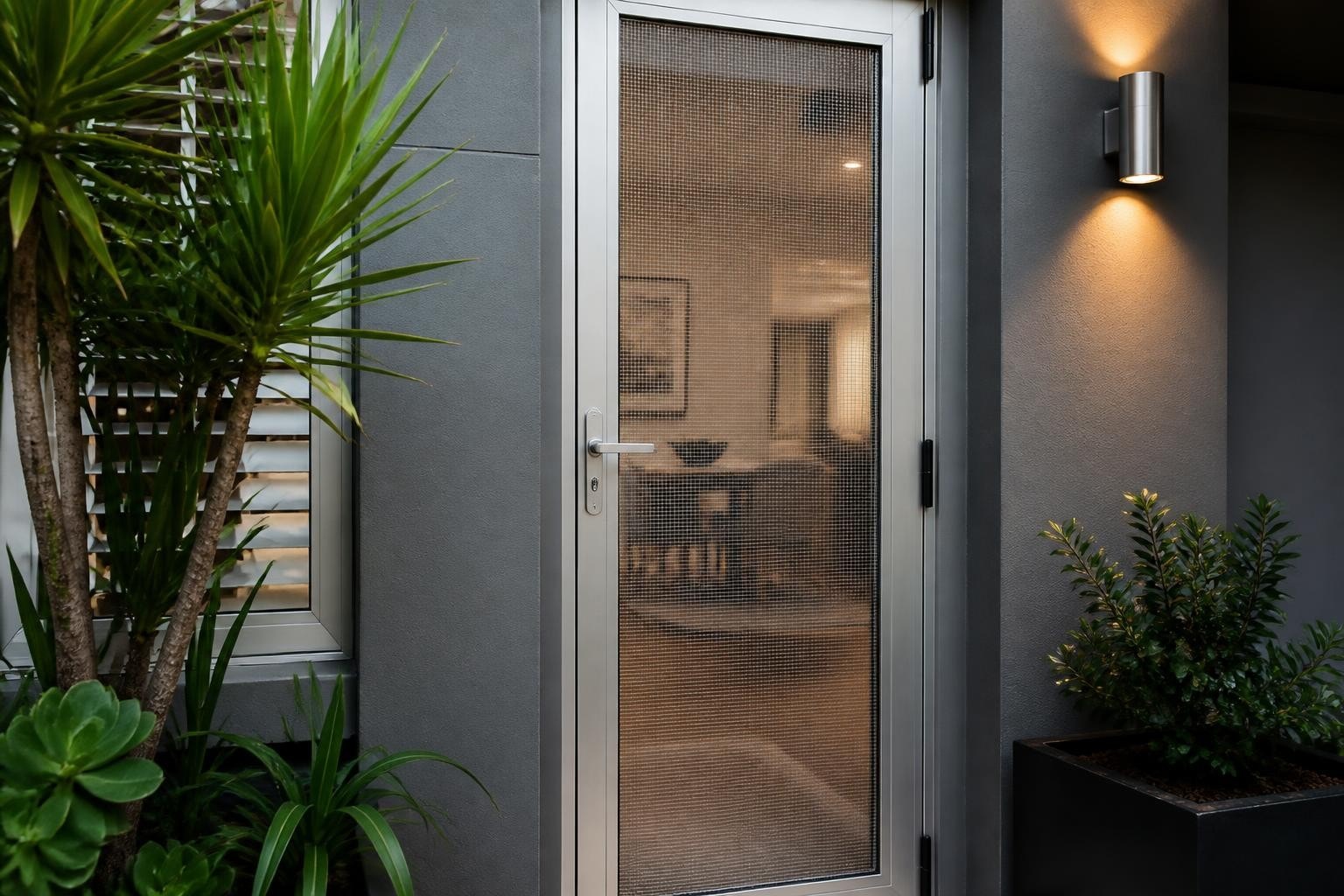
Stainless steel screen doors represent a significant investment in both security and ventilation for residential and commercial properties. Unlike traditional aluminum or fiberglass screens, stainless steel options deliver exceptional strength, corrosion resistance, and longevity that make them particularly valuable in coastal climates, high-crime areas, and environments where both security and airflow matter. For South African homeowners and business owners evaluating security solutions, understanding the technical specifications, installation considerations, and real-world performance of stainless steel screen doors is essential to making an informed decision that protects property and occupants for decades.
The core component of any stainless steel screen door is the mesh itself. This woven or welded material determines the door's security rating, visibility, and insect-blocking performance.
Stainless steel mesh comes in various wire diameters and mesh counts, each suited to different applications. Security-grade mesh typically uses heavier wire (0.8mm to 1.6mm diameter) in configurations ranging from 10×10 to 12×12 weave patterns per inch. The technical specifications for stainless steel insect mesh demonstrate how wire diameter and aperture size work together to balance visibility, airflow, and protection.
Heavier wire diameters provide superior resistance to cutting and forced entry. A 1.2mm diameter wire mesh delivers substantially more strength than 0.8mm options, though at the cost of slightly reduced visibility and airflow.
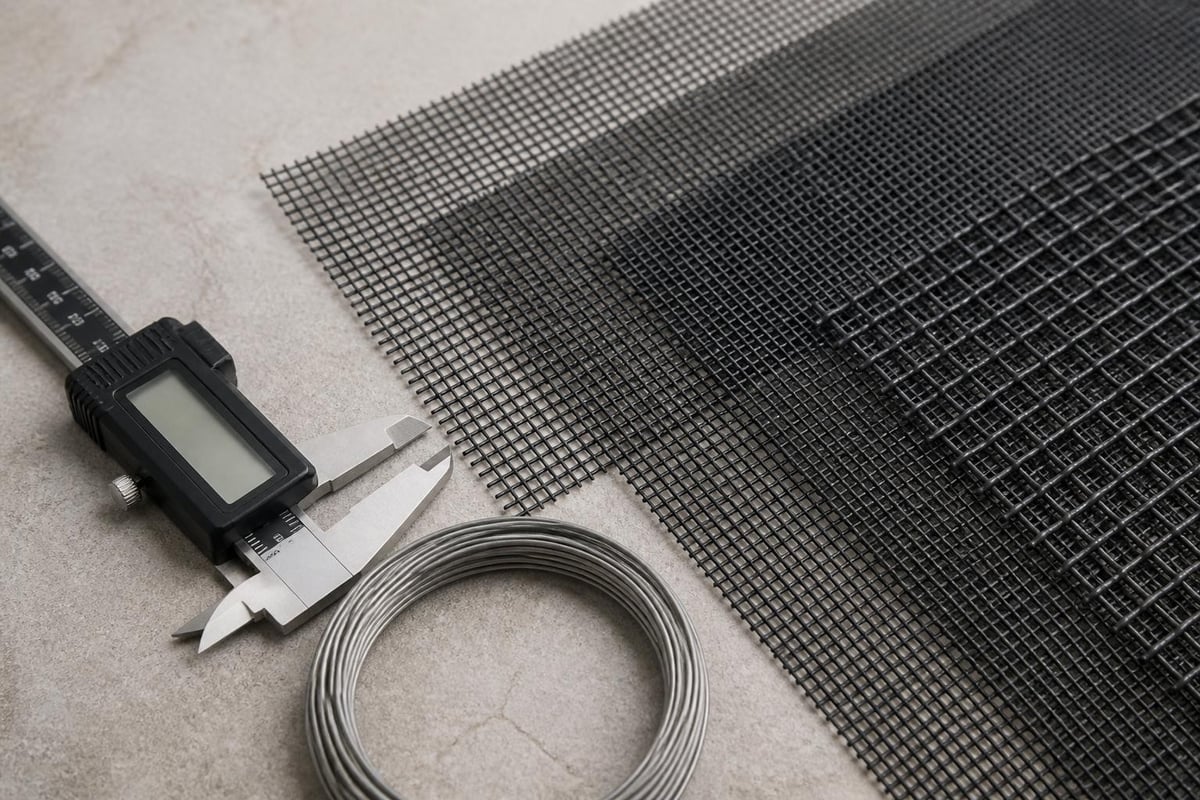
Key mesh specifications to evaluate:
Not all stainless steel delivers the same corrosion resistance. Grade 304 (18-8 stainless) suits most inland applications, while Grade 316 (marine-grade stainless) is essential for coastal installations where salt exposure accelerates corrosion.
Research on crevice corrosion in stainless steels shows that Grade 316's molybdenum content provides significantly better resistance to pitting and crevice corrosion in chloride-rich environments. For properties within 10 kilometers of the ocean, the premium for 316-grade mesh pays dividends in extended service life.
| Grade | Composition | Best Applications | Corrosion Resistance |
|---|---|---|---|
| 304 | 18% Cr, 8% Ni | Inland residential, commercial | Good general resistance |
| 316 | 16% Cr, 10% Ni, 2% Mo | Coastal, marine, industrial | Excellent chloride resistance |
| 316L | Low-carbon 316 | Welded assemblies | Superior weld-zone corrosion resistance |
The mesh is only as strong as the frame system that supports it. Professional stainless steel screen doors integrate the mesh into heavy-duty aluminum or steel frames using compression mounting or welded assemblies.
Aluminum frames offer corrosion resistance and lighter weight, making them easier to operate in sliding configurations. Powder-coated aluminum frames provide additional protection and can be color-matched to existing window frames or architectural finishes.
Steel frames deliver maximum strength for fixed installations or applications requiring the highest security ratings. When paired with stainless steel mesh, properly treated steel frames create a barrier capable of withstanding sustained forced-entry attempts.
Frame construction considerations:
Security performance depends heavily on locking hardware. Stainless steel screen doors should incorporate multi-point locking systems, deadbolts rated for forced-entry resistance, and strike plates anchored through the frame into structural framing members.
The Steel Door Institute’s technical guide provides valuable context on how door assemblies should be specified and tested for security applications. These principles apply equally to screen door installations where security is a primary concern.
Three-point locking systems engage the door at top, middle, and bottom points, distributing force across the entire door height and making it exponentially more difficult to breach through prying or kicking.
Quantifying the security performance of stainless steel screen doors requires understanding relevant testing standards and certification programs.
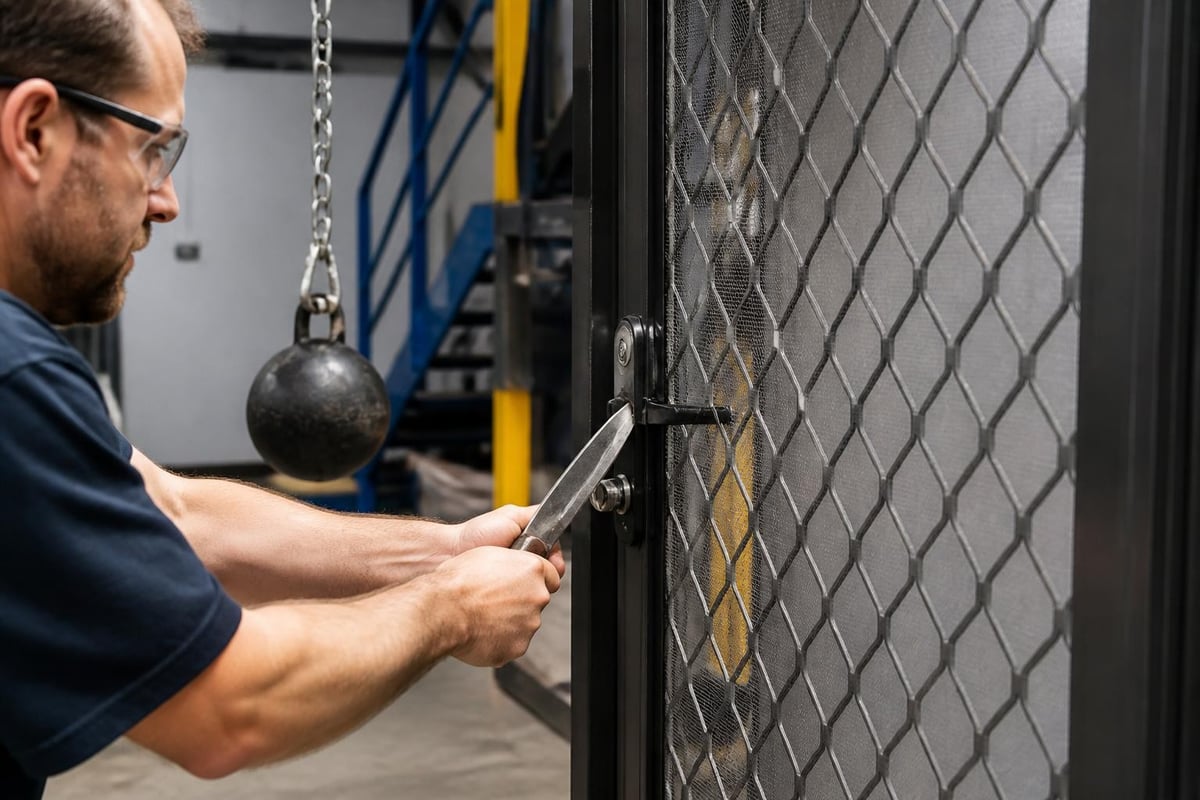
Security screen doors undergo standardized testing that simulates real-world attack methods. Tests typically include knife-shear resistance (attempts to cut through mesh), impact resistance (blunt-force strikes), jemmy testing (prying attacks), and pull testing (attempts to separate mesh from frame).
Products that pass these battery of tests earn classifications ranging from basic deterrent to maximum security. For South African applications, understanding how these international standards translate to local security needs helps property owners select appropriate protection levels.
Common attack methods tested:
While South Africa has specific building regulations, examining how stainless steel screen doors perform under international building codes provides useful benchmarks. The Miami-Dade County product approval system for hurricane-impact products demonstrates the rigorous testing protocol that premium security screens can meet when engineered for extreme conditions.
This level of certification, while not required in South Africa, indicates a product engineered to withstand sustained wind loads and impact from wind-borne debris-performance characteristics that translate directly to forced-entry resistance.
Proper installation determines whether a stainless steel screen door delivers its designed security performance. Even the strongest mesh and frame assembly becomes a liability when improperly anchored to the building structure.
Security installations require through-bolting into structural framing members, not simply surface-mounting to trim or siding. Anchoring points should be spaced no more than 300mm apart around the entire door perimeter, using corrosion-resistant fasteners rated for the application.
For masonry installations, chemical anchors or expansion bolts provide superior holding power compared to plastic anchors or toggle bolts. The frame-to-wall interface should be sealed against water intrusion while allowing the door assembly to function smoothly.
| Installation Type | Anchoring Method | Typical Spacing | Security Rating |
|---|---|---|---|
| Surface mount | Screws into trim | 400-600mm | Basic |
| Reveal mount | Screws into jamb | 300-400mm | Moderate |
| Security mount | Through-bolts to studs/masonry | 200-300mm | Maximum |
Stainless steel screen doors must balance security with weather protection. Quality installations incorporate brush seals or compression weather stripping around the entire perimeter, with particular attention to the threshold area where water infiltration is most likely.
Threshold design affects both accessibility and security. Low-profile thresholds improve accessibility for wheelchairs and daily foot traffic but may compromise weather sealing. Higher security thresholds create a positive seal against wind-driven rain but require a step-over entry.
For South African clients seeking both security and comfort, Clear Shield Security Screens combine high-strength stainless-steel mesh with thoughtfully engineered frame systems that deliver protection without compromising views or ventilation. These screens incorporate brush seals and aluminum frames in sliding or hinged configurations that suit various architectural styles and functional requirements.
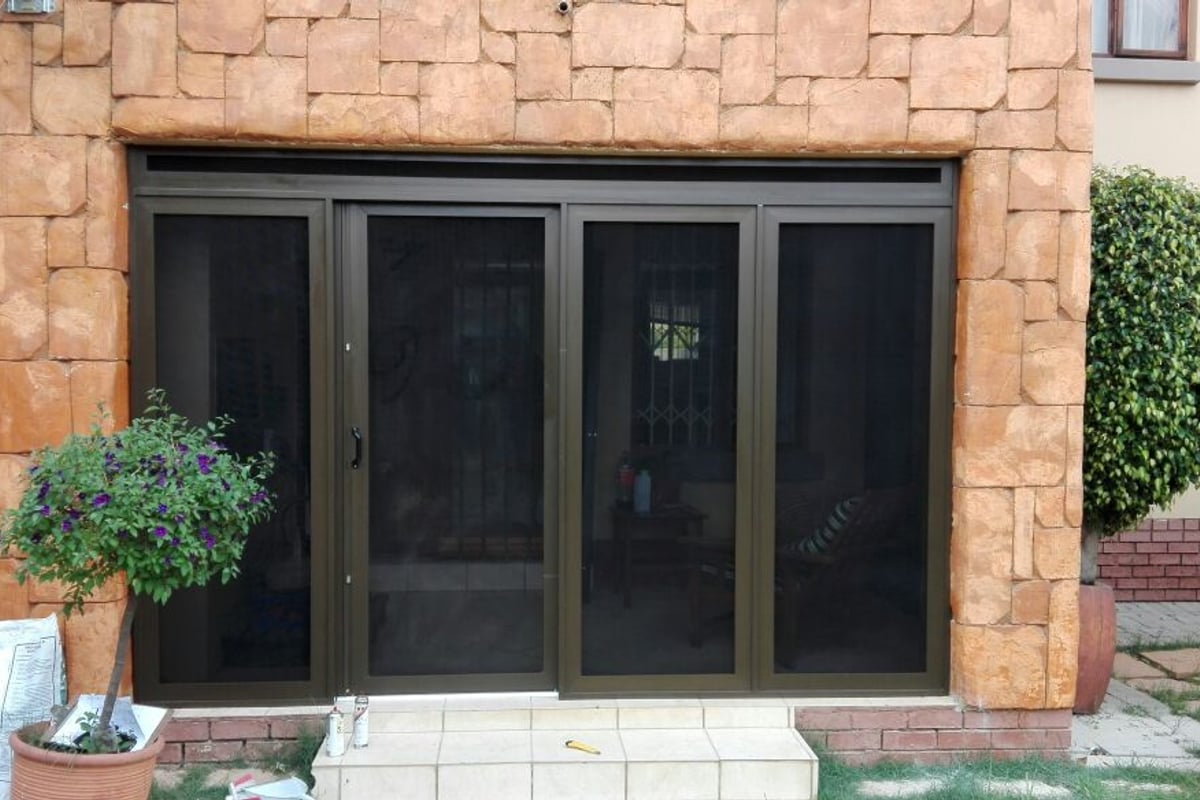
The low-maintenance reputation of stainless steel screen doors is well-deserved, but understanding proper care procedures maximizes service life and maintains security performance.
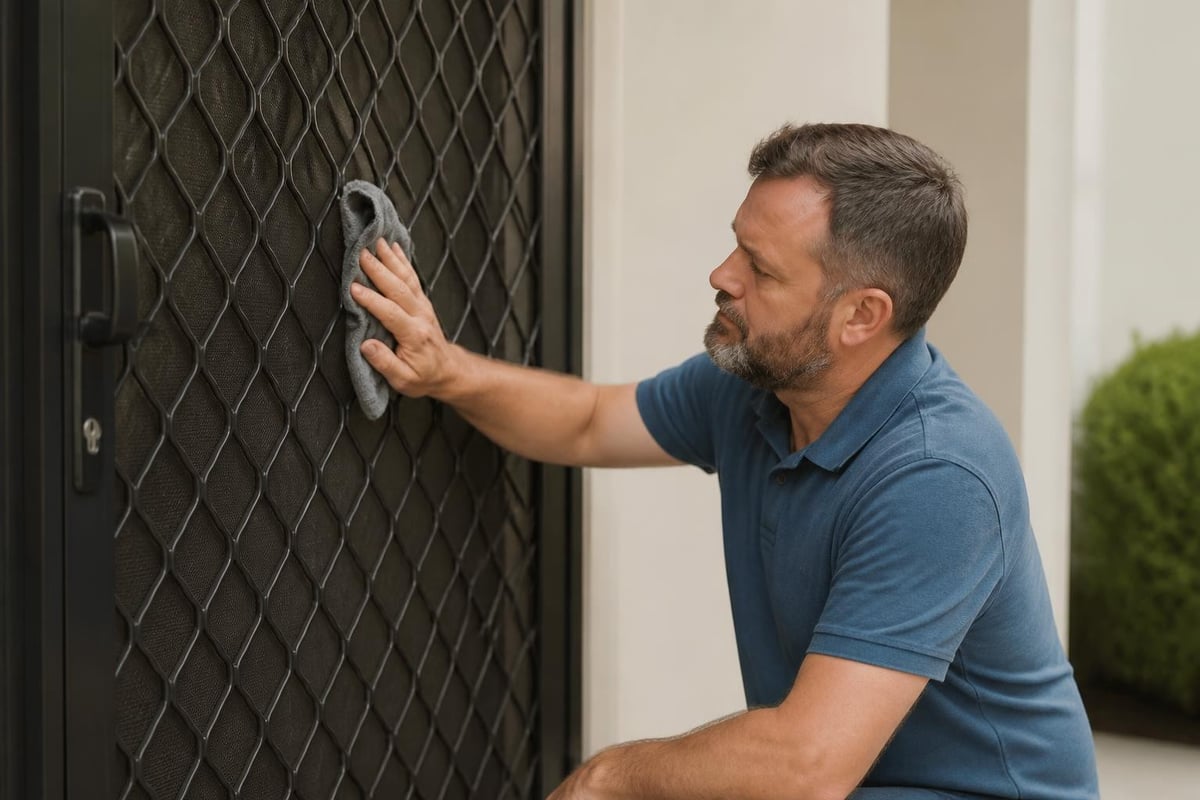
Stainless steel mesh resists corrosion but still benefits from periodic cleaning to remove accumulated dirt, salt deposits, and organic material. A soft brush with mild detergent and water is sufficient for most applications. Coastal installations should be cleaned quarterly to remove salt buildup before it can initiate corrosion.
Maintenance schedule recommendations:
Despite stainless steel's corrosion resistance, certain conditions can still cause staining or surface rust. Tea staining-a cosmetic surface discoloration-occurs when iron particles from nearby sources (tools, fasteners, construction dust) embed in the stainless surface and oxidize.
This can be removed with specialized stainless steel cleaners or a mild oxalic acid solution. True corrosion in high-grade stainless steel typically indicates improper grade selection (using 304 where 316 is required) or galvanic corrosion from dissimilar metal contact.
The recycling and lifecycle data for stainless steel demonstrates that properly maintained stainless steel installations can deliver 30-50 years of service life, after which the material retains significant recycling value-an important consideration for whole-lifecycle cost analysis.
Stainless steel screen doors align with sustainable building practices through their exceptional durability, recyclability, and minimal maintenance requirements.
Stainless steel production requires significant energy input, but the material's longevity distributes this environmental cost across decades of service. The lifecycle inventory and analysis data shows that stainless steel's 100% recyclability without degradation of properties makes it one of the most sustainable building materials when assessed on a whole-lifecycle basis.
A stainless steel screen door that provides 40 years of maintenance-free service has a dramatically lower environmental footprint than aluminum screens requiring replacement every 8-10 years or mild steel products that corrode and fail within 15 years in coastal environments.
Beyond security, stainless steel screen doors enable natural ventilation strategies that reduce mechanical cooling loads. By allowing property owners to safely open windows and doors during moderate weather, these screens facilitate passive cooling that can reduce air conditioning energy consumption by 15-30% in appropriate climates.
The mesh's open area percentage-typically 50-65% for security-grade products-allows substantial airflow while blocking insects and providing security. This ventilation performance becomes particularly valuable in South African climates where natural cooling can replace mechanical systems for significant portions of the year.
Modern stainless steel screen doors have evolved far beyond industrial appearances. Contemporary designs integrate seamlessly with architectural styles ranging from traditional to ultra-modern.
Powder-coated frames are available in a vast spectrum of colors, allowing stainless steel screen doors to complement existing trim colors, coordinate with architectural features, or create visual interest through contrast. Black, white, bronze, and grey tones remain popular, but custom colors can match specific design requirements.
The mesh itself is typically available in natural stainless (silver-grey) or black powder-coated finishes. Black mesh significantly improves outward visibility by reducing reflection and creating a "screen door disappearing" effect that maintains views while providing security.
Popular design configurations:
One primary advantage of stainless steel screen doors over traditional burglar bars is maintained visibility. Quality mesh products deliver 50-70% light transmission, allowing natural light to penetrate while providing security.
The wire diameter and mesh spacing directly affect visibility. Finer mesh blocks more light but provides better insect protection. Coarser mesh maximizes visibility and airflow but may allow smaller insects through. For most applications, an 11×11 or 12×12 mesh count with 1.0-1.2mm wire diameter provides the optimal balance.
Stainless steel screen doors represent a premium investment compared to standard aluminum screens or fixed burglar bars. Understanding the total cost of ownership helps justify the initial expenditure.
The installed cost of professional-grade stainless steel screen doors varies based on size, configuration, mesh grade, frame material, and hardware selection. For a standard single door installation in South Africa, prices typically range from R8,000 to R18,000 depending on specifications and security rating.
| Component | Basic Grade | Premium Security Grade |
|---|---|---|
| Mesh material | 304 stainless, 0.9mm wire | 316 stainless, 1.4mm wire |
| Frame construction | Standard aluminum extrusion | Heavy-duty reinforced frame |
| Locking system | Single-point lock | Three-point security lock |
| Installation | Standard mounting | Security-rated through-bolting |
| Typical installed cost | R8,000–R12,000 | R14,000–R18,000 |
When compared to insurance deductibles, property loss from break-ins, and the replacement cost of damaged windows and doors, stainless steel screen doors provide measurable return on investment. A single prevented burglary typically saves more than the door's cost when accounting for property loss, insurance impacts, and psychological trauma.
The durability advantage becomes clear over time. While powder-coated mild steel bars may cost 40% less initially, they often require replacement within 10-15 years due to corrosion. Stainless steel installations can provide 40+ years of service, making the annualized cost comparable or lower than seemingly cheaper alternatives.
Selecting appropriate stainless steel screen doors requires evaluating multiple technical factors against specific property needs and security concerns.
Coastal properties require Grade 316 stainless mesh and marine-grade hardware to resist accelerated corrosion from salt exposure. Inland properties can typically specify Grade 304 mesh with confidence in long-term performance.
High-traffic commercial applications benefit from heavy-duty hinges rated for 100,000+ cycle life and commercial-grade closers that ensure proper latching. Residential applications can use lighter-duty hardware while still maintaining security performance.
Specification checklist:
The complexity of security installations makes professional installation strongly recommended. Experienced installers understand structural anchoring requirements, proper weather sealing techniques, and hardware adjustment procedures that ensure long-term performance.
When evaluating installers, request references from similar installations, verify insurance coverage, and confirm that the installer follows manufacturer specifications for mounting and anchoring. Quality installation often matters more than incremental differences in product specifications.
South African property owners face unique security challenges that make stainless steel screen doors particularly relevant. High property crime rates in urban areas create demand for solutions that provide genuine security without creating a fortress-like appearance.
South Africa's diverse climate zones require different approaches. Coastal regions from Cape Town to Durban experience salt-laden air that accelerates corrosion of inferior materials, making marine-grade stainless essential. Interior plateau regions face intense UV exposure and temperature extremes that can degrade painted finishes and weaken polymer-coated materials.
The country's moderate climate in many regions makes natural ventilation strategies viable for extended periods, increasing the value proposition of screen doors that allow safe window and door operation during pleasant weather.
Professional stainless steel screen doors address the "smash-and-grab" style break-ins common in South African urban areas. The mesh provides a physical barrier that prevents entry even when glass is broken, buying time for security response or deterring criminals who seek quick, quiet entry.
Layered security approaches combining stainless steel screen doors with quality locks, outdoor lighting, and alarm systems create defense-in-depth that dramatically reduces successful burglary attempts. The visibility advantage of mesh screens maintains neighborhood watch effectiveness while providing protection.
Stainless steel screen doors deliver exceptional long-term value through their combination of security performance, corrosion resistance, and maintenance-free service life that can span decades. Whether you're protecting a coastal property requiring marine-grade materials, securing a commercial facility with high-traffic demands, or simply seeking peace of mind for your family home, these engineered systems provide measurable protection advantages over traditional alternatives. Limax Security Specialists brings decades of experience in specifying, installing, and servicing security solutions across South Africa, helping property owners select the right stainless steel screen door configuration for their specific needs, architectural style, and security requirements.


