
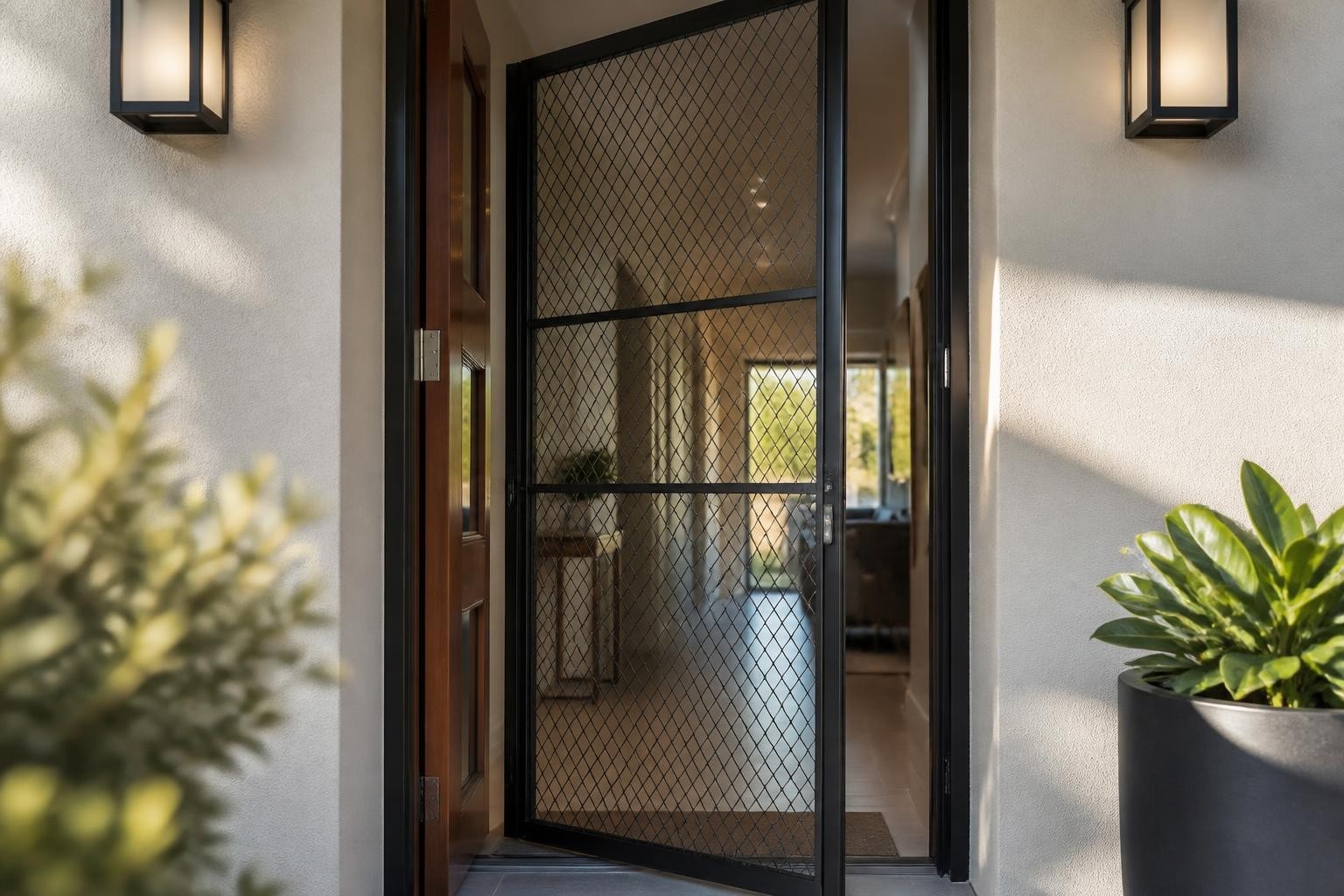
A screen gate door represents a critical layer in modern home security, blending physical protection with practical functionality. Unlike traditional solid security gates or simple mesh screens, this hybrid solution allows fresh air and natural light to flow through your entryway while maintaining a robust barrier against unauthorized access. For homeowners in security-conscious regions, understanding the nuances of screen gate door systems can mean the difference between vulnerable openings and well-protected living spaces that don't sacrifice comfort or aesthetics.
A screen gate door serves dual purposes that often seem contradictory: it must be transparent enough to permit visibility and airflow, yet strong enough to resist forced entry. This balance defines the entire category.
Every effective screen gate door comprises three essential elements working as an integrated system. The frame-typically constructed from aluminum, steel, or reinforced composites-provides structural integrity and anchoring points. The mesh or screening material forms the primary barrier, ranging from standard insect mesh to high-tensile stainless steel security screens. Finally, the hardware assembly includes hinges, locks, latches, and strike plates engineered to resist tampering and forced manipulation.
According to NIST research on physical security, door assemblies must be evaluated as complete systems rather than individual components. A screen gate door with premium mesh but inadequate frame anchoring or weak lock hardware fails the entire security objective.
Material specifications vary significantly:
The screen gate door design inherently involves compromise. Larger apertures in the mesh improve airflow and visibility but reduce resistance to probing and cutting attacks. Conversely, tighter weaves and thicker wire diameters enhance security but restrict air movement and can create a more enclosed feeling.
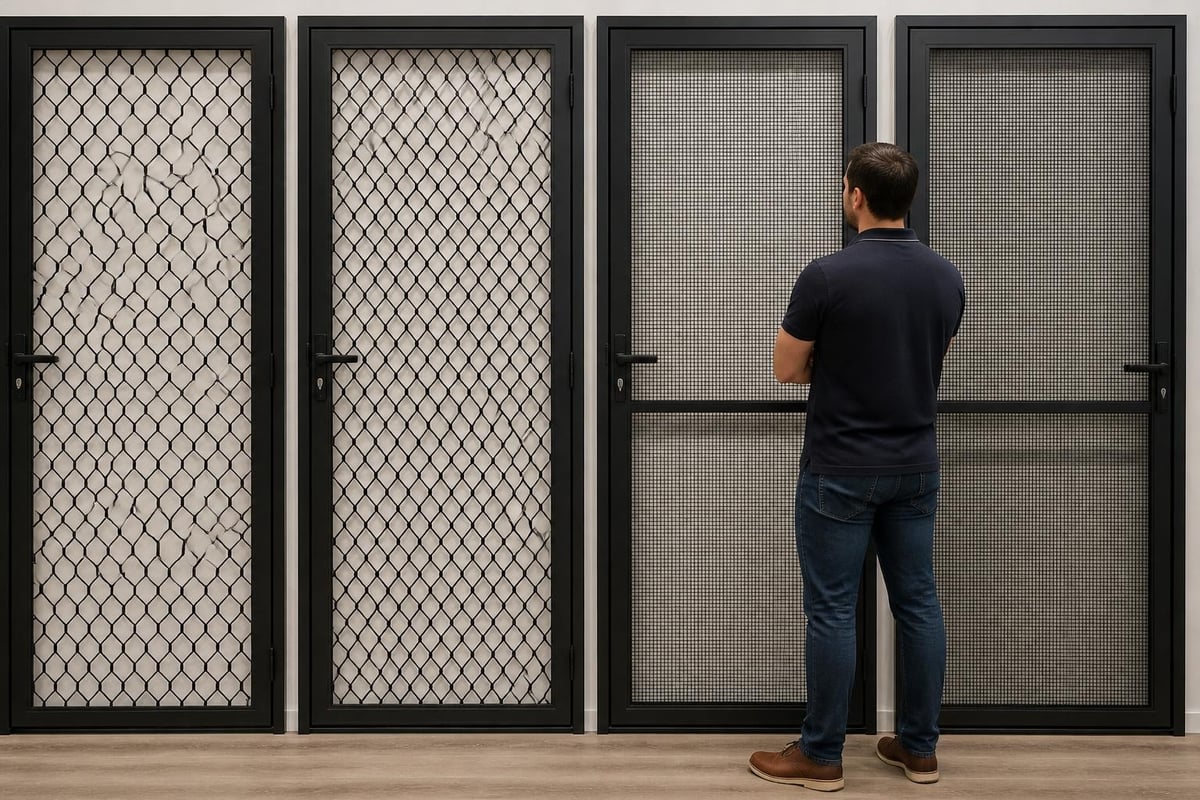
Professional installations address this by selecting mesh specifications matched to the specific threat environment and climate needs. Coastal properties benefit from marine-grade stainless steel that resists salt corrosion, while urban installations might prioritize impact resistance and probe protection over maximum airflow.
Screen gate door systems appear in multiple configurations, each optimized for different architectural contexts and security requirements.
Sliding screen gate doors operate on track systems, ideal for wider openings and limited clearance zones where a swinging door would obstruct pathways or furniture. These designs work particularly well for patio access, balcony entries, and spaces where multiple panels can stack to create full-width openings during low-threat periods.
| Configuration | Best Applications | Space Requirements | Operational Advantages |
|---|---|---|---|
| Single hinged | Standard doorways, main entries | 90-degree swing clearance | Familiar operation, robust locking |
| Double hinged | Wide entrances, French doors | Bilateral swing space | Balanced aesthetics, flexible access |
| Single sliding | Patios, balconies, narrow halls | Minimal projection | Space-efficient, smooth operation |
| Multi-panel sliding | Full-width openings, commercial | Track length = opening width | Maximum opening, scalable security |
Hinged screen gate doors provide superior security through multipoint locking mechanisms and rigid frame-to-jamb contact. The U.S. Access Board guidelines clarify that auxiliary doors like security screens must maintain proper maneuvering clearances and hardware accessibility, particularly in commercial or public-access settings.
Modern screen gate door designs have evolved beyond purely functional barriers into architectural elements that complement building facades. Powder-coating technology enables color-matching to existing trim, frames, and design schemes. Decorative patterns, laser-cut panels, and custom infills allow personalization without compromising the underlying security mesh.
Popular aesthetic approaches include:
The challenge lies in ensuring decorative elements don't create footholds, handholds, or leverage points that assist forced-entry attempts. Professional designers evaluate each aesthetic addition through a security lens before implementation.
Quantifying screen gate door performance requires standardized testing that simulates real-world attack methods and environmental stresses.
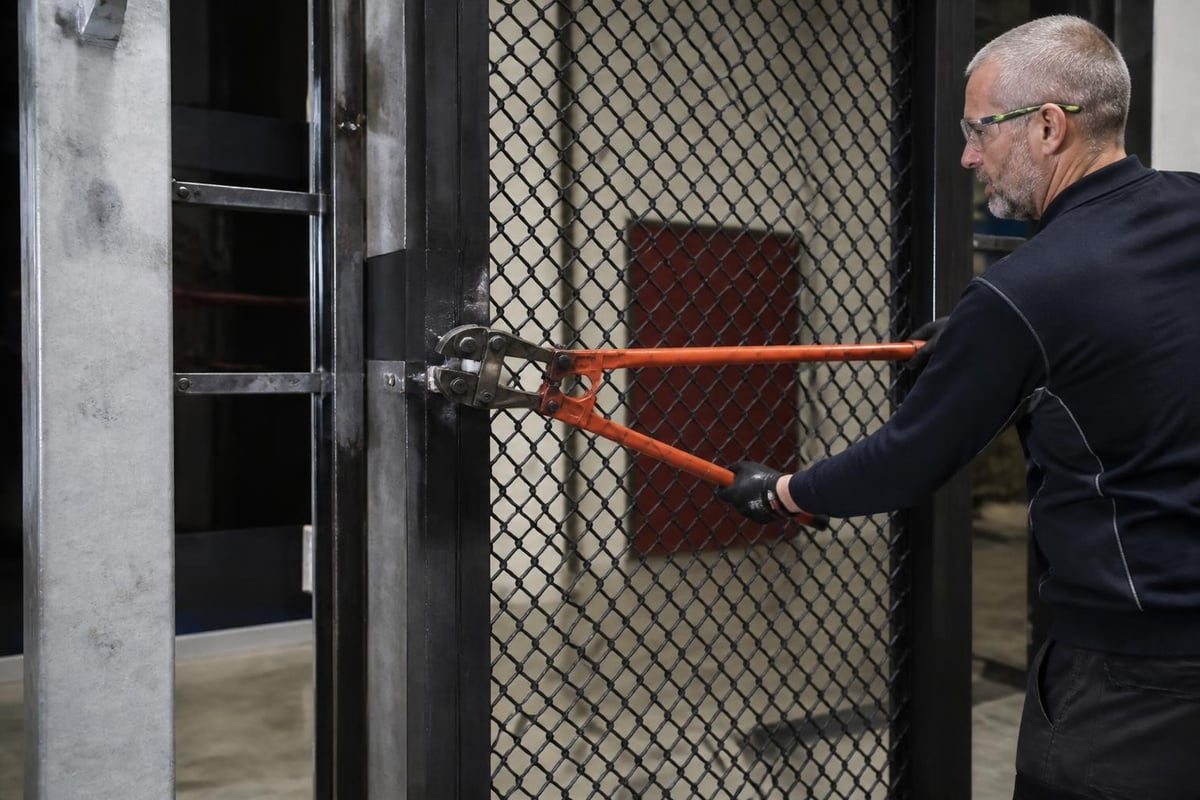
Australian Standard AS 5039 represents the most comprehensive security screen testing protocol globally. AS 5039.3:2023 details methods for impact, probe, shear, and jemmy testing, establishing measurable thresholds for security screen performance. Products certified to these standards undergo knife-shear tests (simulating cutting attacks), impact tests (blunt-force resistance), probe tests (penetration attempts), and jemmy tests (prying resistance).
North American standards, including ANSI/BHMA specifications, focus heavily on hardware performance-lock cycles, hinge durability, and finish longevity. These complement mesh-specific testing by ensuring the locking and mounting components match the screen's protective capabilities.
Laboratory testing provides baselines, but installed screen gate door performance depends on multiple field variables. Installation quality determines whether frame anchoring can resist the forces the mesh and hardware are rated to withstand. A screen tested to 500 joules impact resistance fails immediately if installed into weak or deteriorated doorjambs with inadequate fasteners.
Critical installation considerations:
Environmental exposure accelerates degradation. Coastal installations face salt-air corrosion, arid climates see dust infiltration into track systems, and humid regions battle mold growth in frame channels. Material selection and maintenance protocols must account for these local factors.
Professional screen gate door installation requires both technical skill and security awareness that typical door-hanging experience doesn't provide.
Before installation begins, competent installers evaluate the entire opening assembly. They measure frame squareness, assess jamb material and condition, identify structural load paths, and determine optimal mounting methods. This assessment often reveals issues invisible to untrained eyes: rotted timber jambs behind intact cladding, masonry with inadequate compressive strength for anchor loads, or frame distortion from foundation settlement.
Preparation work frequently includes jamb reinforcement with steel plates or composite inserts, frame shimming to correct out-of-square conditions, and weatherproofing upgrades to seal gaps that could admit moisture behind the new screen gate door assembly. Skipping these steps leads to premature failures-locks that won't engage properly, mesh that sags from inadequate frame tension, or complete pull-through during forced-entry attempts.
The lock mechanism represents the screen gate door's weakest point if improperly installed. Multi-point locks require precise strike-plate alignment at each locking point, with adequate backset depth to prevent prying leverage. Deadbolts must engage fully into reinforced jamb inserts, not just timber or plasterboard.
Installation sequence for optimal security:
Professional installers from companies like Limax Security Specialists understand that a screen gate door is only as secure as its installation. Limax's Clear Shield Security Screens combine high-strength stainless steel mesh with precision-engineered aluminum frames, but even these premium products depend on expert installation to deliver their full protective potential.
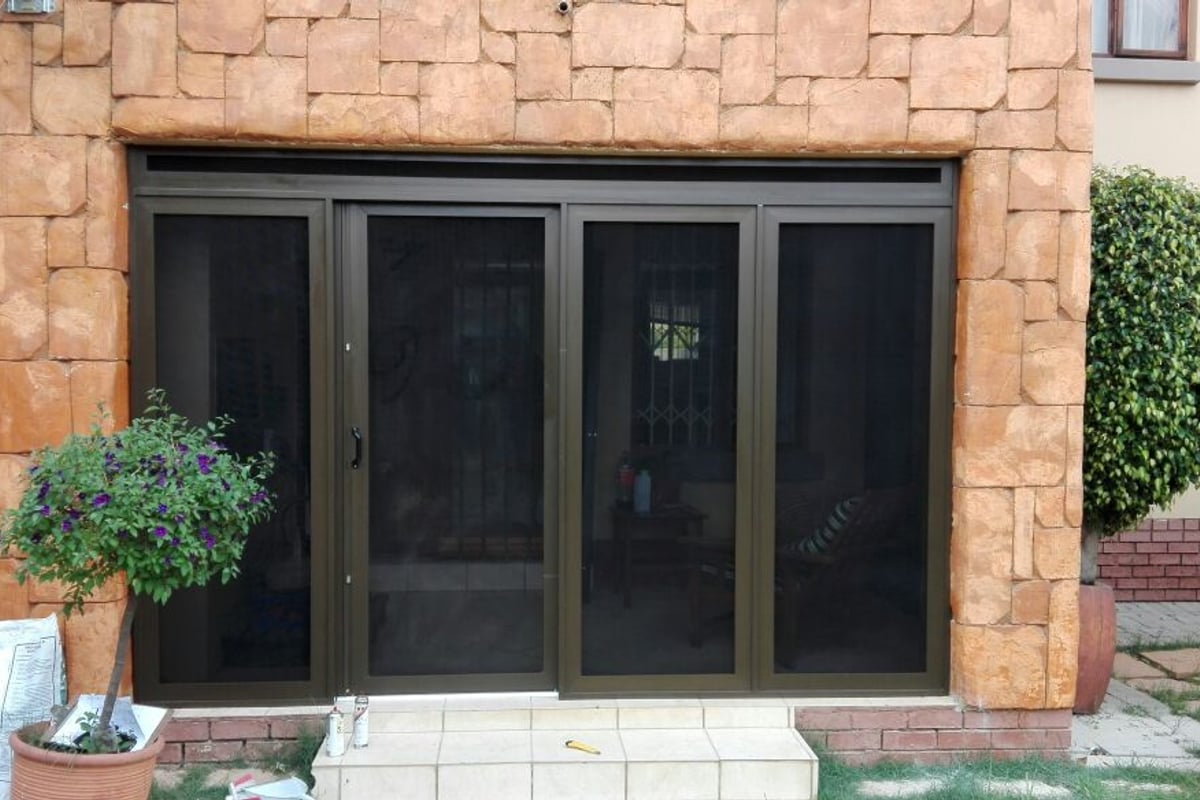
Common installation errors compromise even well-designed screen gate door systems. Undersized fasteners save minutes during installation but create permanent vulnerabilities. Using masonry anchors rated for static loads in applications experiencing dynamic impact loads leads to anchor failure under attack. Installing locks without through-bolting or adequate backing plates allows attackers to defeat the locking mechanism without touching the mesh.
| Common Error | Security Impact | Proper Correction |
|---|---|---|
| Insufficient frame anchors | Frame pull-through during prying | Minimum 6 anchors per jamb, 10mm diameter |
| Strike plates in soft material | Lock defeats easily, minimal force required | Steel reinforcement plates, through-bolted |
| Mesh installed without tension | Sagging, easier cutting, poor aesthetics | Proper tensioning during frame assembly |
| Inadequate weatherproofing | Corrosion at critical stress points | Complete seal system, drainage paths |
| Wrong fastener type for substrate | Anchor pull-out, complete assembly failure | Match fastener to tested substrate capacity |
A screen gate door requires ongoing maintenance to preserve both functionality and security performance over its service life.
Monthly visual inspections catch emerging issues before they become vulnerabilities. Check mesh tension and look for signs of impact, attempted cutting, or corrosion. Examine frame joints for cracks or separation. Test lock operation-smooth engagement indicates proper alignment, while binding or difficulty suggests frame movement or hinge wear. Inspect weatherstripping for gaps or deterioration that admits moisture to critical components.
Quarterly deep inspections should include fastener torque checks, hinge lubrication, lock mechanism cleaning, and track cleaning for sliding configurations. Annual professional inspections verify structural integrity, test lock security under load, and assess whether environmental degradation requires component replacement.
Proper maintenance extends screen gate door service life from 10-15 years to 20-25 years or more. Stainless steel mesh requires minimal care beyond periodic washing to remove accumulated dirt and salt deposits. Aluminum frames benefit from annual protective coating renewal, particularly in harsh environments. Lock mechanisms need appropriate lubricants-graphite or Teflon-based products that won't attract dust or gum up in temperature extremes.
Maintenance schedule for optimal longevity:
Environmental conditions dictate maintenance intensity. Coastal installations require more frequent corrosion inspections and protective coating renewal. High-traffic commercial applications need more frequent hinge and lock servicing. Homes with children or pets should inspect mesh integrity more often to catch damage before it progresses.
Choosing an appropriate screen gate door involves balancing security requirements, budget constraints, aesthetic preferences, and practical functionality.
Start by honestly evaluating the security threats your property faces. Urban areas with high burglary rates justify premium stainless steel mesh and reinforced frames. Suburban homes might achieve adequate protection with medium-grade screens focused more on deterrence than absolute resistance. Rural properties often prioritize pest exclusion and visibility over maximum security, though this varies by region.
Consider your building's overall security posture. Installing a high-security screen gate door on an entry adjacent to easily-broken windows creates a false sense of protection while wasting resources. Effective security treats the building envelope comprehensively, matching protection levels across all potential entry points.
Screen gate door pricing spans from a few hundred dollars for basic insect screens to several thousand for certified high-security installations. Understanding what drives these cost differences helps allocate budgets effectively.
Price factors and their security value:
The value equation shifts when considering insurance implications, property value impact, and peace-of-mind factors that are difficult to quantify financially. Many insurers offer premium reductions for certified security installations, partially offsetting initial costs over time.
A screen gate door you're embarrassed to display won't be used consistently, defeating its security purpose. Modern designs integrate security with aesthetics through color-matching, decorative elements, and slim profiles that don't dominate the entrance visually.
Practical functionality matters equally. Consider how the screen gate door fits your daily routine-does it interfere with furniture moving, grocery carrying, or child/pet access patterns? Sliding configurations work better for some situations, hinged for others. Think about seasonal use patterns and whether you need easy removal or reconfiguration capabilities.
A well-chosen screen gate door delivers years of reliable protection while maintaining the openness and ventilation that make living spaces comfortable. By understanding the technical performance factors, installation requirements, and maintenance needs outlined above, you can make informed decisions that balance security, functionality, and aesthetics for your specific situation. Whether you're protecting a residential property or securing a commercial entrance, Limax Security Specialists brings decades of experience in high-quality security installations across South Africa, helping you select and install the screen gate door system that best meets your unique requirements.


