
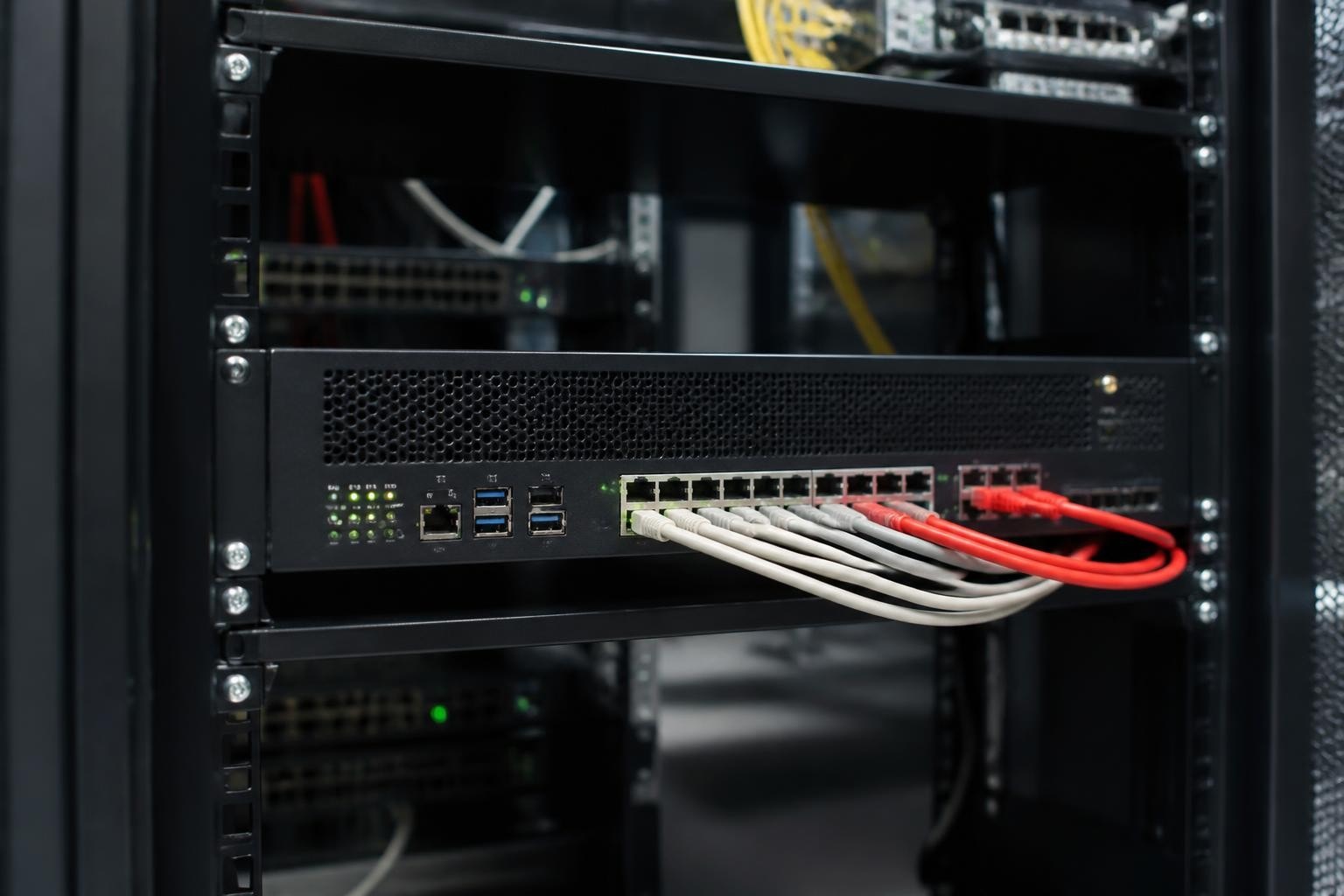
Network security has evolved from standalone point solutions into comprehensive platforms that address multiple threats simultaneously. A unified threat management device represents this shift, combining firewall protection, intrusion detection, antivirus scanning, virtual private networks, and content filtering into a single hardware or virtual appliance. For businesses managing complex security requirements, understanding how these integrated systems work and when to deploy them can mean the difference between comprehensive protection and vulnerable gaps in your digital perimeter.
The fundamental architecture of a unified threat management device consolidates security functions that traditionally required separate appliances, software licenses, and management consoles. Instead of routing traffic through multiple inspection points, modern UTM systems analyze packets in a coordinated pipeline that applies all security policies simultaneously.
This integration delivers several operational advantages over fragmented security stacks. Single-pane-of-glass management reduces administrative overhead, while coordinated threat intelligence sharing between modules improves detection accuracy. When the intrusion prevention system identifies suspicious behavior patterns, it can immediately inform the firewall and web filter to block related domains or IP addresses without manual intervention.
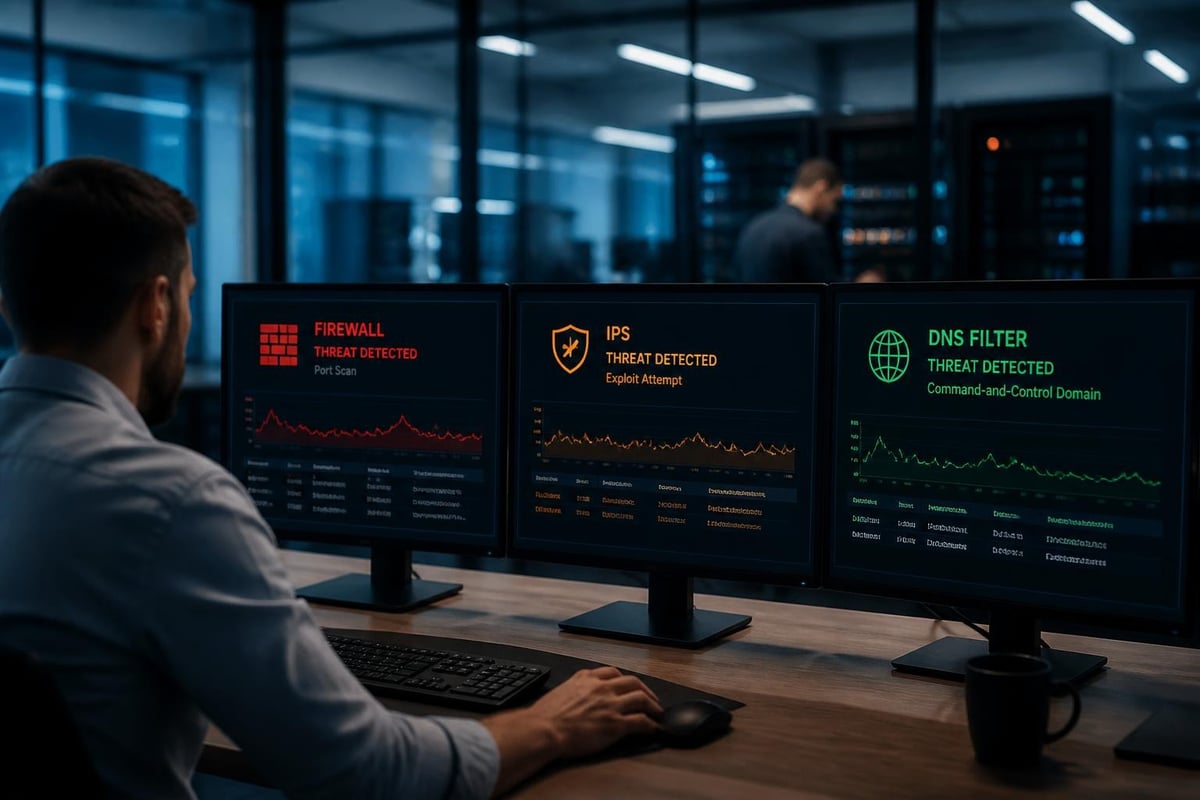
Every unified threat management device implements a baseline set of protective capabilities, though vendors differentiate through performance, feature depth, and policy flexibility.
Essential UTM modules include:
According to a comprehensive 2024 survey in IEEE Communications Surveys & Tutorials, modern UTM deployments increasingly incorporate machine learning models for behavior analysis, enabling faster response to zero-day threats and polymorphic malware variants.
The computational cost of running multiple deep-packet inspection engines simultaneously creates performance constraints that organizations must evaluate carefully. A unified threat management device rated for 1 Gbps firewall throughput might deliver only 300-400 Mbps when all security features are enabled, particularly when processing encrypted HTTPS traffic through SSL/TLS inspection.
Sizing a UTM appliance requires understanding actual traffic patterns, not just internet circuit bandwidth. Enterprises should measure:
| Traffic Profile | Firewall Only | With IPS + AV | Full UTM Suite |
|---|---|---|---|
| 1 Gbps device | 950 Mbps | 450 Mbps | 300 Mbps |
| 5 Gbps device | 4.8 Gbps | 2.2 Gbps | 1.5 Gbps |
| 10 Gbps device | 9.5 Gbps | 4.5 Gbps | 3.0 Gbps |
Typical throughput degradation when enabling security features (vendor specifications vary)
Modern unified threat management devices support three primary deployment patterns, each optimized for different network topologies and security requirements.
The most common configuration positions the UTM appliance at the network edge, inspecting all traffic between internal resources and the internet. This perimeter placement provides centralized visibility and control while simplifying policy management.
In a gateway deployment, the unified threat management device sits between the internet router and core switches, operating in routing or transparent bridge mode. All user traffic, server communications, and IoT device connections pass through the UTM for inspection before reaching their destination.
This architecture works well for organizations with clearly defined network boundaries, but struggles with cloud-first environments where applications live in SaaS platforms and infrastructure runs in AWS, Azure, or Google Cloud. Traffic between users and cloud services often bypasses the perimeter entirely, creating blind spots in security monitoring.
Enterprises with compliance requirements or high-value assets often deploy additional unified threat management devices internally to create security zones. A manufacturing facility might place a UTM between the corporate network and operational technology (OT) systems running industrial controls, ensuring that a compromised office workstation cannot directly access production equipment.
Benefits of internal segmentation:
The CISA guidance on critical infrastructure protection recommends UTM appliances as part of a layered defense strategy, particularly for organizations managing both IT and OT environments.
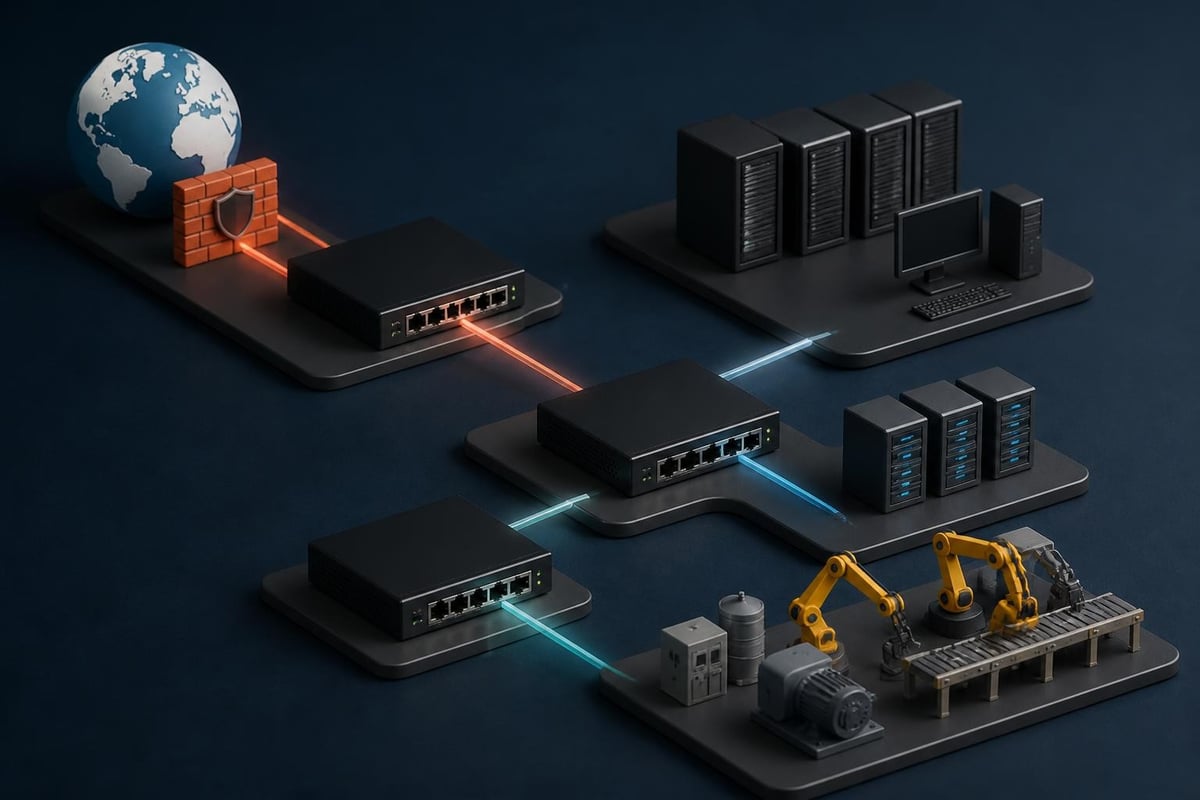
Virtual UTM appliances running in AWS, Azure, or Google Cloud protect cloud-native workloads with the same integrated security functions available in hardware devices. These virtual instances inspect traffic between virtual networks, cloud storage, and public-facing applications.
Hybrid deployments combine on-premises hardware with cloud instances, managed through a centralized policy controller that ensures consistent security rules across all locations. Branch offices might use lightweight UTM devices that synchronize configurations from a regional hub, while cloud workloads run virtual instances governed by the same policy framework.
The line between a unified threat management device and a next-generation firewall (NGFW) has blurred considerably, with many vendors offering products that satisfy both categories. Understanding the remaining distinctions helps organizations select the right platform for their specific requirements.
Traditional differentiation (less relevant in 2026):
| Feature Category | UTM Heritage | NGFW Heritage |
|---|---|---|
| Primary strength | Integrated security suite | Deep application control |
| Target market | SMB, distributed enterprise | Large enterprise, data center |
| Performance focus | Feature breadth | High throughput |
| Management approach | All-in-one simplicity | Granular policy control |
Modern products from major vendors incorporate capabilities from both categories, making label less important than evaluating specific requirements against tested performance. Rapid7’s fundamentals article on UTM provides a practical framework for comparing platforms based on actual security outcomes rather than marketing categories.
The baseline feature set described earlier represents table stakes for any unified threat management device in 2026. Leading platforms differentiate through advanced capabilities that address sophisticated attack techniques and complex compliance requirements.
With over 90% of internet traffic now encrypted, the ability to inspect HTTPS connections without breaking user experience or violating privacy regulations has become critical. Modern UTM devices implement SSL/TLS inspection through several approaches:
Organizations must balance security visibility against performance impact, privacy concerns, and certificate management complexity. Some platforms offer hardware acceleration specifically for cryptographic operations, maintaining acceptable throughput even with full inspection enabled.
Zero-day malware and targeted attacks often evade signature-based detection. Advanced unified threat management devices incorporate sandboxing capabilities that execute suspicious files in isolated virtual environments, observing behavior for malicious indicators before allowing them to reach endpoints.
Cloud-based sandboxing offloads this computationally intensive analysis to vendor-operated infrastructure, returning a verdict within seconds. On-premises sandboxing provides faster results and keeps potentially sensitive files within organizational boundaries, at the cost of additional hardware and licensing.
Physical security installations face similar challenges when protecting valuable assets. Just as a unified threat management device creates layered digital defenses, physical security requires multiple integrated barriers. Organizations protecting high-value facilities often combine perimeter security with specialized access controls. For properties requiring protection from both human intruders and wildlife, Monkey proof gates provide engineered solutions that prevent unauthorized access while maintaining aesthetic appeal, demonstrating how integrated security approaches work across both digital and physical domains.

No unified threat management device operates in isolation. Modern platforms consume threat intelligence feeds from multiple sources, correlating internal observations with global attack trends to improve detection accuracy and reduce false positives.
Intelligence sources include:
The IEEE Technology Navigator on firewall computing tracks emerging research in this area, including techniques for automated threat intelligence correlation and real-time policy updates based on active campaigns.
Technical capabilities matter little if security teams cannot effectively deploy, monitor, and maintain the unified threat management device throughout its lifecycle. Operational requirements often drive platform selection as much as feature specifications.
Organizations operating multiple UTM appliances across branch locations, data centers, and cloud environments require centralized management that provides consistent policy enforcement with minimal administrative overhead.
Key management capabilities:
Cloud-delivered management platforms eliminate the need to maintain separate management servers while providing anywhere-access to security configurations and monitoring dashboards.
Comprehensive logging across all security modules generates valuable forensic data during incident investigations, but creates storage and analysis challenges that organizations must address proactively.
Modern unified threat management devices integrate with Security Information and Event Management (SIEM) platforms, forwarding normalized logs for correlation with data from endpoints, servers, and other security tools. This integration enables detection of multi-stage attacks that span network and endpoint layers.
| Log Category | Retention Requirement | Storage Volume (GB/day per 1000 users) |
|---|---|---|
| Firewall permit/deny | 90 days (typical) | 5-8 GB |
| IPS alerts | 365 days | 2-4 GB |
| Web filtering logs | 180 days | 15-20 GB |
| VPN connections | 90 days | 1-2 GB |
| Full packet capture | 7 days | 200-500 GB |
Approximate log volumes vary significantly based on user activity, enabled features, and logging verbosity
Security appliances require regular firmware updates to address vulnerabilities, add features, and improve performance. Organizations must balance the need for current protections against the operational risk of updates that might introduce instability or require configuration changes.
Establishing a structured update cadence:
Choosing the right unified threat management device requires matching technical specifications, licensing models, and support options to organizational size, security maturity, and operational capabilities.
Small organizations typically prioritize simplicity, all-inclusive licensing, and minimal ongoing management requirements. Entry-level UTM appliances designed for this market segment include built-in WiFi controllers, basic SD-WAN capabilities, and subscription bundles that cover all security features without complex licensing calculations.
Critical evaluation factors:
Organizations in this segment often operate multiple locations, manage compliance requirements, and employ dedicated IT staff who need granular control over security policies. Platform flexibility and scalability become more important than simplicity.
Mid-market deployments frequently implement high-availability pairs of unified threat management devices to eliminate single points of failure. Active-active clustering provides both redundancy and increased throughput, while active-passive configurations prioritize failover capability.
Large organizations and managed security service providers (MSSPs) require platforms that support thousands of concurrent policies, multi-tenant isolation, and integration with existing security orchestration platforms. Performance requirements extend into multi-gigabit throughput with minimal latency impact.
Enterprise UTM deployments often specialize by function, using high-throughput models for data center traffic inspection and branch-optimized appliances for remote locations. Centralized policy management becomes essential when operating dozens or hundreds of devices across geographically distributed infrastructure.
Research from organizations like the SANS Institute provides case studies and lessons learned from enterprise UTM deployments, helping security teams avoid common pitfalls and optimize configurations for their specific environments.
A unified threat management device functions as one component within a comprehensive security strategy that spans endpoints, applications, data, and cloud infrastructure. Effective integration with complementary security tools amplifies the value of each individual platform.
While UTM devices protect the network perimeter and internal segments, EDR platforms monitor individual workstations and servers for malicious activity. Bidirectional integration between these systems creates powerful correlation opportunities.
When an endpoint detects ransomware encryption activity, it can trigger the unified threat management device to quarantine the affected system, block command-and-control traffic, and prevent lateral movement to other devices. Conversely, when the UTM identifies a phishing site, it can instruct EDR agents to scan for related indicators of compromise across all endpoints.
Organizations embracing SaaS applications and cloud infrastructure need visibility into cloud API activity that bypasses traditional network security. CASB platforms monitor cloud application usage, enforce data loss prevention policies, and detect anomalous user behavior.
Coordinating CASB and unified threat management device policies ensures consistent security enforcement whether users access applications through the corporate network or directly from home offices and remote locations. Shared policy frameworks and common threat intelligence feeds reduce administrative overhead while improving security outcomes.
Enterprise security operations centers leverage SOAR platforms to automate response workflows, reducing the time between detection and remediation. Integration with the unified threat management device enables automated responses to common threat scenarios.
Example automation workflows:
A unified threat management device consolidates essential network security functions into an integrated platform that simplifies operations while providing comprehensive threat protection. When physical and digital security strategies align through layered defenses and integrated controls, organizations create resilient protection against evolving threats. Limax Security Specialists brings this same philosophy to physical security installations across South Africa, combining proven technology with expert deployment to protect what matters most-contact us today to discuss how integrated security solutions can strengthen your organization's defenses.


