
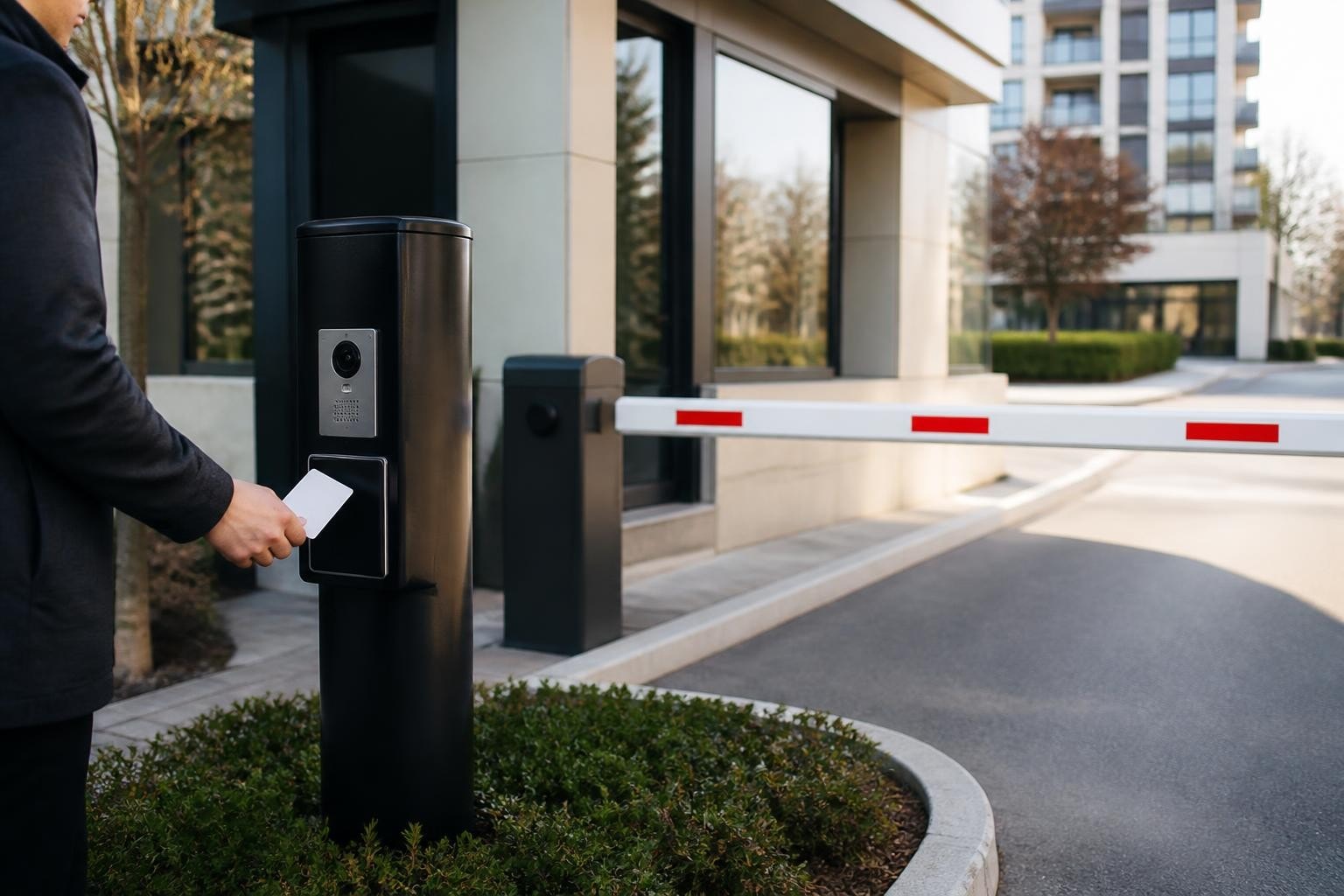
Property security begins at the perimeter, and access gates serve as the first line of defense against unauthorized entry. Whether protecting a private residence, commercial facility, or industrial complex, these controlled entry points combine physical barriers with intelligent systems to regulate who enters and exits. As security threats evolve and property owners demand smarter solutions, understanding the full spectrum of access gate options, technologies, and compliance requirements has become essential for making informed decisions that balance protection, convenience, and regulatory obligations.
Access gates function as both physical barriers and control mechanisms, creating secure boundaries around properties while enabling authorized passage. Unlike traditional fences or walls, these systems incorporate movable barriers that open on demand, paired with identification and verification technologies that determine who gains entry.
The core components work together seamlessly. A physical gate structure-whether swing, slide, or overhead-forms the barrier itself. Control electronics manage opening and closing operations, while access credentials (cards, codes, biometrics, or vehicle tags) verify authorization. Power systems, safety sensors, and override mechanisms complete the installation, ensuring reliable operation under normal conditions and emergencies alike.
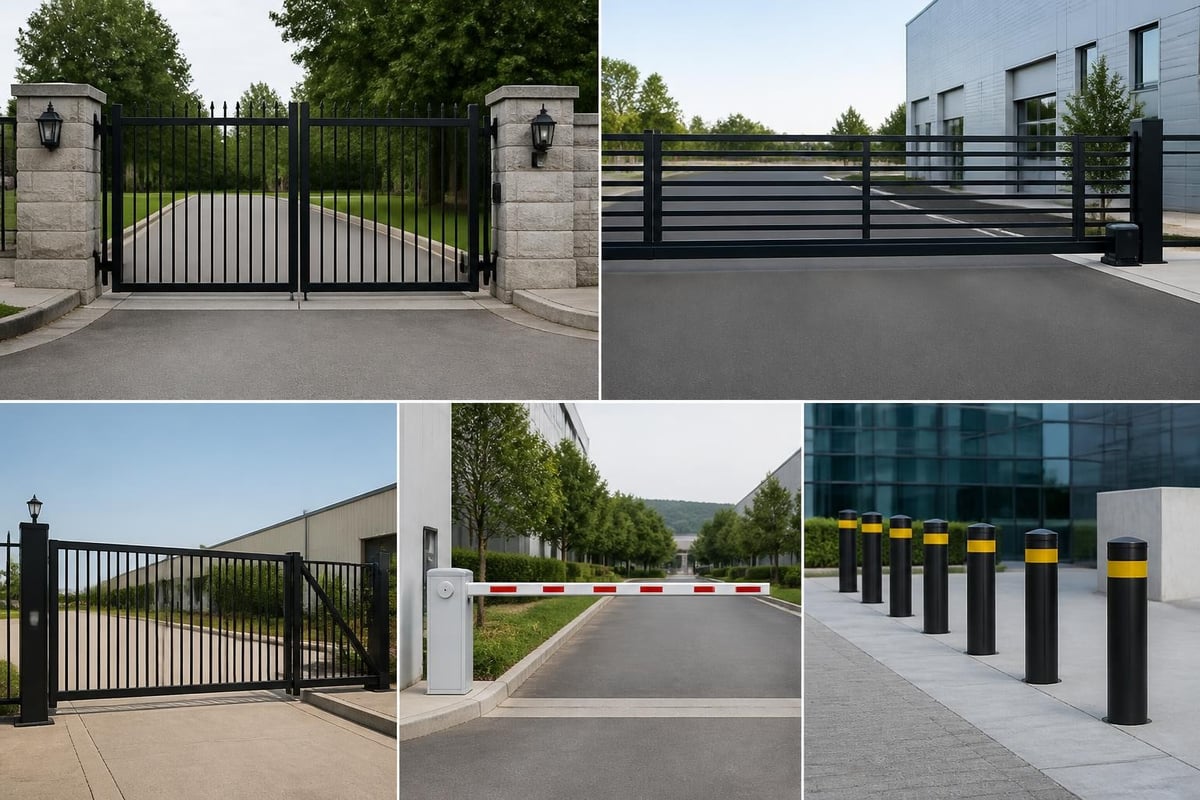
Different properties demand different solutions, and gate configurations vary widely to meet diverse needs:
Installation context drives configuration choice. Residential properties often favor swing gates for their visual appeal, while commercial sites prioritize sliding or cantilever designs that handle continuous use. Security-critical locations may deploy bollards or crash-rated barriers engineered to stop vehicles traveling at specific speeds.
Modern access gates rely on sophisticated control systems that authenticate users, log entries, and integrate with broader security infrastructure. These technologies have evolved far beyond simple keypads, offering layered verification and real-time monitoring capabilities.
Credential technologies form the foundation of access control:
| Technology | Advantages | Ideal Applications |
|---|---|---|
| Proximity cards | Cost-effective, easy to manage | Office complexes, residential estates |
| Keypads | No physical credential needed | Delivery areas, secondary gates |
| Long-range RFID | Hands-free vehicle access | High-traffic commercial sites |
| Biometrics | Highest security, non-transferable | Data centers, restricted facilities |
| License plate recognition | Automated vehicle tracking | Parking structures, logistics hubs |
| Mobile credentials | Smartphone-based, remotely manageable | Modern residential, flexible workspaces |
Integration capabilities extend gate functionality beyond simple open-close operations. When connected to security management platforms, access gates become data sources that track movement patterns, trigger alerts for unauthorized attempts, and coordinate with video surveillance. An attempted breach can simultaneously lock down multiple gates, alert security personnel, and begin recording-all within milliseconds.
The official U.S. Department of Justice ADA design standards establish critical requirements for accessible design, ensuring that access gates accommodate individuals with disabilities through proper width clearances, operating forces, and timing sequences.
Access gates present serious hazards when improperly designed or installed, making compliance with safety standards non-negotiable. Crushing and entrapment risks have led regulatory bodies worldwide to establish stringent requirements that manufacturers and installers must follow.
The UK Health & Safety Executive provides comprehensive guidance on powered gate risks, emphasizing that owners bear legal responsibility for safe operation. Their framework addresses installation quality, maintenance protocols, and user training-all essential for preventing serious injuries.
In North America, UL 325 and UL 294 standards govern gate operators and access control units, requiring listed products to incorporate specific safety features. These include:
The DASMA technical guidance documents offer industry best practices covering construction, installation methodology, testing procedures, and ongoing maintenance schedules. Following these protocols significantly reduces liability exposure while protecting users.
Compliance extends beyond initial installation. Regular inspections verify that safety systems remain functional, adjustments maintain proper force limits, and wear hasn't compromised structural integrity. Documentation of these inspections demonstrates due diligence in legal contexts.

Homeowners face unique decisions when selecting access gates, balancing security needs with aesthetic preferences and neighborhood character. The right solution protects property without creating a fortress-like appearance that diminishes curb appeal or community integration.
Material selection influences both performance and appearance. Steel offers maximum strength and durability, aluminum resists corrosion while remaining lightweight, and wrought iron delivers classic elegance. Wood composites blend with natural landscapes, though they require more maintenance than metal alternatives. High-quality powder coating protects metal gates from weathering while offering color customization.
Automation level deserves careful consideration. Fully automated systems provide maximum convenience-residents never exit vehicles to open gates manually. Partial automation may suit secondary entrances or properties where manual operation serves as backup. Solar-powered systems eliminate trenching for electrical supply, making them cost-effective for remote gate locations.
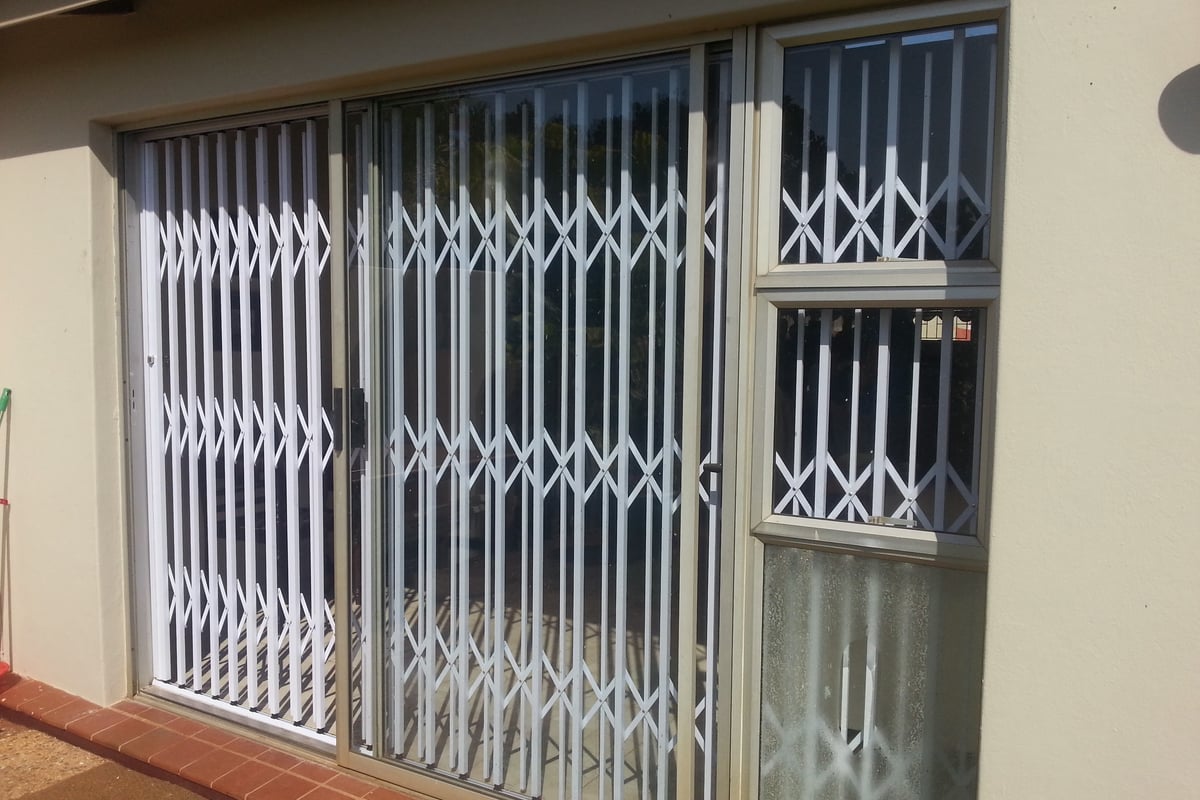
For properties in areas with persistent wildlife challenges, specialized designs address specific intrusion risks. Specialized solutions prevent climbing and ensure complete perimeter security without sacrificing the clean lines that maintain property values.
Smart home platforms increasingly incorporate access gates as controllable devices. Integration enables scheduling (automatic closure after specific times), geofencing (opening as residents approach), and notification systems that alert homeowners to entries and exits. Video intercom systems let residents verify visitor identity before granting access, while temporary codes accommodate service providers without compromising permanent credentials.
Commercial properties face higher traffic volumes, stricter liability concerns, and more complex operational requirements than residential installations. Access gates at these facilities must handle dozens or hundreds of daily cycles while maintaining security standards and meeting regulatory obligations.
High-cycle hardware becomes essential. Commercial-grade operators incorporate industrial motors, reinforced drive systems, and components rated for continuous duty. While residential gates typically endure 5-10 cycles daily, commercial installations may process 50-200 cycles, demanding exponentially greater durability.
Traffic management strategies optimize flow during peak periods:
Industrial facilities with security-critical operations may implement multi-factor authentication, requiring both credential verification and biometric confirmation. This layered approach prevents credential sharing while creating detailed audit trails that document every access event.
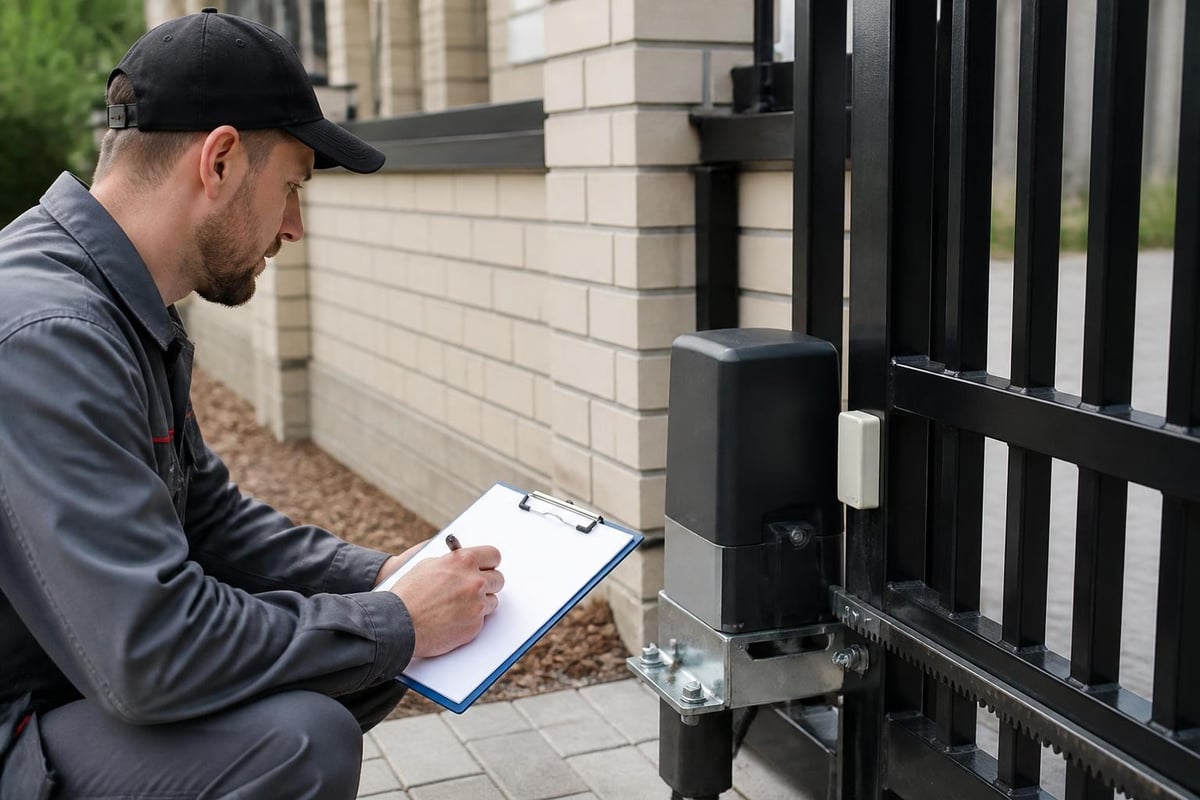
Access gates require proactive maintenance to ensure reliable operation and prevent failures that compromise security. A structured maintenance program addresses mechanical wear, electronics calibration, and safety system verification on regular schedules.
| Frequency | Mechanical Tasks | Electrical Tasks | Safety Tasks |
|---|---|---|---|
| Weekly | Lubricate hinges/track | Test battery backup | Verify sensor operation |
| Monthly | Inspect fasteners | Clean photo eyes | Test emergency release |
| Quarterly | Adjust limit switches | Check power connections | Measure closing force |
| Annually | Professional inspection | Controller diagnostics | Full safety audit |
Seasonal considerations affect maintenance schedules. Winter conditions demand additional attention to ice accumulation in tracks, battery performance in cold temperatures, and sensor alignment after freeze-thaw cycles. Summer heat may require hydraulic fluid checks and electronics cooling system verification.
Professional service contracts ensure that qualified technicians perform complex adjustments, particularly for safety-critical systems. International standards like IEC 60839-11-2 define requirements for electronic access control system installation and ongoing service, providing frameworks that maintenance programs should follow.
Access gate technology continues advancing rapidly, driven by artificial intelligence, cloud connectivity, and evolving security threats. Understanding emerging capabilities helps property owners and security managers plan installations that remain relevant as requirements change.
Artificial intelligence enhances gate systems in multiple ways. Machine learning algorithms detect anomalous behavior patterns-repeated failed access attempts, unusual entry times, or credential sharing. Predictive maintenance analyzes sensor data to identify component wear before failures occur, scheduling service proactively rather than reactively.
Cloud-based management platforms shift control infrastructure from on-site servers to distributed networks. This architecture enables remote administration from any internet-connected device, simplifies multi-site management for organizations with distributed properties, and ensures automatic updates that patch vulnerabilities without on-site technical visits.
The NIST framework for operational technology security addresses how physical access points like gates integrate into broader cyber-physical security architectures. As access control systems connect to enterprise networks, they inherit IT security requirements including encryption, authentication protocols, and intrusion detection.
Behavioral analytics represent the next frontier in access control. Rather than simply verifying that a credential is valid, advanced systems assess whether access patterns match historical norms. An employee badge used at an unusual time or location triggers additional verification steps, preventing credential theft exploitation.
Sustainability considerations increasingly influence gate selection. Solar-powered operators eliminate grid dependency and reduce operating costs. Energy-efficient motors minimize electricity consumption during opening cycles. Recyclable materials and powder coating processes reduce environmental impact across the product lifecycle.
Network connectivity brings convenience but introduces vulnerabilities that traditional mechanical gates never faced. Access control systems connected to corporate networks or internet-based management platforms become potential attack vectors that require dedicated security measures.
Attack surface reduction begins with network segmentation. Access control systems should operate on isolated network segments with strictly controlled pathways to other systems. This architecture prevents compromised gates from providing access to broader IT infrastructure.
Critical security practices include:
Vendor selection should prioritize manufacturers with demonstrated security commitments, including responsible disclosure programs, regular security audits, and documented vulnerability response processes. Systems lacking security update mechanisms become permanent liabilities that cannot be patched when weaknesses emerge.
Access gate investments require justification beyond simple security improvement. A comprehensive analysis considers direct costs, operational savings, liability reduction, and property value enhancement.
Direct costs include equipment, installation labor, electrical infrastructure, and permits. Residential installations typically range from moderate to premium depending on automation level, size, and feature complexity. Commercial projects scale significantly higher due to heavier-duty hardware, multiple lanes, and integrated control systems.
Operational benefits deliver ongoing value:
Liability protection provides less tangible but equally important value. Properly designed and maintained access gates with comprehensive safety features reduce premises liability exposure. Documentation of compliance with applicable standards demonstrates reasonable care in legal contexts.
Successful access gate projects begin long before equipment arrives, with thorough site assessment and preparation that addresses civil, electrical, and regulatory requirements.
Site surveys identify critical factors:
Electrical infrastructure must support both normal operation and backup power. Typical installations require dedicated circuits sized for motor loads, plus battery backup systems maintaining emergency operation during power failures. Solar installations need southern exposure and structural capacity for panel mounting.
Permitting processes vary by jurisdiction but commonly include building permits, electrical permits, and inspections verifying code compliance. Some municipalities require traffic impact studies for commercial installations that affect public roadways. Working with experienced installers familiar with local requirements streamlines approval processes.
Foundation design proves critical for long-term performance. Gate posts must resist lateral forces during wind events and daily operation cycles. Concrete footings extend below frost lines in cold climates, preventing heaving that misaligns components. Proper drainage around foundations prevents water accumulation that accelerates corrosion.
Even well-designed systems experience occasional problems, and understanding common failure modes enables quick diagnosis and resolution. Many issues stem from environmental factors, user error, or normal wear rather than fundamental design flaws.
Intermittent operation often traces to:
Slow response times may indicate controller configuration issues, inadequate power supply, or mechanical binding requiring adjustment. Gates should complete full cycles within manufacturer-specified times; significant deviations suggest underlying problems requiring professional attention.
Unusual noise during operation signals mechanical issues. Grinding sounds indicate misaligned components or inadequate lubrication. Clicking or buzzing from electrical components suggests loose connections or failing relays. Addressing these symptoms promptly prevents minor issues from escalating into expensive failures.
Installation quality determines long-term satisfaction and security effectiveness. Selecting qualified professionals ensures proper design, compliant installation, and reliable ongoing support.
Evaluation criteria should include:
Local expertise matters. Installers familiar with regional climate conditions, soil types, and regulatory requirements design systems that perform reliably in specific environments. They maintain relationships with inspectors and understand permit processes, avoiding delays that plague out-of-area contractors.
Post-installation support separates exceptional providers from adequate ones. Clarify response times for service calls, parts availability, emergency support coverage, and training provided to owners and operators. Systems are only as reliable as the support infrastructure maintaining them.
Access gates represent sophisticated security investments that demand careful planning, proper installation, and ongoing maintenance to deliver their full protective value. From selecting appropriate configurations and control technologies to ensuring compliance with safety standards and maintaining reliable operation, every decision shapes system effectiveness and longevity. Limax Security Specialists brings decades of experience designing and installing comprehensive security solutions across residential and commercial properties throughout South Africa, combining technical expertise with responsive service that keeps your access control systems performing at peak effectiveness year after year.


