
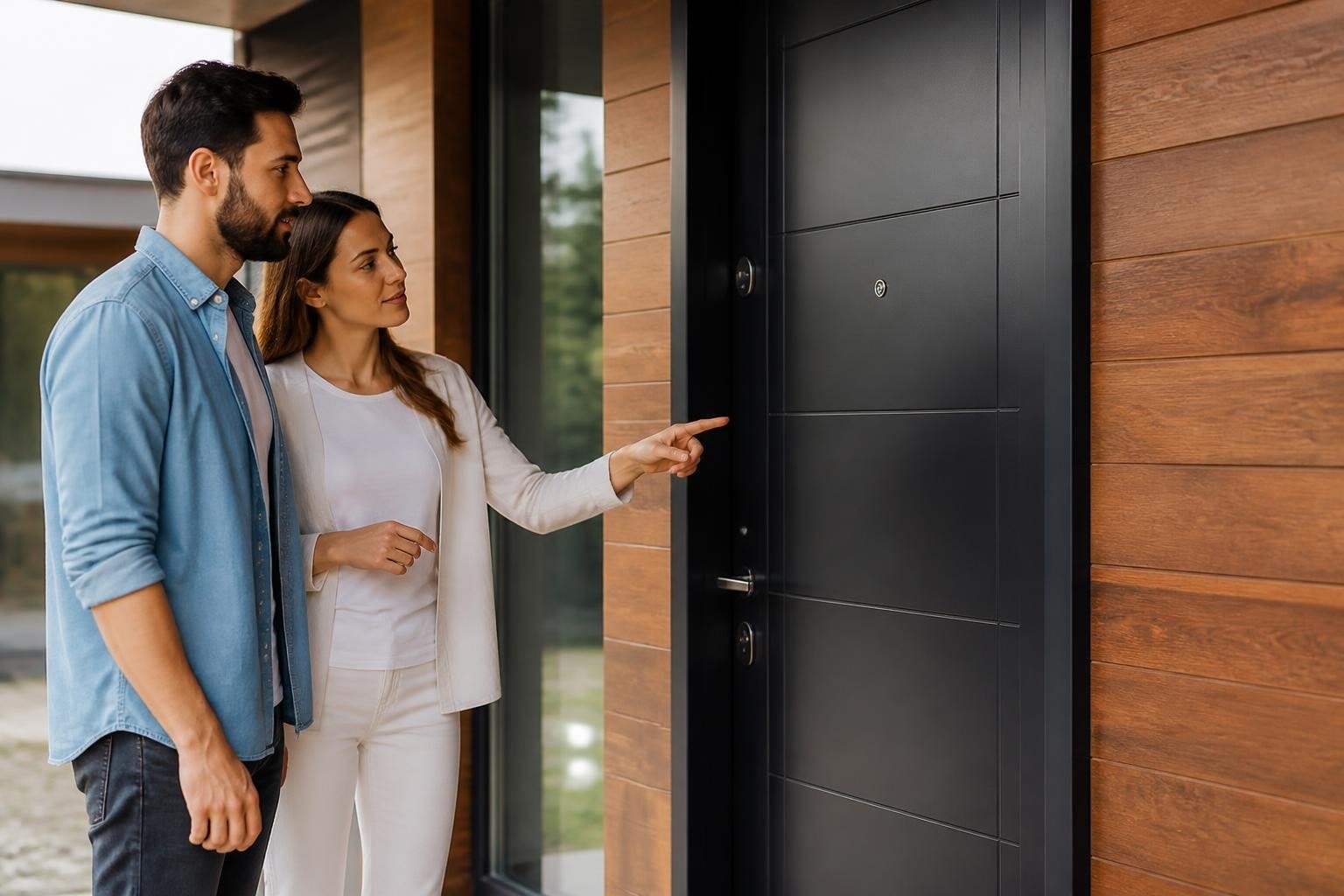
Understanding the price of security doors requires looking beyond the sticker price. Homeowners and property managers investing in security doors in 2026 face a complex market shaped by material costs, labor rates, certification requirements, and long-term value considerations. Whether you're protecting a suburban home or a commercial facility, the right security door balances upfront investment with decades of protection and peace of mind.
The primary factor affecting the price of security doors is the material from which the door is constructed. Steel remains the most common choice, offering excellent strength-to-cost ratios across residential and light commercial applications. Entry-level steel security doors typically start around $600–$1,200 for the door unit alone, while premium steel assemblies with reinforced frames and multi-point locking systems can reach $2,500–$4,500.
Steel security doors come in several gauge thicknesses, each affecting both performance and price. Twenty-gauge steel represents the minimum for basic residential security, while 16- or 14-gauge construction offers substantially greater resistance to forced entry.
| Steel Gauge | Typical Use | Price Range (Door Only) |
|---|---|---|
| 20-gauge | Light residential | $600–$1,200 |
| 18-gauge | Standard residential | $900–$1,800 |
| 16-gauge | Enhanced residential, light commercial | $1,400–$2,800 |
| 14-gauge or heavier | High-security residential, commercial | $2,200–$5,000+ |
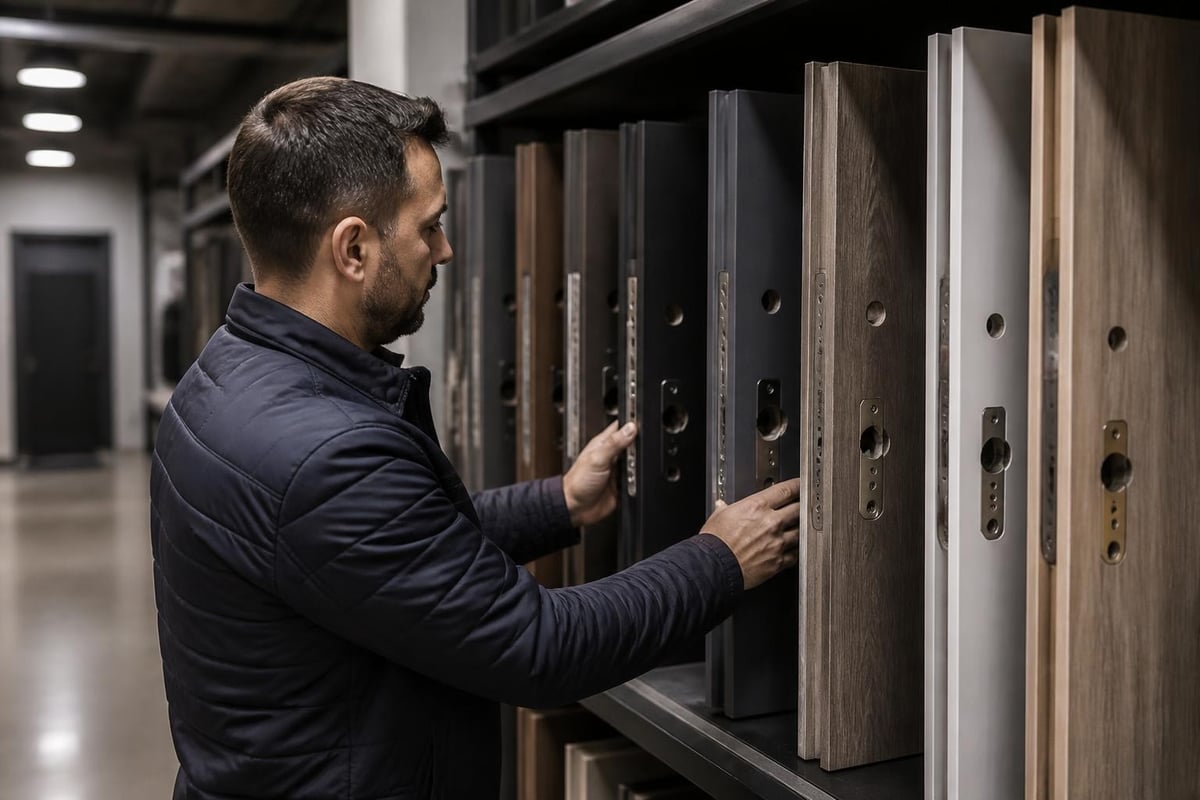
The Steel Door Institute provides maintenance guidance that affects lifecycle costs, noting that proper maintenance extends useful life to 30+ years. This longevity shifts the effective annual cost dramatically when compared to standard entry doors requiring replacement every 10–15 years.
Aluminum security doors offer corrosion resistance and lighter weight, making them ideal for coastal environments or high-traffic commercial settings. Expect to pay $800–$2,200 for residential-grade aluminum security doors, with commercial-grade units running $2,000–$4,500. Fiberglass and composite materials provide aesthetic flexibility and weather resistance at $1,200–$3,000 for residential applications, though they typically offer lower security ratings than steel equivalents at similar price points.
Wood-core security doors with steel or aluminum reinforcement blend traditional aesthetics with modern protection, commanding premium prices of $2,500–$6,000 depending on wood species and security enhancements.
Professional installation accounts for a significant portion of total security door costs. According to HomeAdvisor’s security door pricing guide, installation labor typically adds $200–$800 to the project, depending on complexity, regional labor rates, and structural modifications required.
Labor rates vary considerably by region. Metropolitan areas with higher costs of living see installation charges at the upper end of the range, while rural or lower-cost regions may offer more competitive installation pricing. RSMeans construction cost data tracks these regional variations, showing that the same security door installation might cost 30–50% more in major cities compared to smaller markets.
The existing door frame condition significantly affects installation costs. If the current frame requires removal, repair, or reinforcement, expect additional charges of $150–$500. Masonry or steel-framed openings often require specialized mounting hardware and additional labor time, increasing installation costs by $200–$600.
The price of security doors escalates with certification levels and tested performance ratings. Doors certified to resist specific attack methods or achieve particular fire ratings carry premium pricing due to testing costs, specialized materials, and manufacturing precision.
Basic security doors provide visual deterrence and resistance to opportunistic break-ins, typically priced $800–$1,800 installed. Mid-grade security doors incorporate reinforced strike plates, multi-point locks, and tested forced-entry resistance, running $1,800–$3,500 installed. High-security doors meet UL standards for bullet resistance or forced-entry delay, starting at $3,500 and reaching $10,000+ for residential applications.
UL’s guidance on fire-rated and bullet-resisting doors explains how UL 752 bullet-resistance ratings (Levels 1–8) and UL 10B/10C fire ratings add documented performance that justifies higher pricing. Commercial applications requiring these certifications typically see door costs double or triple compared to uncertified equivalents.
Fire-rated security doors serving dual purposes command premium pricing, with 20-minute fire-rated security doors starting around $2,200 and 90-minute ratings reaching $4,500–$8,000. The NFPA maintains resources on NFPA 80 fire door inspection and maintenance requirements that affect long-term compliance costs for commercial installations.
The locking system dramatically influences both security effectiveness and price. Standard single-cylinder deadbolts offer minimal protection and add $50–$150 to door costs, while multi-point locking systems-engaging three to five points along the door frame-increase prices by $300–$800.
Electronic and smart locks integrate with home automation systems and provide keyless entry, adding $200–$600 depending on features. Biometric readers and commercial-grade access control systems can add $500–$2,500 to the total price of security doors.
High-security cylinder locks meeting ANSI Grade 1 specifications resist picking, drilling, and bumping, adding $150–$400 to hardware costs compared to standard residential locks.
Security doors no longer mean sacrificing curb appeal. Modern designs incorporate decorative elements, custom finishes, and architectural details that increase the price of security doors while maintaining protective capabilities.
Custom color finishes, powder-coating, or wood-grain overlays typically add $200–$600 to door costs. Decorative glass inserts-using laminated, tempered, or polycarbonate materials-range from $150 for small fixed panels to $800+ for larger sidelites or transoms. Ornamental ironwork, custom grilles, or laser-cut patterns add $300–$1,200 depending on complexity.

Premium security doors disguised as traditional entry doors command top-tier pricing. A steel-core door with authentic wood veneer, hidden reinforcements, and concealed multi-point locks might cost $4,000–$7,000 installed, compared to $1,500–$2,500 for a clearly utilitarian security door offering similar protection levels.
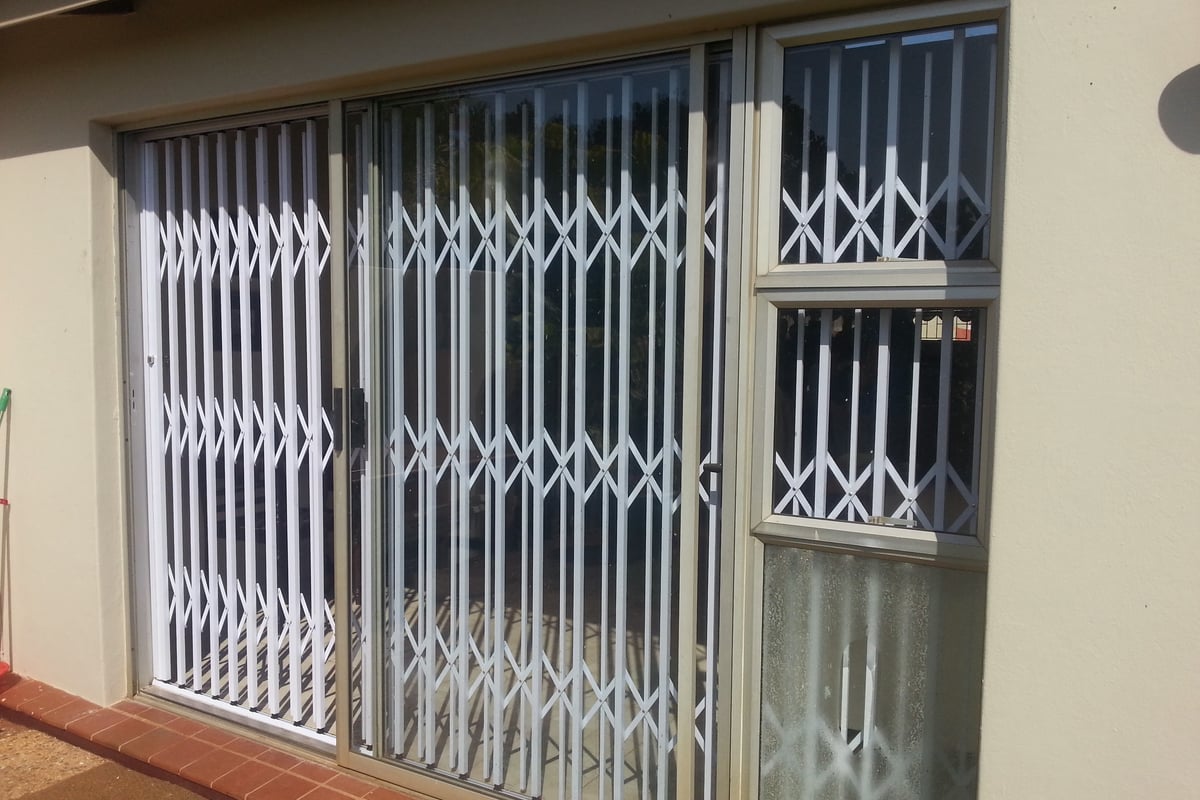
Limax Security Specialists recognizes that modern homeowners want security that complements their property's aesthetic. Monkey-proof security gates demonstrate this principle-engineered for maximum protection while maintaining clean, attractive lines that enhance rather than detract from a home's appearance, all backed by comprehensive guarantees that ensure long-term value.
Energy-efficient security doors reduce heating and cooling costs over decades of service. The Department of Energy’s guidance on energy-efficient doors emphasizes lifecycle cost analysis, noting that well-insulated doors save $50–$200 annually in energy costs.
Thermal breaks, weather stripping, and insulated cores add $200–$500 to security door prices but deliver measurable energy savings. In moderate climates, these features pay for themselves within 3–6 years; in extreme climates, payback periods shrink to 2–4 years.
Installing certified security doors may qualify for homeowners insurance discounts of 2–10%, saving $50–$300 annually depending on coverage levels. The Insurance Institute for Business & Home Safety documents how impact-rated and secure openings reduce claim frequency and severity, factors insurers recognize in premium calculations.
Security door installations typically recoup 50–75% of their cost in increased home value, with high-end installations in security-conscious markets potentially recovering 90%+ of the investment at resale. Consumer Reports’ door testing and guidance helps homeowners select doors that balance immediate security needs with long-term value retention.
Beyond the door and installation, several additional expenses affect total project costs. Permits for structural modifications typically run $50–$200, though simple door replacements often exempt from permitting. Threshold modifications for accessibility compliance add $100–$400. Custom jamb extensions for thick walls increase costs by $150–$500.
Annual maintenance costs for security doors remain modest-typically $20–$75 for lubrication, weather-strip replacement, and hardware inspection. Major servicing every 5–7 years (lock replacement, hinge servicing, finish touch-up) averages $150–$400. Over a 25-year lifespan, total maintenance costs of $800–$2,000 remain minimal compared to replacement costs for standard doors.
The FIXR cost guide for security door installation notes that doors in harsh environments (coastal salt exposure, extreme temperature cycles) may require more frequent maintenance or protective coating reapplication, adding $50–$150 to annual upkeep costs.
Commercial security doors face different requirements and price structures than residential installations. Higher traffic volumes, code compliance mandates, and liability considerations drive commercial pricing upward.
| Application | Basic Range | Mid-Grade Range | High-Security Range |
|---|---|---|---|
| Residential | $800–$1,500 | $1,500–$3,500 | $3,500–$8,000 |
| Light Commercial | $1,200–$2,500 | $2,500–$5,000 | $5,000–$12,000 |
| Heavy Commercial | $2,000–$4,000 | $4,000–$8,000 | $8,000–$20,000+ |
Commercial installations often require specialized frames, automatic operators, access control integration, and ADA compliance features, each adding $300–$3,000 to project costs.
The price of security doors fluctuates with market conditions and seasonal demand. Material costs-particularly steel and aluminum-respond to commodity pricing, with 2026 showing relative stability after the volatility of 2023–2025. Installing security doors during off-peak seasons (late fall through early spring in most markets) may yield 10–20% discounts from contractors eager to maintain steady workloads.

Supply chain considerations affect lead times for custom or specialized security doors. Standard residential units typically ship within 2–4 weeks, while custom commercial doors may require 8–16 weeks from order to delivery. Planning accordingly prevents rush charges that can add 15–25% to total project costs.
Evaluating the price of security doors requires weighing multiple factors beyond initial cost. A $2,000 security door protecting $200,000 in home value and irreplaceable family safety offers compelling value despite appearing expensive compared to a $400 standard entry door.
Immediate benefits include enhanced security, reduced break-in risk, insurance discounts, and improved energy efficiency. Long-term benefits encompass decades of reliable service, minimal maintenance requirements, increased property value, and peace of mind that justifies the premium over standard doors.
Budget-conscious buyers might prioritize:
This approach delivers effective security at entry-level pricing while leaving room for future upgrades as budgets allow.
Regardless of budget, maximizing security door value requires careful planning. Obtain multiple quotes from reputable installers, comparing not just price but warranties, installation quality, and post-installation service. Verify that quotes include all necessary components-frame reinforcement, weather stripping, quality hardware-rather than assuming these items come standard.
Request documentation of security ratings, material certifications, and energy-efficiency ratings. Generic claims of "high security" mean little without third-party testing verification. Look for doors meeting ASTM standards for forced entry resistance or carrying certification from recognized testing laboratories.
Investigate warranties carefully, as they reveal manufacturer confidence in product longevity. Premium security doors typically carry 10–25-year warranties on materials and finish, with lifetime warranties on structural integrity. Installation warranties should cover labor defects for at least one year, with reputable contractors offering 2–5 years.
The price of security doors in 2026 reflects sophisticated engineering, tested performance, and long-term value rather than simple barrier function. Whether protecting a residence or commercial facility, the right security door represents an investment in safety, efficiency, and peace of mind that pays dividends for decades.
Understanding what drives security door pricing empowers you to make informed decisions that balance protection, aesthetics, and budget. When you're ready to invest in security that enhances your property's value and safety, Limax Security Specialists brings decades of experience in custom security solutions across residential and commercial applications throughout South Africa. Our team helps you navigate options, select the right products for your specific needs, and ensure professional installation that delivers lasting protection and peace of mind.


