
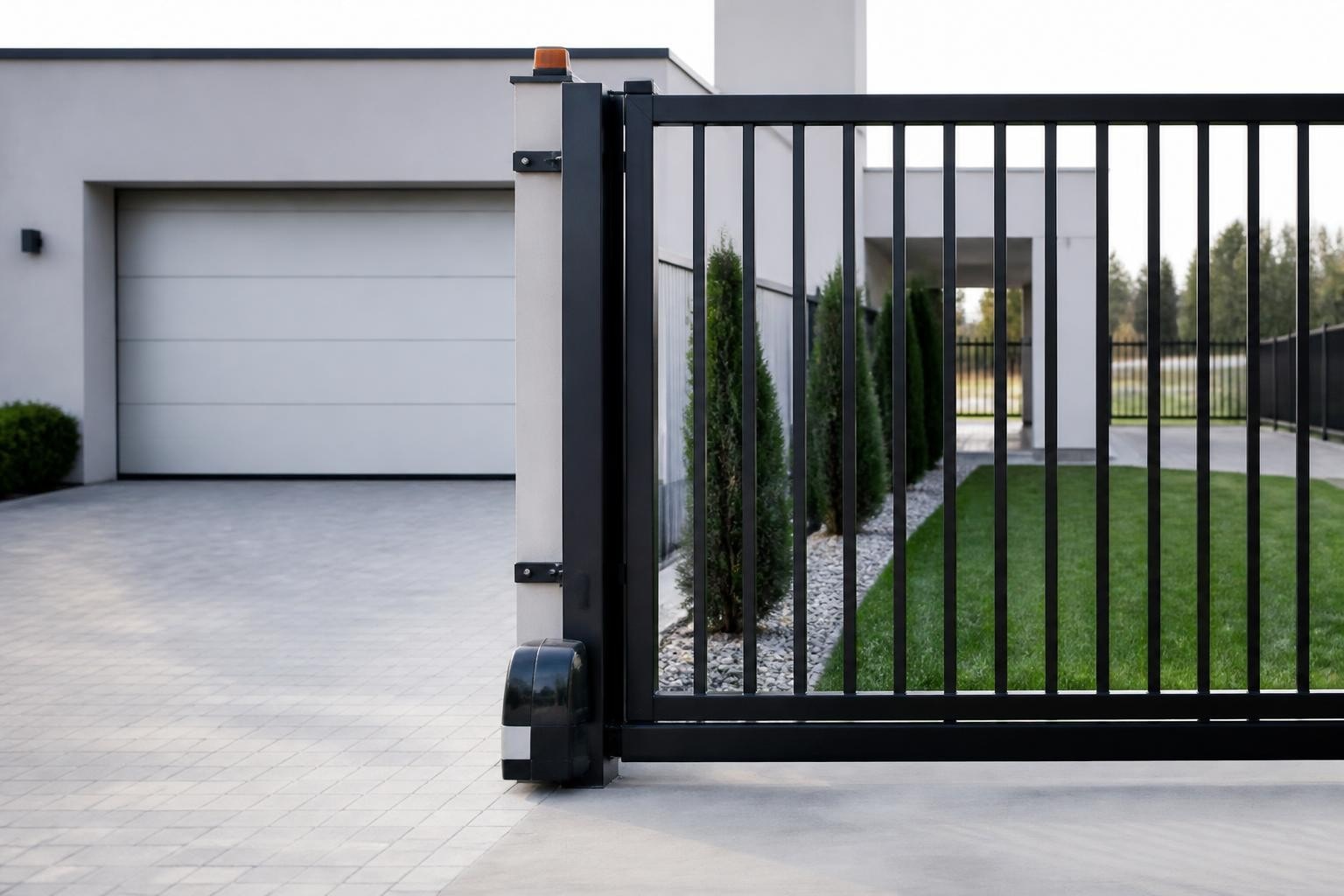
Modern security begins at the perimeter. Whether you're protecting a residential home or a commercial facility, gates and garage doors represent your first line of defense against unauthorized entry. These critical access points do more than simply open and close-they establish boundaries, control traffic flow, and integrate with broader security systems. Understanding how to select, install, and maintain these barriers is essential for property owners who take security seriously. From material selection to automation technology, every decision impacts both your safety and your property's curb appeal.
Gates and garage doors serve fundamentally different purposes within a security ecosystem, yet they work in concert to protect your property. Perimeter gates control who enters your grounds, creating a psychological and physical deterrent before anyone reaches your building. Garage doors, meanwhile, protect one of the most vulnerable entry points to most structures-a direct connection to your home or facility that bypasses many exterior security layers.
The security effectiveness of these barriers depends on three core factors: construction quality, proper installation, and ongoing maintenance. A premium gate manufactured from hardened steel becomes worthless if installed with inadequate anchoring or paired with a lock that can be defeated with bolt cutters. Similarly, a reinforced garage door loses much of its protective value when its automatic opener uses outdated radio frequencies vulnerable to code-grabbing attacks.
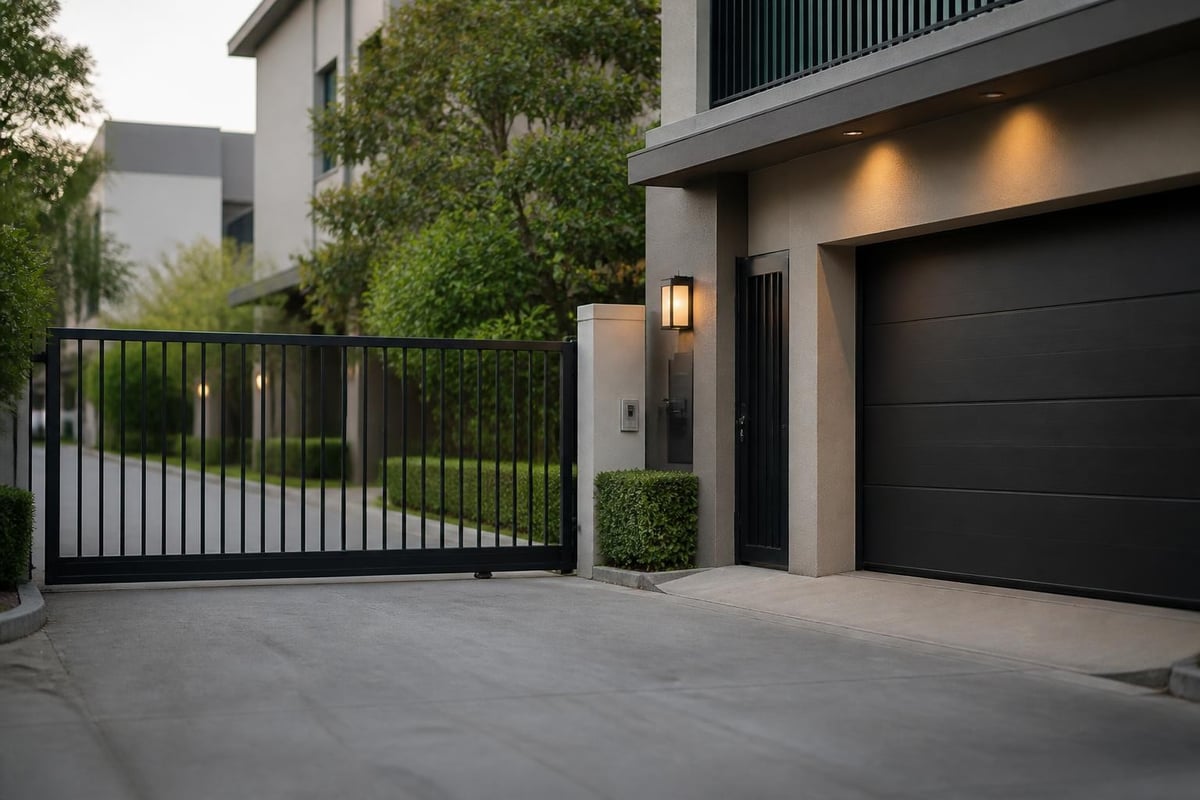
The materials you choose directly determine how well your gates and garage doors resist forced entry attempts. Steel remains the gold standard for security-focused installations, offering superior strength-to-weight ratios and resistance to cutting, prying, and impact. Aluminum provides excellent corrosion resistance and lighter weight, making it ideal for coastal environments, though it generally requires thicker gauges to match steel's security performance.
Common materials and their security characteristics:
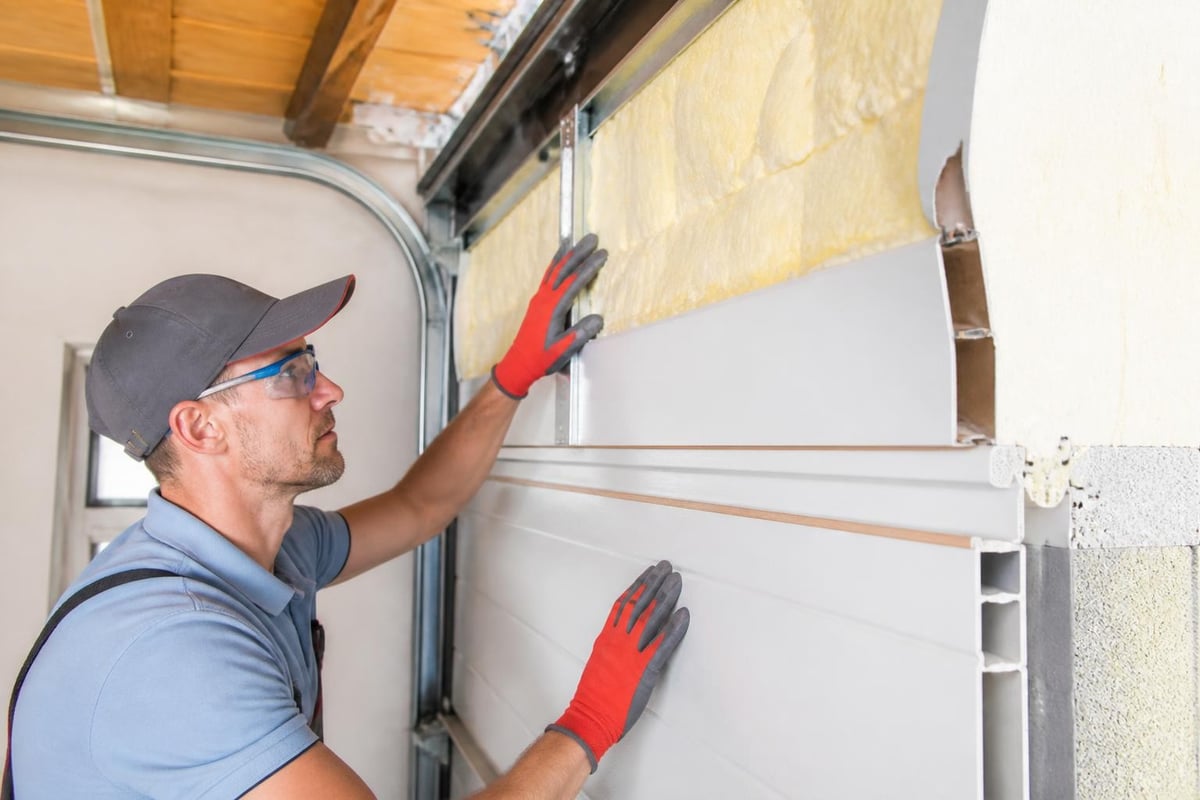
Modern manufacturing techniques have introduced composite solutions that layer materials to achieve multiple objectives simultaneously. A garage door might feature a steel frame for structural integrity, polyurethane foam insulation for energy efficiency, and a decorative wood overlay for aesthetic appeal. Understanding these construction approaches helps property owners make informed trade-offs between security, functionality, and appearance.
Automated gates and garage doors transform simple barriers into intelligent access points. Modern automation systems integrate motors, sensors, control boards, and communication protocols to manage entry while collecting valuable security data. These systems range from basic radio-frequency remote controls to sophisticated biometric scanners linked to property-wide security networks.
The controller represents the brain of any automated system. Contemporary controllers process inputs from multiple sources-remote transmitters, keypads, smartphone apps, vehicle sensors-and execute programmed responses. Advanced units log every access event, creating an audit trail that proves invaluable for security investigations or insurance claims.
| System Type | Security Level | Convenience | Typical Cost Range | Best Application |
|---|---|---|---|---|
| RF Remote (fixed code) | Low | High | $200-$500 | Low-risk residential |
| Rolling-code RF | Medium | High | $400-$800 | Standard residential |
| Keypad + rolling-code | Medium-High | Medium | $600-$1,200 | Multi-user residential |
| Smartphone app + encryption | High | High | $800-$2,000 | Tech-savvy homes |
| Biometric + multi-factor | Very High | Medium | $2,000-$5,000+ | High-security commercial |
Connected gates and garage doors offer unprecedented control and monitoring capabilities, but they also introduce new security considerations. Smart garage-door controllers have been found to contain serious vulnerabilities that could allow unauthorized remote access if not properly secured and updated.
When implementing smart access systems, prioritize manufacturers who demonstrate commitment to security through regular firmware updates, encrypted communications, and responsible vulnerability disclosure. Verify that any cloud-connected device supports two-factor authentication and provides granular access logs. The convenience of opening your gate from across town loses its appeal if that same connection enables an attacker to do the same.
Essential security features for smart systems:
Gates and garage doors must meet stringent safety standards designed to prevent injury and death, particularly to children. The International Residential Code establishes specific provisions for garage doors, including requirements for UL 325-listed operators with auto-reverse and entrapment-protection features.
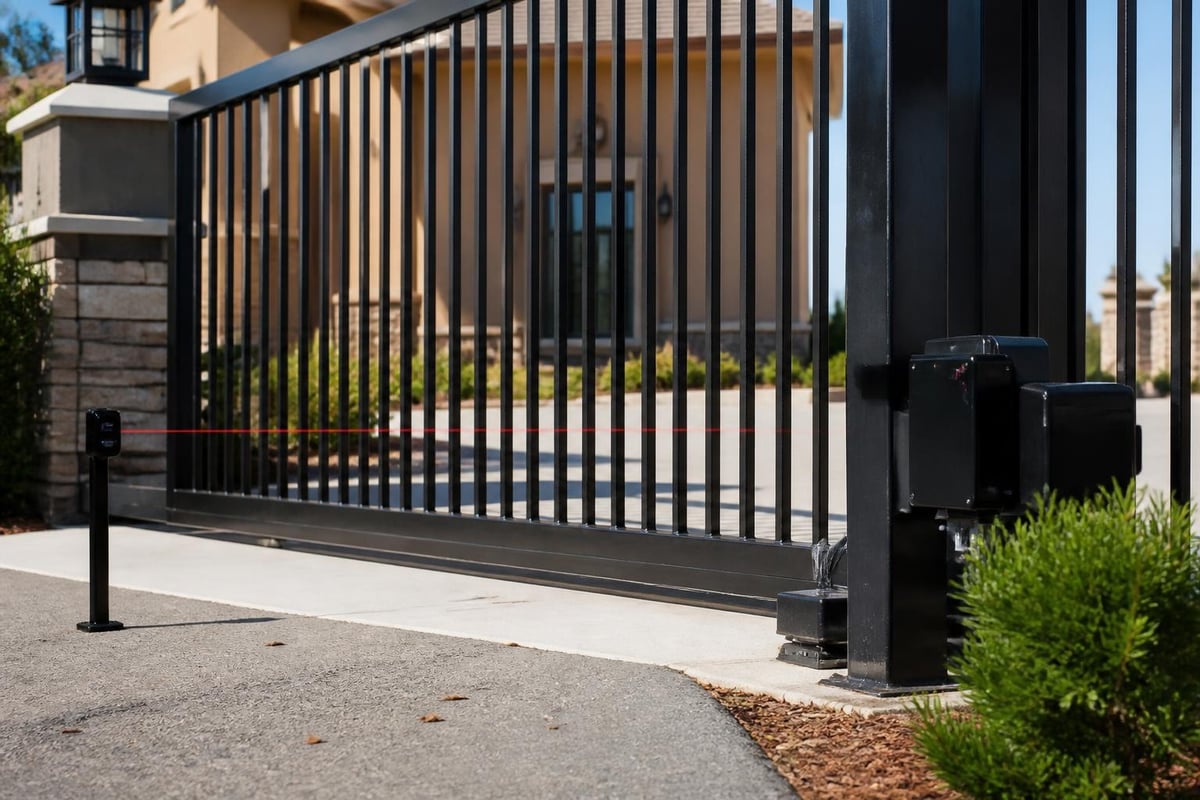
Automated vehicular gates require particular attention to safety engineering. The ASTM F2200 standard specification addresses construction and safety requirements for automated gate systems, mandating features like obstruction sensors, emergency release mechanisms, and adequate warning signage. Compliance isn't optional-it's a legal requirement that protects both users and property owners from liability.
Commercial installations face additional scrutiny. The U.S. Access Board provides detailed guidance on gates and entrances to ensure ADA compliance, specifying dimensions, opening forces, and maneuvering clearances. Fire codes also govern certain installations-the NFPA establishes requirements for doors and gates that affect means-of-egress provisions, particularly important for garage doors in attached structures.
Professional installation dramatically impacts both security and safety outcomes. Improperly tensioned garage-door springs represent a serious injury hazard-these high-tension components can cause severe harm or death if they fail during amateur installation. Gates require precise alignment, proper anchoring into structural elements, and correct sensor calibration to function safely.
Limax Security Specialists brings decades of experience to every installation, ensuring that gates and garage doors not only meet but exceed safety standards while delivering maximum security value. Professional installers understand the nuances of different materials, soil conditions, and architectural constraints that determine long-term performance.
Beyond basic functionality, professional installation optimizes system integration. Security gates should coordinate with CCTV placement, lighting systems, and alarm monitoring. Garage doors need proper weather sealing, structural support verification, and electrical code compliance. These considerations require expertise that extends well beyond simply mounting hardware.
Standard gates and garage doors provide baseline protection, but targeted enhancements significantly improve their resistance to determined attackers. Security hardening addresses the weakest links in any barrier system-locks, hinges, control panels, and structural joints.
High-priority security upgrades:
Lock selection deserves particular attention. Many standard gate locks can be defeated in seconds using readily available tools. Upgrade to pick-resistant cylinders, shrouded shackle padlocks, or integrated electromagnetic locks for automated systems. Consider redundant locking-multiple independent mechanisms that an intruder must defeat separately.
Garage doors benefit from interior slide-bolt reinforcement when the opener is disengaged. This simple addition prevents the emergency-release mechanism from becoming a security vulnerability. Zip-tie the release handle or install a shield that blocks external access through window gaps.
Understanding common attack methods helps you implement targeted countermeasures. Gates face ramming attempts, lock drilling, hinge pin removal, and fence-climbing bypass. Garage doors are vulnerable to top-panel deflection, emergency-release exploitation, and radio-frequency attacks on opener systems.
| Attack Vector | Vulnerability | Effective Countermeasure | Implementation Cost |
|---|---|---|---|
| Vehicle ramming | Weak posts, poor anchoring | Concrete-filled bollards, buried posts | $500-$2,000 |
| Lock picking/drilling | Standard pin-tumbler locks | High-security cylinders, shielded design | $100-$400 |
| Hinge pin removal | Exposed removable pins | Continuous hinge or NRP hinges | $150-$600 |
| Panel deflection | Thin gauge, wide spacing | Reinforcing ribs, thicker materials | $300-$1,500 |
| RF code grabbing | Fixed-code remotes | Rolling-code or encrypted systems | $200-$800 |
| Emergency release | External cable access | Release shield, interior lock | $50-$200 |
Research demonstrates that rolling-code systems significantly improve security over fixed-code predecessors, though even these protocols have documented vulnerabilities requiring ongoing manufacturer updates.
Garage doors represent significant thermal boundaries, especially in attached garages that share walls with conditioned living spaces. The Department of Energy recommends specific insulation and air-sealing strategies to minimize heat transfer and improve overall building envelope performance.
Insulated garage doors typically achieve R-values between 6.5 and 18.4, depending on construction method and material thickness. Polyurethane foam injection provides superior insulation compared to polystyrene panels, while also adding structural rigidity that improves security performance. Weather-stripping along all edges prevents air infiltration and reduces energy loss.
Gates generally have minimal direct energy impact, but their automation systems consume standby power continuously. Modern control boards with sleep modes and solar-panel options reduce this parasitic load while maintaining functionality.
Regular maintenance extends the service life of gates and garage doors while preserving their security function. Neglected systems develop wear patterns that create new vulnerabilities-a sagging gate with binding operation tells an observant criminal that security receives low priority.
Quarterly maintenance checklist:
Garage door springs require professional attention-their extreme tension makes DIY replacement dangerous. Torsion springs typically last 10,000-20,000 cycles (approximately 7-10 years for average residential use), and timely replacement prevents sudden failures that leave your garage vulnerable.
Attached garages present unique fire risks due to vehicle fuel, stored chemicals, and direct connections to living spaces. Consumer Reports highlights the importance of heat-sensing alarms specifically designed for garage environments where temperature extremes make standard smoke detectors unreliable.
Emergency access becomes critical during fire events. Gates must include manual release mechanisms clearly marked and accessible to first responders. Battery backup ensures gates can open during power failures, preventing occupants from becoming trapped during emergencies.
Fire-rated garage doors serve specialized purposes in commercial settings and multi-family residences. These doors carry hourly ratings indicating how long they resist fire penetration, protecting adjacent spaces and maintaining compartmentalization during evacuation.
Emergency preparedness features:
Security features need not compromise architectural vision. Contemporary gates and garage doors are available in virtually unlimited design configurations, from minimalist steel frameworks to ornate wrought-iron patterns. Powder-coat finishes provide durable color in any shade, while wood overlays soften industrial materials.
The visual impact extends beyond the barriers themselves. Gate posts, surrounding landscaping, lighting integration, and approach pavement all contribute to first impressions. Thoughtful design creates cohesive security that enhances rather than detracts from property aesthetics.
Property value research consistently shows that quality gates and garage doors deliver strong returns on investment. Beyond the security premium, these features signal overall property maintenance and attention to detail that appeals to discerning buyers. Automated systems with smart-home integration particularly resonate with contemporary purchasers.
Design considerations for visual appeal:
Gates and garage doors form the foundation of perimeter security, combining physical barriers with intelligent access control to protect what matters most. By understanding material options, automation technologies, safety requirements, and maintenance best practices, property owners can make informed decisions that balance security, convenience, and aesthetic goals. Whether you're securing a family home or a commercial facility, Limax Security Specialists delivers custom-engineered solutions backed by decades of experience in high-security installations across South Africa-contact us today for a comprehensive security assessment.


